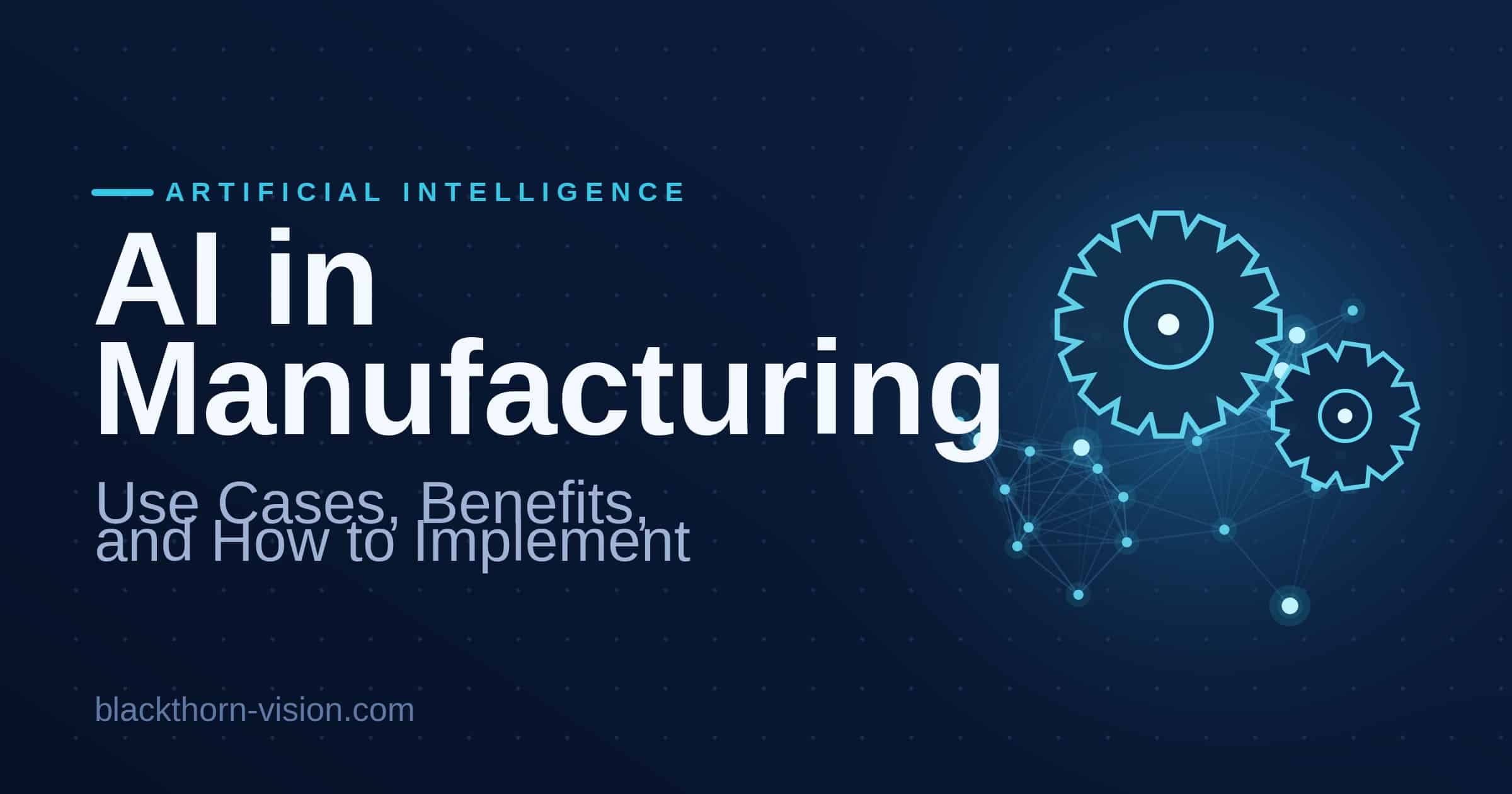

Custom ecommerce development involves building a unique software architecture from scratch using frameworks like React, Node.js, or Python. This provides total control over every feature and is ideal for businesses with unique workflows. Platform-based development (using Shopify, Magento, or BigCommerce) leverages an existing engine. While platforms offer faster deployment, they may come with “bloat” and monthly licensing fees. An experienced ecommerce software development company can help you weigh the TCO (Total Cost of Ownership) of both paths to see which yields a better long-term ROI.
Ecommerce software development companies: Architecting scalable digital growth
 12 minutes read
Content
Digital commerce has undergone a seismic shift. What once sufficed as a simple online storefront has evolved into a complex, multi-layered ecosystem where user experience, backend efficiency, and data security intersect. For businesses aiming to dominate the market – particularly within the highly competitive US landscape – the choice of an ecommerce software development company is no longer just a technical decision; it is a fundamental business strategy. This guide explores the depths of modern development, providing a blueprint for those ready to move beyond “off-the-shelf” limitations.
Executive summary & Market landscape
The global ecommerce market continues to expand at an unprecedented rate. Recent data indicates that global retail ecommerce sales are projected to surpass $8 trillion by 2027, with the United States alone accounting for a significant portion of that growth. As consumer behavior shifts toward “mobile-first” and “social-commerce” mentalities, the demand for sophisticated ecommerce software development services has spiked. It is no longer enough to simply be present online; brands must provide frictionless, high-speed, and hyper-personalized journeys to retain customer loyalty.
In this saturated environment, the “one-size-fits-all” approach is failing. Standard platforms often hit a “glass ceiling” regarding customization and load handling. This is where custom ecommerce software development becomes a critical differentiator. Modern businesses are increasingly moving away from monolithic architectures in favor of agile, service-oriented environments. By partnering with an experienced ecommerce development agency, companies can build infrastructures that don’t just handle today’s traffic but are prepared for the exponential spikes of tomorrow. The focus has shifted from mere transaction processing to creating a holistic digital brand experience that integrates seamlessly with logistics, marketing, and customer support.
Top 10 Ecommerce software development companies
1. Blackthorn Vision
Blackthorn Vision has carved out a niche as a high-end engineering powerhouse specializing in complex enterprise ecosystems. Unlike agencies that focus solely on frontend aesthetics, this ecommerce software development company excels in modernizing legacy architectures and building high-performance cross-platform applications. Their expertise in React Native and unified codebases makes them a go-to for US brands looking to bridge the gap between web and mobile commerce without doubling their maintenance overhead. They are particularly praised for their “long-term partner” mindset, often acting as an integrated technical arm for their clients.
2. ScienceSoft
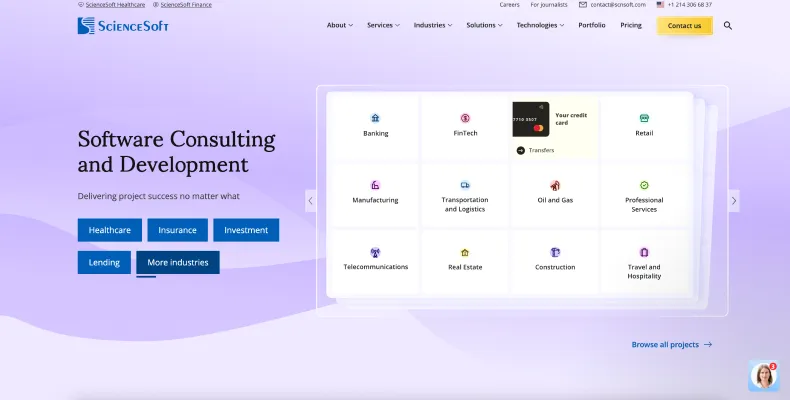
With over three decades of experience, ScienceSoft is a veteran in the realm of ecommerce software solution development. They offer a massive breadth of services, from consulting to full-cycle development of multi-vendor marketplaces. ScienceSoft is known for its rigorous approach to data security and its ability to implement advanced AI and ML features for predictive analytics. Their portfolio spans across 30+ industries, making them exceptionally capable of handling the niche regulatory and logistical requirements of the US retail market.
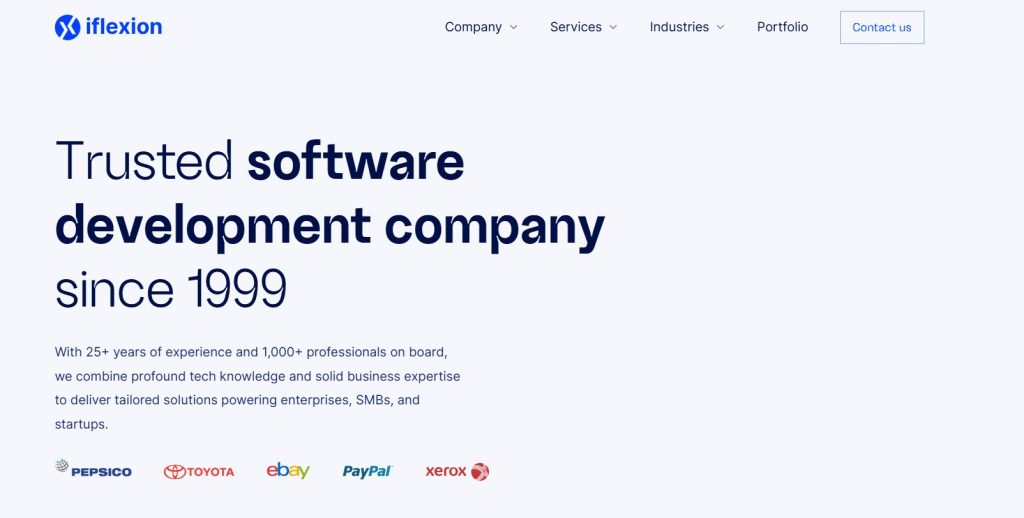
3. Iflexion
Iflexion is a dominant force in the Adobe Commerce (Magento) ecosystem. As a specialized ecommerce development agency, they focus on creating highly scalable B2C and B2B solutions that can handle millions of transactions. Their “Retail Competency Center” ensures that their developers are always ahead of industry trends, providing clients with PCI DSS-compliant infrastructures and sophisticated ERP integrations. They are best suited for large-scale enterprises that require a deeply customized, robust backend to support global operations.
4. Itransition
Itransition is a global leader in custom ecommerce software development, recognized by Gartner and Forrester for their engineering excellence. They offer an impressive balance between cost-efficiency and high-end technical output. Itransition excels in “Platform-Agnostic” development, meaning they help clients choose the right technology – whether it’s BigCommerce, Shopify Plus, or a custom-built headless solution – based strictly on business goals. Their ability to manage massive, multi-year digital transformation projects makes them a top contender for enterprise-level US retailers.
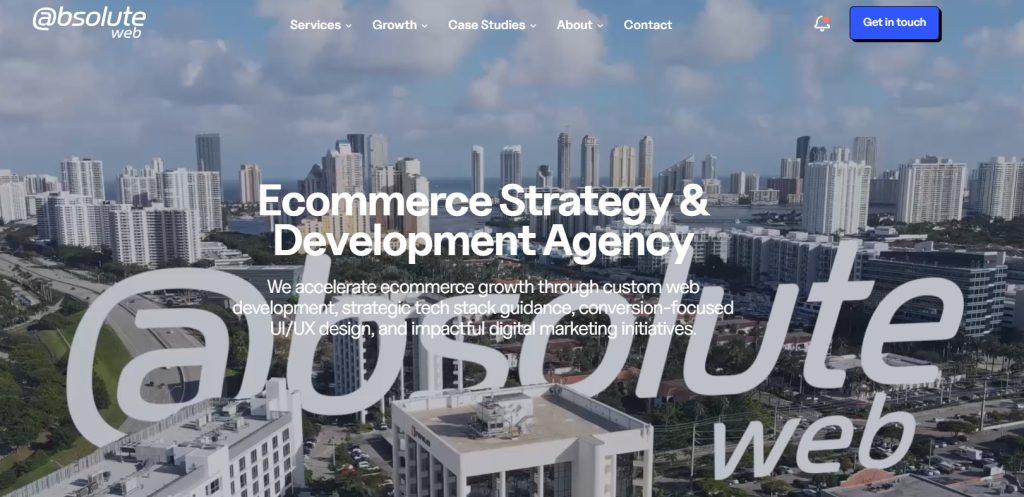
5. Absolute Web
Based in Miami, Absolute Web is a premier e-commerce software development company that places a heavy emphasis on UI/UX and Conversion Rate Optimization (CRO). They are masters of the “Digital Experience,” ensuring that every technical decision is backed by user behavior data. They have a strong reputation for successful platform migrations (e.g., Magento to BigCommerce) and are known for their high-touch communication and collaborative approach. For brands where “brand storytelling” is as important as the checkout button, Absolute Web is an industry leader.
6. Bounteous
Bounteous is famous for its “Co-Innovation” model, which moves beyond traditional outsourcing to create a truly collaborative development environment. As a major ecommerce development company, they specialize in creating “Digital Flow” – a continuous cycle of data-driven improvements. They are heavily focused on the US market, helping brands like Domino’s and Caesars Entertainment build massive, high-concurrency platforms. Their strength lies in combining world-class engineering with sophisticated digital marketing and analytics.
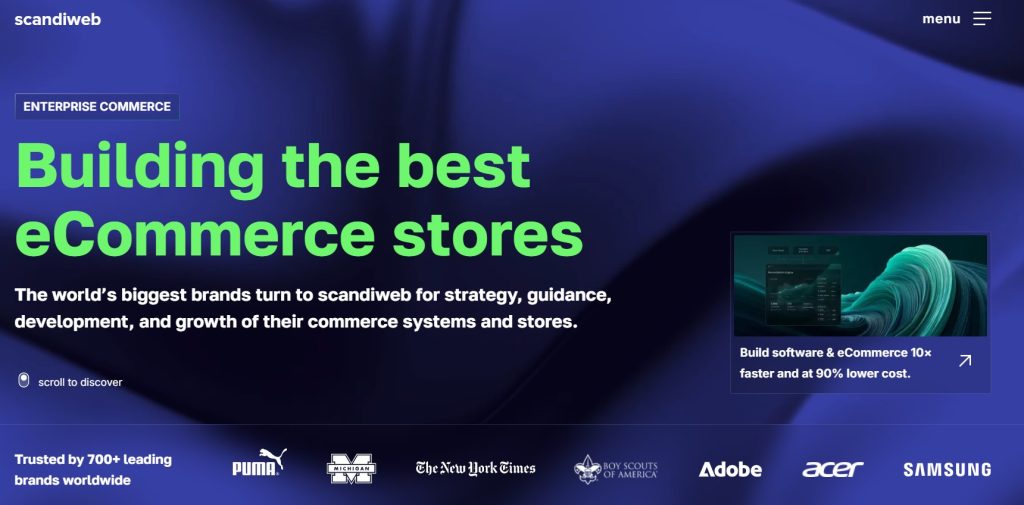
7. Scandiweb
Scandiweb is a global pioneer in the Magento and Headless commerce space. They are the creators of ScandiPWA, the first open-source PWA theme for Magento, demonstrating their deep commitment to open-source innovation. This ecommerce software development services provider is known for its “performance-first” philosophy, often being called upon to fix slow, bloated sites that are failing to convert. Their holistic approach integrates SEO, CRO, and advanced data tracking into the very core of the code.
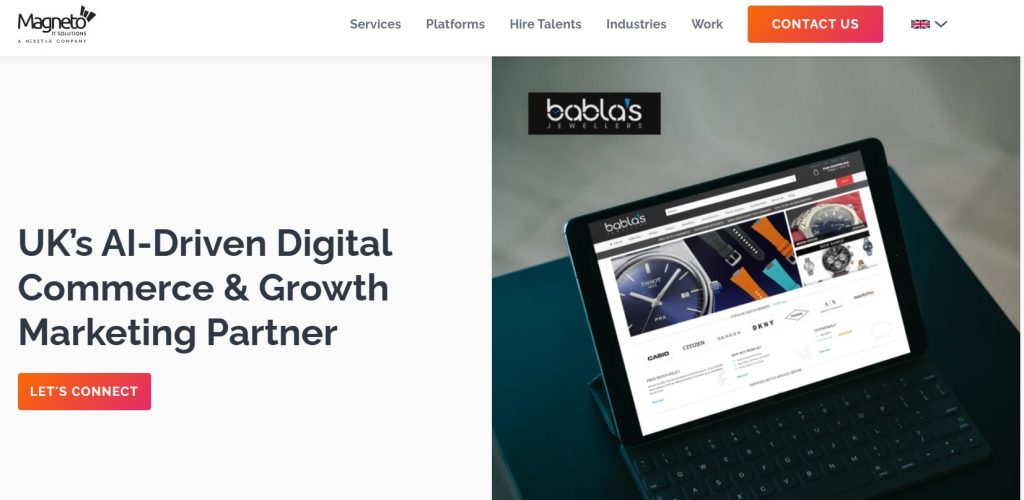
8. Magneto IT Solutions
Magneto IT Solutions is a highly agile custom ecommerce development company with a strong focus on B2B digitization. They have spent over a decade helping businesses move their offline supply chains into the digital realm. Their expertise includes developing custom digital catalogs, complex order management systems (OMS), and secure customer portals. They are particularly effective for mid-market companies that need to automate complex workflows without the enterprise price tag of a global consultancy.
9. Vaimo
Vaimo is one of the world’s most respected Adobe Commerce Gold Partners. They provide a “one-stop-shop” for ecommerce solutions development, covering everything from strategic consulting to 24/7 post-launch support. With a massive in-house team of certified experts, Vaimo is capable of delivering highly complex, multi-currency, and multi-language sites for global brands. Their reputation is built on reliability and the ability to deliver high-quality code under tight deadlines for large-scale digital transformations.
10. Gorilla Group (A Wunderman Thompson Company)
Now part of a global network, Gorilla Group remains one of the most decorated ecommerce software development companies in the United States. They describe themselves as a “commerce experience agency,” blending strategy, design, and technology. They have a deep partnership with SAP Commerce Cloud, Adobe, and Shopify Plus, allowing them to provide unbiased advice on the best platform for a client’s specific needs. Their work is characterized by a “future-proof” approach, ensuring that the platforms they build today are ready for the technological shifts of tomorrow.
Core ecommerce development services: The full stack
When evaluating an ecommerce software development company, it is vital to understand the breadth of the “Full Stack.” Modern development isn’t just about the frontend visuals; it’s about the underlying architecture that ensures stability. A comprehensive suite of ecommerce development solutions typically begins with Custom Storefront Development. This involves building a unique brand identity from the ground up, ensuring that the User Interface (UI) is not just beautiful but optimized for conversion.
A major trend in the industry is Headless and Composable Commerce. By decoupling the frontend (the “head”) from the backend commerce logic, developers gain the freedom to push content to any device via APIs. This is essential for businesses that want to provide a consistent experience across smartwatches, IoT devices, and web browsers. Furthermore, Mobile Commerce (mCommerce) remains a dominant force. With over 60% of ecommerce traffic originating from mobile devices, a top-tier ecommerce software development services provider will prioritize Progressive Web Apps (PWAs) or native mobile applications. For B2B entities, the complexity increases, requiring features like bulk pricing, multi-layered account permissions, and custom ERP integrations – tasks that require a highly specialized custom ecommerce development company.
Advanced technological integrations
The true power of ecommerce software solution development lies in its ability to integrate with emerging technologies. Artificial Intelligence (AI) and Machine Learning (ML) are no longer futuristic concepts; they are current requirements. Statistics show that AI-powered personalization can increase conversion rates by up to 15%. An expert e commerce software development company will implement AI for predictive search, intelligent product recommendations, and automated customer service bots that handle complex queries without human intervention.
Beyond AI, the integration of Omnichannel Synchronization is paramount. In the US market, consumers often research products online before buying in-store, or vice-versa. Successful ecommerce solutions development ensures that inventory levels, customer profiles, and loyalty points are synced in real-time across all physical and digital touchpoints. Additionally, Augmented Reality (AR) is becoming a staple for industries like furniture and fashion, allowing “virtual try-ons” that significantly reduce return rates – a major cost-saver for online retailers. Finally, robust security protocols, including PCI DSS compliance and multi-factor authentication, must be baked into the code to protect sensitive consumer data from ever-evolving cyber threats.
Strategic engineering: The development lifecycle
Superior custom e commerce software development is the result of a disciplined, multi-stage lifecycle. It begins with Discovery and Consulting, where the ecommerce development company dives deep into the brand’s business goals, target audience, and existing technical debt. This phase prevents costly mid-project pivots by establishing a clear roadmap and Key Performance Indicators (KPIs). Without this foundation, even the most expensive software will likely fail to meet business objectives.
Following discovery, the focus shifts to UI/UX Design and Prototyping. This is where data-driven design takes center stage, using heatmaps and user behavior analytics to create intuitive navigation. The Development and QA (Quality Assurance) phase follows, employing Agile methodologies to ensure iterative progress and transparency. Automated testing is crucial here; high-performing ecommerce software development companies run thousands of tests to simulate peak traffic conditions, ensuring the site doesn’t crash during major sales events. Finally, the DevOps and Deployment stage ensures a smooth launch with continuous integration/continuous deployment (CI/CD) pipelines, allowing for seamless updates and minimal downtime in the future.
Platform expertise: Choosing your engine
While custom ecommerce development offers the most flexibility, many businesses find success leveraging established platforms as a foundation. A versatile e-commerce software development company should hold certifications in various ecosystems. For enterprise-level giants, Adobe Commerce (formerly Magento) remains a powerhouse due to its limitless customization and robust B2B capabilities. It allows for complex multi-store setups and global expansion with ease.
On the other hand, Shopify Plus has become a favorite for high-growth D2C brands that prioritize speed to market and a user-friendly backend. For those looking for a “middle ground,” BigCommerce offers excellent “out-of-the-box” features with a strong inclination toward headless configurations. However, for companies with truly unique business models that no platform can accommodate, building a custom ecommerce software solution using frameworks like React, Node.js, or Python is the best path. This “clean slate” approach ensures that every line of code serves a specific business purpose, eliminating the “bloat” often found in pre-built platforms and resulting in superior site speed and SEO performance.
The “Anti-fail” framework: How to select your partner
Selecting an ecommerce development agency is a high-stakes decision. To avoid the common pitfalls of outsourcing, businesses should apply a rigorous “Anti-Fail” framework. First, look beyond the portfolio. While high-quality screenshots are nice, an expert partner should provide detailed case studies that highlight problem-solving capabilities, such as how they reduced page load time by 40% or integrated a legacy ERP system with a modern frontend.
Second, technical transparency is non-negotiable. A reliable e commerce software development company will be open about their tech stack, their documentation standards, and their communication protocols. Do they use Jira for project tracking? Do they provide regular code reviews? Third, consider the Total Cost of Ownership (TCO). The cheapest initial bid often leads to the most expensive long-term maintenance. A professional partner will provide a realistic budget that includes post-launch support, security patches, and scaling costs. Finally, ensure there is a cultural and time-zone alignment that allows for real-time collaboration. In the fast-paced world of digital retail, waiting 24 hours for a critical bug fix is not an option.
Post-launch: Maintenance and growth
The journey doesn’t end when the site goes live. In fact, the most successful ecommerce brands view launch day as just the beginning. Continuous ecommerce software development services include ongoing performance optimization to stay ahead of search engine algorithm changes and evolving web standards. Data from Google indicates that a delay of just 100 milliseconds in load time can hurt conversion rates by 7%; therefore, constant monitoring of Core Web Vitals is essential.
Moreover, the market is constantly changing. A dedicated ecommerce development company will work with you to analyze user data, perform A/B testing on new features, and refine the checkout process to reduce cart abandonment. This iterative process of “Growth Engineering” ensures that the platform evolves alongside the business. Regular security audits, software updates, and server optimizations are also mandatory to protect the brand’s reputation. By maintaining a long-term partnership with a development team, businesses can ensure their technical infrastructure remains a growth engine rather than a bottleneck, allowing them to scale confidently into new markets and product categories.
Conclusion
The transition to a sophisticated digital commerce model is a complex journey, but it is the only path to long-term viability. By focusing on custom ecommerce software development and selecting a partner that understands the nuances of modern architecture, businesses can build a foundation that is both resilient and scalable. The modern consumer demands speed, security, and personalization; your software must be capable of delivering all three simultaneously.
As you move forward, your immediate priority should be a Technical Audit of your current systems to identify bottlenecks. Once these are clear, use the frameworks provided in this guide to draft a comprehensive Request for Proposal (RFP). Look for an ecommerce software development company that views your success as their own – a partner that brings not just developers to the table, but strategists, security experts, and visionaries. The future of commerce belongs to the brands that are built to adapt, and that adaptation starts with the code.
FAQ
What is the difference between custom ecommerce development and using a platform?
How do I choose the right ecommerce software development company?
The right partner is one that demonstrates deep technical expertise alongside a clear understanding of your business vertical. Beyond checking certifications (like Adobe or Shopify Partner status), you should evaluate their communication style, their approach to security and data privacy, and their post-launch support offerings. A reliable ecommerce development agency will not just act as a “coder” but as a strategic consultant who helps you avoid technical debt and optimizes your platform for long-term growth.
What is Headless Commerce, and do I need it?
Headless commerce is the decoupling of the frontend presentation layer from the backend commerce functionality. You might need it if you want to deliver a high-speed, app-like experience or if you need to push products to multiple “heads” like smart devices, mobile apps, and web stores simultaneously. Most top ecommerce software development companies recommend headless architecture for brands prioritizing high performance and future-proof scalability, as it allows you to update the user interface without touching the complex backend logic.
How long does it take an ecommerce development agency to build a site?
A standard implementation on a platform like Shopify Plus can take 3 to 5 months. However, complex custom e commerce software development projects generally require 6 to 12 months. This timeline includes phases for discovery, architecture design, frontend/backend development, and rigorous QA testing. Choosing an ecommerce development company that utilizes Agile methodologies can often help in launching a “Minimum Viable Product” (MVP) sooner, followed by iterative feature rollouts.
How much do ecommerce software development services typically cost in the US?
The cost of ecommerce software solution development varies wildly based on complexity. A mid-market project with standard integrations might range from $50,000 to $150,000. However, for enterprise-level custom ecommerce development involving headless architecture, ERP synchronization, and multi-region support, budgets often exceed $250,000 to $500,000+. The primary drivers of cost include the number of third-party integrations, the complexity of data migration, and the level of custom UX/UI design required.
You may also like
-
 September 28, 2026Read in 19 min.
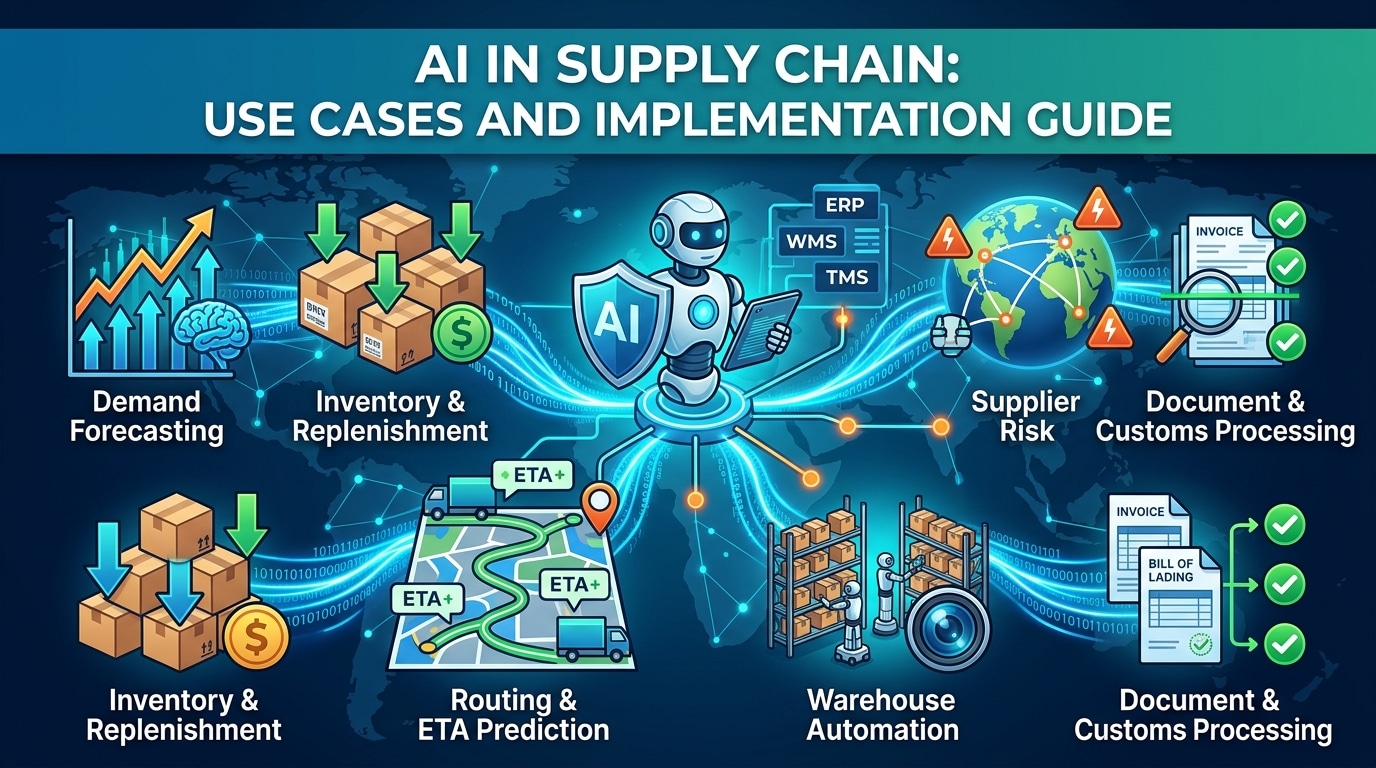
AI in supply chain: Use cases and implementation guide
What is AI in supply chain management? -
 September 21, 2026Read in 19 min.
AI in banking: Use cases, explainable AI, and how to deploy it in regulated environments
AI in banking: use cases, explainable AI and governance, generative AI, ROI, and how to deploy it in a regulated environment -
 September 8, 2026Read in 16 min.
The AI-Native SDLC: From Writing Software to Orchestrating It
An AI-native SDLC cuts delivery time by about half without loosening a single quality gate. See the three eras, the toolchain and the guardrails. -
 September 4, 2026Read in 36 min.
Custom software development cost: Real ranges, rate cards, and how to budget
How much custom software development costs. Explore real pricing ranges, hourly rates, key cost factors, hidden expenses, and budgeting tips. -
 September 2, 2026Read in 36 min.
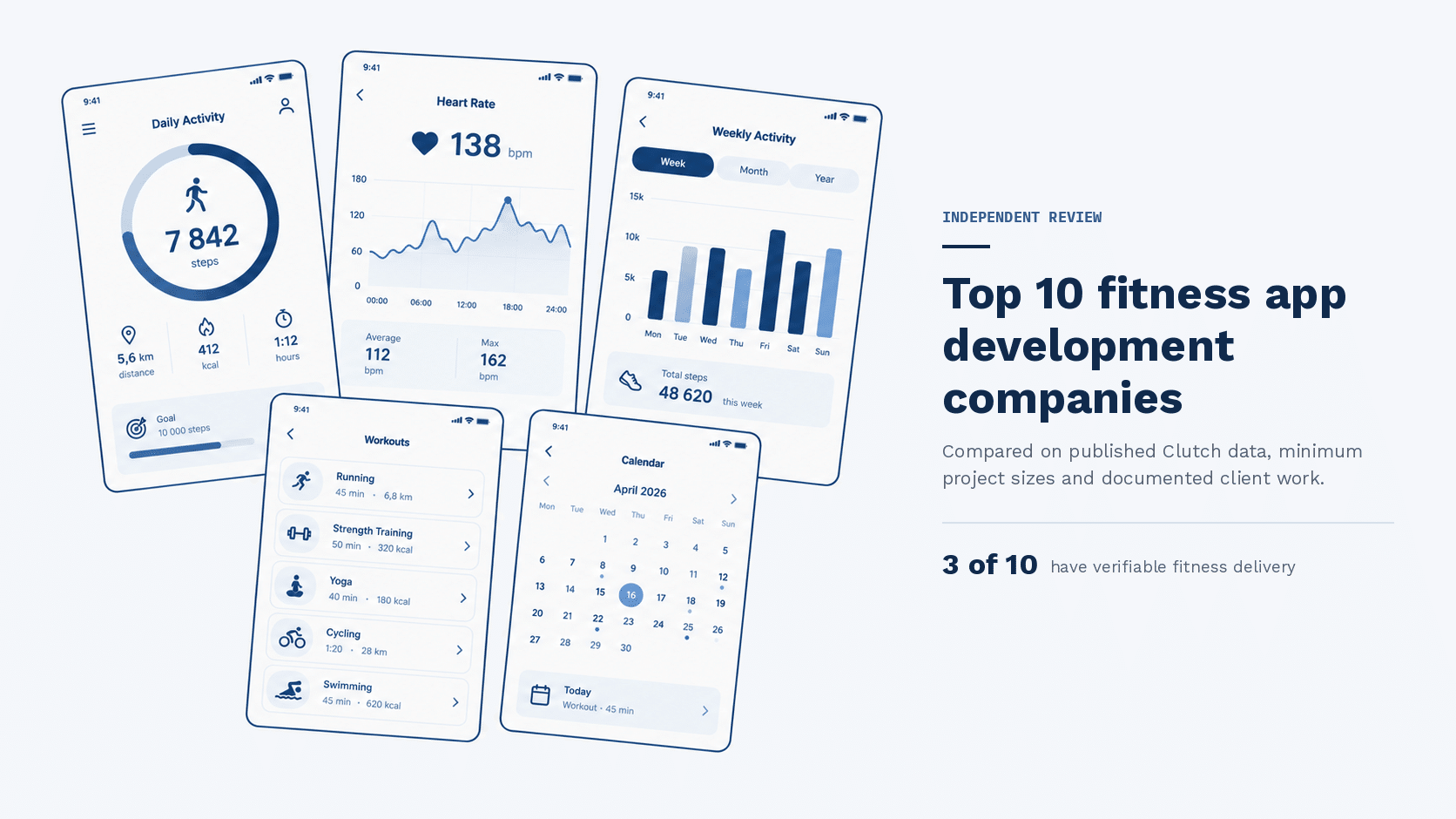
Fitness app development companies: An independent shortlist
10 fitness app development companies compared on verified data, published pricing, and real client work. Only three have documented fitness delivery. -
 August 27, 2026Read in 36 min.
Top software development companies in the USA
Find the best US-based software developers. From AI to enterprise web apps, here are the top 30 software development companies in the USA you should hire in 2026. -
 August 19, 2026Read in 22 min.
Robotic Process Automation in healthcare: Definition, benefits, and real cases
From patient scheduling to claims processing: explore proven RPA use cases in healthcare, backed by real data, ROI benchmarks, and compliance guidance. -
 July 22, 2026Read in 21 min.
AI Use Cases: 25+ Real Enterprise Examples Across Industries
Most impactful AI use cases in business - from generative AI and agentic AI to predictive analytics. Real examples by industry with ROI data and implementation priorities. -
July 22, 2026Read in 17 min.
AI in manufacturing: How to implement, use cases and benefits
How artificial intelligence is transforming manufacturing - from predictive maintenance and quality control to supply chain optimization and digital twins. Real ROI data and implementation roadmap. -
July 21, 2026Read in 18 min.
AI in Education: How Artificial Intelligence Is Transforming Learning
How AI is used in education - from personalized learning and automated grading to AI tutors and corporate L&D. Real examples, benefits, challenges, and what's next.