Managing money can be stressful enough without confusing screens or complicated forms. Our UI/UX design team makes financial software easier to navigate, tests important features with real users, and writes clear instructions and error messages. The goal is to help people get things done without contacting support.
Fintech software development services
We help banks, lenders, and fintechs build better software and modernize systems they already have. Secure, compliant, and built to last.

What we offer
Blackthorn Vision is a fintech software development company that builds custom software for banks, credit unions, lenders, payment providers, investment firms, and startups. We develop new products and modernize systems that have been running for years. Our fintech software development services cover everything from planning and architecture to development, testing, launch, and ongoing support.
Whether you need help with a single payment integration or an entire platform, our fintech development services take care of the technical work while keeping security and compliance in check.
Some of our fintech clients have stayed with us for over 12 years. We’ve helped build an AI-assisted trading negotiation platform, an equity and cap table management tool, and budgeting and forecasting software for small businesses and nonprofits. Much of our work is built on .NET and Azure. Our fintech software development company is a Microsoft Solutions Partner. We help financial companies move older systems to the cloud, one step at a time, without disrupting day-to-day operations.


Have a new product in mind or an old system that needs work?
Tell us what you're working on, and we'll help you figure out where to start.
Our capabilities
-

Custom fintech software development
We build fintech software around your business processes, from customer-facing apps to the systems your teams use daily. Our fintech web development services include web portals, dashboards, and admin tools, and our fintech mobile app development services cover apps for iOS and Android. We also develop cross-platform apps when a shared codebase is the better choice.
As a provider of end-to-end fintech app development services, our team handles both the front end and back end, so everything works together. We plan data flows, user permissions, and audit requirements early, before they become costly problems later.
-

Fintech software modernization
Older financial systems can be difficult to change, especially when they contain years of undocumented business logic. We help you modernize without putting daily operations on hold. First, we assess your system’s work, including the less obvious rules and exceptions. Then we upgrade it to a newer version of .NET or move it to Azure, one part at a time. We can run old and new components side by side to check that everything works as expected. Reports, integrations, and financial records stay intact throughout the process.
-

AI and machine learning for fintech
With our fintech AI development services, we help financial companies put AI to work on real business problems. That might mean assessing credit risk, spotting unusual transactions, forecasting cash flow, or extracting information from financial documents. We also build AI assistants that take repetitive tasks off your operations and support teams’ plates.
Because financial decisions need to be accountable, we make sure model activity can be tracked, results can be reviewed, and people stay involved when decisions carry greater risk. Our developers handle both the AI models and their integration with your existing software.
-
Third-party software integrations
Financial software doesn’t work in isolation. We connect your product to banks, payment processors, identity verification services, credit bureaus, accounting tools, and market data providers. We build integrations that handle failed requests, prevent duplicate payments, and alert your team when something goes wrong.
Our experience includes connecting a trading platform to Bloomberg market data through Azure Data Factory and integrating accounting systems with budgeting software. We also work with open banking services, Banking-as-a-Service (BaaS) platforms, and card-issuing APIs.
-
Technical consulting
Not sure whether to rebuild, upgrade, or keep what you have? We can help you make that call. Our consultants review your software, architecture, security, and third-party tools to identify what works and what needs attention. We also help you compare ready-made platforms with custom development, plan cloud migrations, and estimate project costs.
If you’re starting with a new idea, our product discovery process helps turn it into a clear plan, complete with a prototype, prioritized features, and a budget estimate. You’ll get practical recommendations you can take forward with our team or another provider.
Trends in fintech software development
-
Open banking and embedded finance
Open banking lets customers share their financial data securely with other apps and services. Embedded finance takes things further by bringing payments, lending, and banking features into everyday platforms, from online marketplaces to payroll software.
But the rules around data sharing are still changing. In the US, the CFPB’s Section 1033 rule has faced legal challenges, leaving some requirements uncertain. We build integrations around standards such as FDX and keep consent management separate from the rest of the system. That way, it’s easier to adjust when regulations change without rebuilding the whole product.
-
AI and machine learning in fintech
AI has been part of financial software for years, helping banks detect fraud, assess credit risk, and analyze transactions. What’s changing is the way companies use it. Generative AI and AI agents can now read documents, summarize customer cases, and prepare recommendations for employees to review.
The challenge is making these tools reliable, secure, and easy to audit. We use Azure OpenAI to build AI features within approved cloud environments, with access controls and logs that help teams track how the technology is used.
-
Blockchain and digital assets in fintech
Blockchain in finance is moving beyond experimentation toward more practical uses, including tokenized assets, stablecoin payments, and smart contracts. But adding blockchain to a financial product also raises questions about security, asset custody, regulatory compliance, and integration with existing systems.
We’ve worked with smart contract signing in a trading platform, allowing parties to confirm agreements digitally. We also help companies assess whether blockchain makes sense for their product. Sometimes a distributed ledger is worth the added complexity, but other times, a traditional database may be simpler and more cost-effective.
-
Mobile banking and payment applications
People expect to manage their money from their phones, whether they’re checking a balance, sending a payment, or freezing a card. Features such as biometric login, real-time notifications, and Apple Pay or Google Pay integration have become familiar parts of the experience.
Instant payments add another challenge. When money moves in seconds, fraud detection and security checks need to keep up. We build mobile banking and payment apps with sensitive operations handled on the server, rather than relying on the device alone.
-
Cloud computing and data management in fintech
Cloud technology gives financial companies more flexibility to scale their systems, manage growing data volumes, and roll out updates. But moving financial software to the cloud also means taking data protection, access controls, and regulatory requirements seriously.
We work with Azure and AWS to build cloud applications, set up data pipelines, and support reporting and analytics. Our approach covers encryption, identity management, backups, and audit trails for financial records. And if moving everything to the cloud isn’t an option, we can help you keep sensitive systems on-premises while running other workloads in the cloud.

Fintech development solutions we offer
-
 Digital banking platforms
-
Lending and loan management systems
-
Payment processing and digital wallet software
-
Customer onboarding and KYC/AML software
-
Trading and investment management solutions
-
AI-powered data analysis solutions
-
Budgeting, forecasting and equity management solutions
How you benefit from partnership with us
-
Easy-to-use financial software
-
Financial workflow optimization
We review how your team handles payments, approvals, reports, and other daily tasks to identify what’s slowing things down. Then we automate repetitive work, from reconciling transactions to preparing month-end reports. Your employees spend less time copying data between systems and more time on work that needs their attention.
-
On-premises or cloud deployment
Whether you need to keep your software on your own servers or want to move to the cloud, we can help. We build applications for Azure, AWS, and on-premises environments, including setups that combine both. Using containers and infrastructure as code, we make deployments easier to manage and keep your options open as your business grows.
-
Quality assurance
When software handles money, even a small calculation error can cause serious problems. Our quality assurance engineers check financial calculations, test how different parts of the system work together, and make sure updates don’t break existing features. We also test performance under heavy workloads, including busy periods such as month-end closing.
-
Financial data security
Security is a key part of all our development processes. Blackthorn Vision is ISO 27001 certified, and our team uses encryption, access controls, secure credential management, and regular security testing to protect financial data. We also consider your regulatory and compliance requirements, including PCI DSS, SOC 2, and GLBA, and document the controls your auditors need to review.
-
Scalability and future-proofing
We develop software able to grow with your business. Systems that can handle more customers, transactions, and new features without starting from scratch. That includes using message queues, scalable databases, and services that can grow independently. For one long-term client, we introduced database sharding to support a growing customer base without replacing the existing architecture. We also keep the code organized, making future updates easier.
How fintech software development can help your business



Building something new or upgrading an existing system?
Talk to our Customer Success Manager about your plans, timelines, and the team you'll need to get it done.
Daryna Chorna
Customer Success Manager

Our approach to fintech development services
-
01
We meet with your product, compliance, and engineering teams to understand your goals, users, and existing systems. If there’s legacy software involved, we also look at the code, databases, and integrations. This helps us identify potential risks, clear up open questions, and agree on the scope before moving forward.
-
02
Next, we turn what we’ve learned into user stories and check which regulations and standards apply, such as PCI DSS or GLBA. We also estimate the time and cost of development. Everything goes into a prioritized backlog, a compliance matrix, and a project estimate that explains what’s included and what assumptions we’ve made.
-
03
We plan the software architecture, document how different systems will connect, and create a clickable prototype of the main features. Your team and selected users can try it out and share feedback before development begins. We use that feedback to refine the design, architecture, and API specifications.
-
04
We develop the software in short sprints and show you what’s been built at the end of each one. Our testers check features as they’re developed, paying particular attention to financial calculations, permissions, and security. Automated tests run whenever the code changes, so we can catch issues on time. Each sprint ends with working software your team can review.
-
05
We connect the software to your core systems, payment providers, and data sources, then prepare it for launch. Automated deployment pipelines help us release updates and roll back changes if needed. For legacy migrations, we can run old and new systems side by side to make sure the results match before switching over. We also prepare runbooks so your team knows how to manage the software in production.
-
06
Once the software is live, we keep an eye on performance, fix issues, and release security updates. We also look at usage data together to see what’s working and what could be improved. From there, we agree on support response times and plan future releases based on your priorities.
What our clients say

4.8

-
Berkeley Lights
VP of Software
 USA
“Blackthorn Vision has been involved from the beginning. They’ve done almost all the software development on this product. Their professionalism distinguishes them. Blackthorn Vision’s teammates are good listeners and good workers.”
-
ANC
Chief technology officer
USA
“They work to help develop our company instead of only being a third-party service provider. As a result, they've become a part of our company, which is very cool. Blackthorn Vision has shown that they're willing to go beyond the call of duty to do their job.”
-
Sensia
Digital Architect, Web-Based IoT Platform
USA
“The quality of the work and engagement has been so good. They go beyond simply executing a task, story or test and are genuinely interested in understanding what the end user wants/needs.”
-
Index.dev
Director of Technical Recruitment & AMD Team
UK
“One of the most impressive facts about Blackthorn is that they are very sustainable and stable partner. Good communication, good dedication for their job, and taking a lot of responsibility on their project.”
-
Selux Diagnostics
Senior Program Manager
USA
“Blackthorn resources are embedded in our team and serve as an extension to our workforce. And during the inevitable crunch periods Blackthorn was able to rapidly increase our access to a skilled resource pool on a temporary basis to meet important milestones.”
-
Base Body
General Manager
Australia
"The range of skillsets in this company with the various employees, attention to detail and professionalism is impressive. To every problem was a good solution."
-
Balanced Flow
Vice President
USA
“This company clearly is dedicated to customer satisfaction. They volunteered improved approaches and modifications to requirements we never would have thought of. Their initiatives made the product much better. Their professionalism exceeded our expectations.”
-
BrightArch
Chief technology officer
Norway
“They’re reliable and deliver what they promise. Building an attractive work environment allows them to hire great developers. They’ve had a lot of great suggestions from the start.”
-
Townhill Software
Head of Product
Canada
“The most impressive thing about Blackthorn Vision was the dedication of the team to deliver on assigned milestones without clear indications. Although I possessed significant knowledge about the topic, I was mistaken about how much more there is to learn.”
-
CostDraw
Director of project Services
USA
“They’re technically very competent. They know exactly what they’re doing. I’d wholeheartedly recommend Blackthorn Vision.”
-
SiTime Corporation
Director of Customer Engineering
USA
“Blackthorn Vision LLC had a very professional demeanor and drove all tasks to completion. They did what they said they would do and did it on time like clockwork.”
-
RemiPeople
Chief Executive Officer
Australia
“In addition to their technical skill, the team is responsive and have been a real partner throughout the process.”
-
Orderica.com
Chief Executive Officer
USA
“I appreciate their loyalty. Blackthorn was always trying to resolve my problems. They did what I was expecting them to do; they’re great implementers.”
-
Berkeley Lights
VP of Software
USA
“Blackthorn Vision has been involved from the beginning. They’ve done almost all the software development on this product. Their professionalism distinguishes them. Blackthorn Vision’s teammates are good listeners and good workers.”


Why work with Blackthorn Vision?
-
Clients stay with us for years
Our longest fintech partnership has lasted over 12 years. Others have been going for 4+ years. Over that time, we’ve helped clients launch products, add features, solve technical problems, and keep their software running.
We also tell clients when we think an idea needs more work or a feature isn’t worth the cost. And because the same engineers stay involved, you won’t have to bring a new team up to speed every time your plans change.
-

We have solid fintech experience
We’ve been building software with .NET since 2009 and have years of experience in software development for fintech companies. As a fintech software development company and Microsoft Solutions Partner, we use .NET, Azure, and AI to develop new products and modernize older systems.
Our projects include an AI-assisted trading platform in the US, an equity management tool in Canada, and budgeting software in Australia. We’ve dealt with complex calculations, financial data, third-party integrations, and the other details that make fintech application development different from building a typical business app.
-
You get exactly the people you need
Need a .NET developer to help with an integration? Or a team to build an entire fintech platform? Our fintech software development company can do either. Our developers work across .NET, Azure, AI, data engineering, mobile, and UI/UX. Depending on your project, you can hire fintech software developers individually or bring in a dedicated development team with developers, testers, a business analyst, and a project manager. You don’t have to hire a full team when a smaller one will do.
-
You're informed of every step
Our engineers work from Wroclaw, Lviv and Warsaw with working hours that overlap with the US East Coast. You can discuss an issue with the people working on it and get an answer without waiting through several rounds of messages. Our clients often mention how easy it is to communicate with our team.
Even if something takes longer than expected, we’ll inform you and explain why, and what it means for your timeline. And when a feature goes live, the engineers who built it are still there to help if something needs fixing.


FAQ
-
What is fintech software development?
Fintech software development means building software for banks, lenders, payment companies, investment firms, and other financial businesses. Think mobile banking apps, payment platforms, lending systems, or trading tools. What makes these projects different is how carefully you need to handle money and sensitive data. Calculations must be accurate, transactions need to be traceable, and the software has to meet the regulations that apply to your business.
-
How much does fintech software development cost?
Fintech app development cost depends on what you’re building. A simple fintech app with a few features will cost much less than a banking platform connected to several payment providers and financial systems. Security requirements, integrations, and the state of your existing software also affect the price. We review your requirements before giving you an estimate, so you can see where the budget goes.
-
How long does it take to build a fintech app?
A small app with one main feature takes less time than a platform that handles payments, lending, and identity checks. The number of integrations matters too. For example, getting approval from a banking partner or payment provider can take time, even when the software is ready. We work out a realistic timeline during discovery and review progress with you after every sprint.
-
How do you handle security and compliance in fintech projects?
We start thinking about security before development begins. Our team reviews potential risks, checks code for vulnerabilities, runs automated security tests, and arranges penetration testing before release. Blackthorn Vision is ISO 27001 certified. We also look at which requirements apply to your product, such as PCI DSS, SOC 2, or GLBA, and build the necessary controls into the software. Your team gets documentation to support security reviews and audits.
-
Should I outsource fintech development or build an in-house team?
Both can work. If you’re planning to develop and maintain financial software for years, having your own engineering team may make sense. But hiring experienced fintech software developers takes time, especially when you need people who understand payments, security, or complex integrations. Fintech development outsourcing lets you bring in those skills without hiring everyone permanently. You can also combine the two approaches, keeping product decisions in-house while an external fintech development company handles development. If you are comparing vendors, our overview of top FinTech software development companies explains what to check before you sign.
-
Can you modernize legacy financial software without interrupting operations?
Yes, and you don’t have to replace everything at once. We usually start with one part of the system, build its replacement, and check that both versions produce the same results. We also test data migrations and verify financial records before switching over. The existing software keeps running while we make changes, with rollback plans in place if something doesn’t work as expected. The aim is to keep disruption to a minimum, although some migrations may still need a planned maintenance window.
-
Can you integrate BaaS, open banking, and payment APIs?
Yes. We connect fintech products to Banking-as-a-Service (BaaS) platforms, open banking providers, payment processors, and other financial services. We usually start by testing the provider’s API in a sandbox environment. Then we build the connection, handle failed requests and duplicate events, and set up monitoring so your team knows when something stops working. We also keep the integration separate from the rest of your product, making it easier to change providers or update APIs later.
-
What technologies do you use for fintech software development?
We work mainly with .NET, C#, ASP.NET Core, and Microsoft Azure. For web applications, we use React and TypeScript, while mobile projects may use native iOS and Android technologies or cross-platform frameworks. We also work with SQL Server, Azure SQL, Azure Data Factory, and Azure OpenAI. If your existing product runs on AWS, Node.js, or Java, we can work with those technologies too. We choose the stack based on what your product needs and what your team can maintain.
-
Who owns the source code and intellectual property?
You do. When the project is complete, we transfer full ownership of the source code, documentation, designs, and deployment assets. IP rights are assigned explicitly in the contract, so the product stays under your legal control. We also provide a warranty period after delivery that covers bug fixes.
-
What engagement models do you offer?
We work in three formats. A dedicated team suits long-term products with an evolving roadmap. Staff augmentation adds specific skills, such as .NET, Azure, or AI engineers, to your existing team. A fixed-price project fits a clearly defined scope, such as discovery, a prototype, or a single integration. Many clients start with a fixed-price discovery phase and then move to a dedicated team.
-
What support do you provide after launch?
After release, we monitor performance, fix issues, and ship security updates. We agree on support response times with you and plan future releases based on your priorities and usage data. The engineers who built the product stay involved, so you do not have to bring a new team up to speed. Some of our fintech clients have worked with us for more than 12 years.
Client success stories
-
Fintech
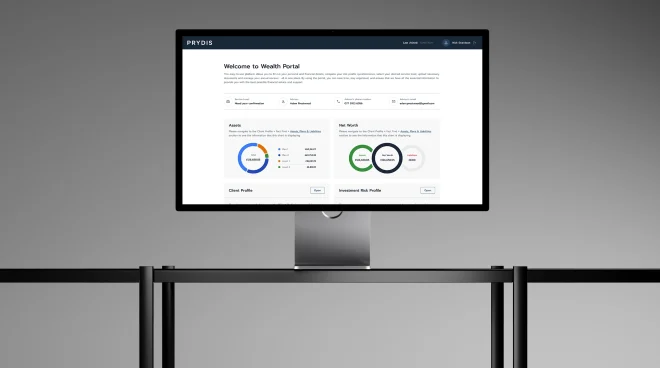
Client management system for a UK-based financial advisory company
1+Years of cooperation
-
Hospitality
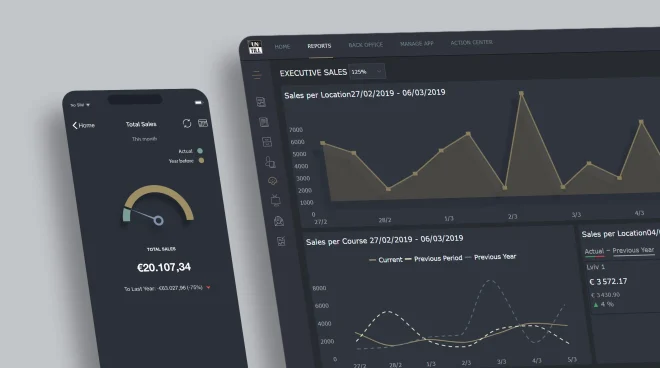
Business intelligence software for the hospitality industry
13+Years of cooperation
-
Biotech
AI-powered laboratory data analysis platform for cell line research
4+Years of cooperation
-
AI & ML, Industrial automation
AI and Machine Vision quality control software
10+Years of cooperation
-
Fintech
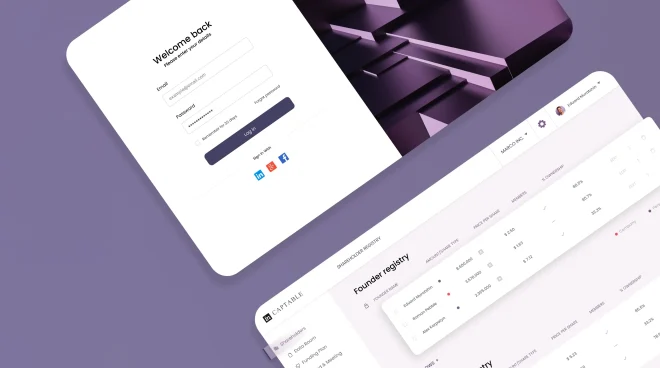
Solution for seamless share calculations and distribution
4+Years of cooperation
-
Fintech
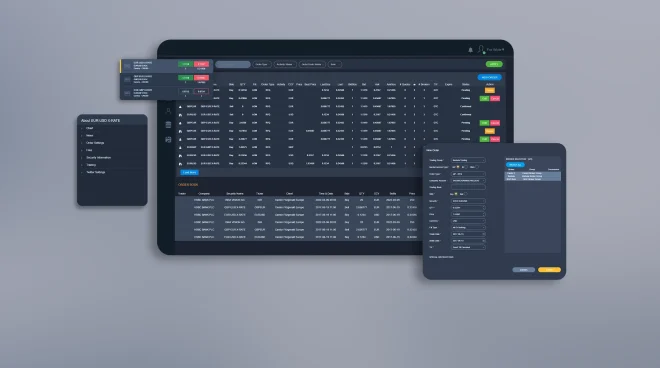
Software for currency and stock trade automation
4+Years of cooperation


Contact us