
This is the #1 pain point for U.S. healthcare, finance, and defense sectors. You cannot just accept a vendor’s promise that they are “compliant.” For complete safety, you must choose an it outsourcing services company that possesses third-party audited certifications, such as SOC 2 Type II or ISO 27001, which must be shared and vetted by your legal team. For specific U.S. regulations like HIPAA or CMMC, the vendor must be willing to sign a strict Business Associate Agreement (BAA) that specifies exactly how they manage protected data and what liabilities they assume.
Outsourcing IT companies: Driving ROI and innovation
 17 minutes read
Content
Choosing the right IT outsourcing company today means finding a partner that understands your long-term business goals as clearly as your own board of directors. This guide is designed for U.S.-based C-suite executives and IT directors who recognize that the old “break-fix” mentality is a liability. We will explore how modern outsourcing services have evolved into sophisticated ecosystems that manage risk, foster innovation, and scale resources on demand. By the end of this article, you will have a definitive roadmap for navigating the complex world of modern tech partnerships, ensuring that your choice of a provider doesn’t just keep the lights on but actively accelerates your journey toward market leadership in an increasingly digital world.
For American enterprises, global business has shifted far beyond outsourcing for cost reduction. The paradigm now emphasizes strategic partnerships and “innovation-as-a-service.” U.S. organizations seek collaborators who drive digital transformation and competitive advantage in a fast-paced market. With the global market exceeding $600 billion, outsourcing has become a primary engine for agility. Top U.S. leaders view these partnerships as essential for accessing specialized talent – like AI architects and cybersecurity experts – often scarce or expensive in domestic tech hubs like Austin or Silicon Valley.
Core outsourced IT service categories: Breadth and depth
Modern outsourced IT services cover technical needs from infrastructure management to strategic planning for American firms. Managed IT services provide 24/7 support and proactive monitoring to ensure zero downtime of critical systems. The scope now includes advanced cybersecurity and compliance tailored to U.S. standards. Top IT outsourcing firms prioritize SOC-as-a-Service and Zero Trust architectures. This integration enables U.S. businesses to offload regulatory compliance, such as HIPAA, FINRA, or CMMC, to dedicated experts.
Beyond basic maintenance, its software outsourcing services are now focused on cutting-edge development and cloud-native solutions. This includes custom software development powered by AI, legacy system modernization, and the implementation of DevOps practices to speed up product release cycles for a demanding consumer base. Furthermore, the rise of “Strategic Leadership” through vCIO (Virtual Chief Information Officer) services has become a game-changer for mid-market companies across the United States. By partnering with a comprehensive IT outsourcing service provider, organizations can access high-level strategic consulting that bridges the gap between technical execution and business growth. This ensures that every dollar spent on technology is directly contributing to the company’s overarching mission and operational efficiency.
Location-based models: Onshore, nearshore, and offshore
Navigating the various geographic models offered by its outsourcing service providers is crucial for balancing cost, culture, and communication within a U.S. business context. The onshore model involves partnering with its outsourced companies located within the United States. This approach offers the highest level of cultural alignment and zero time-zone lag, which is often preferred for high-stakes projects requiring frequent real-time collaboration. While the price point is typically higher due to domestic labor rates, many U.S. firms find that the ease of communication and local legal protections outweigh the additional expense. Onshore providers act as a seamless extension of your local team, making them ideal for sensitive government contracts or complex strategic initiatives.
Alternatively, many U.S. businesses are turning to nearshore and offshore models to optimize their budgets without sacrificing quality. Nearshoring – hiring outsourcing service providers in neighboring regions like Latin America – has become the “Goldilocks” zone for U.S. companies, offering a balance of lower costs and manageable time differences that allow for an overlapping workday. On the other end of the spectrum, offshoring to global tech hubs in Asia or Eastern Europe provides maximum cost-efficiency and the ability to run “follow-the-sun” development cycles. By utilizing a diverse range of outsourced IT providers, U.S. companies can build a hybrid workforce that leverages global talent pools. Understanding these models allows you to tailor your outsourcing strategy to your specific project needs and U.S. financial constraints.
Engagement and pricing models
The way U.S. businesses engage with outsourcing service providers has matured into several distinct models, each suited to different operational needs. Staff augmentation remains a popular choice for American companies that need to scale their internal teams quickly with specific skill sets for a product launch or peak season. In this scenario, the outsourced IT service provider supplies individual experts who work directly under your management. For more defined goals, the Project-Based or Fixed-Price model is ideal, especially for MVP launches or discrete software builds. This model places the responsibility for delivery on the vendor, providing the client with predictable costs and clear milestones for project completion.
For long-term, evolving needs, the Dedicated Team and Outcome-Based pricing models are becoming the new U.S. industry standard. A dedicated team acts as an autonomous unit that grows with your business, offering high levels of ownership and institutional knowledge. However, the most significant trend is the shift toward Outcome-Based Pricing. Rather than paying for hours worked – a model that often leads to “scope creep” – U.S. businesses are now contracting it to outsourcing firms based on specific results, such as system uptime, user adoption rates, or delivery speed. This aligns the incentives of both parties, ensuring that the IT outsourcing services company is as committed to the success of the project as the client is, fostering a true partnership rather than a simple vendor relationship.
Solving the critical pain points of IT outsourcing
One of the primary anxieties for U.S. executives when engaging with outsourcing companies is the fear of “hidden costs” and “communication silos.” Many organizations have previously experienced the frustration of project delays due to cultural misunderstandings or a lack of transparency in billing. Top-tier outsourced IT services have solved this by implementing “Real-Time Project Dashboards” and dedicated U.S.-based account managers who act as a bridge between the client and the global delivery team. By providing granular visibility into every hour worked and every milestone achieved, these providers eliminate the “black box” effect. This level of transparency ensures that the partnership remains focused on value delivery rather than managing friction, allowing the client to maintain full control over their strategic vision while offloading the operational burden.
Another significant “pain point” is the concern over data security and intellectual property (IP) protection when working with it outsourcing service providers. With the rise of global cyber-threats, American firms are rightfully cautious about giving external entities access to their proprietary code and sensitive customer data. Modern it outsourcing firms address this by adopting “Security-by-Design” principles and providing ironclad legal frameworks that comply with U.S. jurisdiction. Leading outsourced it providers now undergo rigorous third-party audits (such as SOC 2 Type II) and utilize secure, encrypted development environments to ensure that your IP remains yours. By prioritizing a “Security-First” culture, these firms transform outsourcing from a potential vulnerability into a powerful defense mechanism, offering a level of protection that many companies struggle to build independently in-house.
How to choose the right partner: A Checklist
Selecting the best IT outsourcing company requires a rigorous vetting process that goes beyond looking at a basic portfolio. For U.S. clients, technical vetting must include an assessment of a provider’s maturity in AI and automation. You should investigate how they use these technologies to optimize their own workflows and the solutions they build for your organization. Furthermore, cultural and communication alignment is no longer a “soft” requirement; it is a fundamental necessity for strategic collaboration in the U.S. market. A provider might have the best engineers in the world, but if their communication style or work ethic doesn’t align with American business culture, the partnership is likely to face significant friction.
Security maturity and U.S. legal compliance are non-negotiable factors when evaluating outsourced IT support companies. You must audit the provider’s internal security protocols to ensure they won’t become a weak link in your supply chain, particularly regarding data privacy laws like CCPA. Additionally, scalability is vital; your chosen outsourced service should be able to grow from providing basic support to managing complex dev squads as your needs evolve. Watch out for “red flags” such as high employee turnover, vague Service Level Agreements (SLAs), or a lack of transparency regarding their processes. By following a structured checklist, you can filter through numerous IT outsourcing service providers to find the one that offers the reliability and expertise your U.S. business demands.
TOP 10 IT Outsourcing companies for the USA
1. Blackthorn Vision
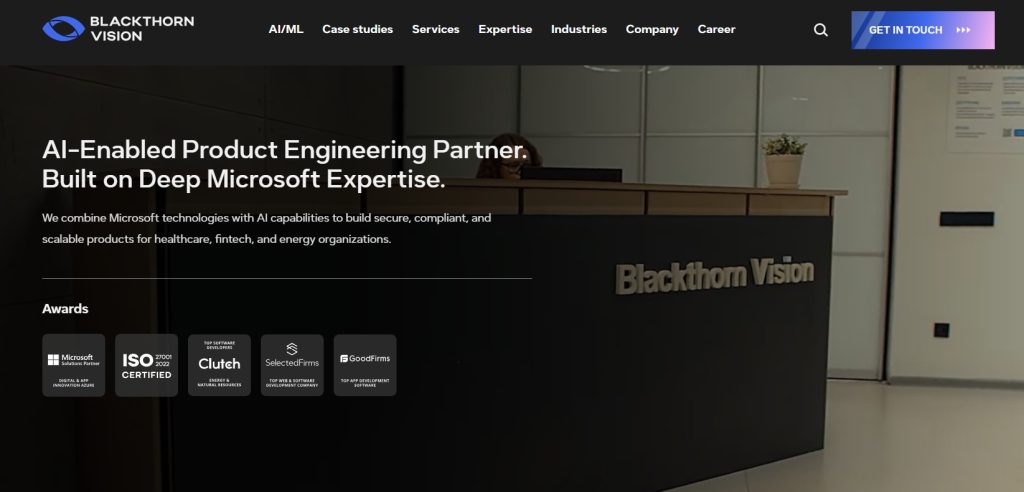
Blackthorn Vision is a premier IT outsourcing firm that has built a stellar reputation for delivering high-end technical solutions, particularly for the U.S. and Western European markets. With a focus on Microsoft technologies and complex web/mobile ecosystems, they employ over 120 highly skilled engineers. They are often cited as a top-tier boutique provider for companies that need deep architectural expertise and a partner that can handle the full “discovery-to-delivery” lifecycle.
For U.S. tech leaders, Blackthorn Vision is an ideal outsourced IT service provider when the project requires more than just “coding.” They excel at business analysis and architectural design, ensuring that the software built is scalable and future-proof. Their smaller size compared to giants like Accenture allows for a more personalized, high-touch relationship. They are frequently ranked as a top provider on platforms like Clutch, reflecting their commitment to quality and their ability to solve complex technical challenges for demanding American clients.
2. Cognizant
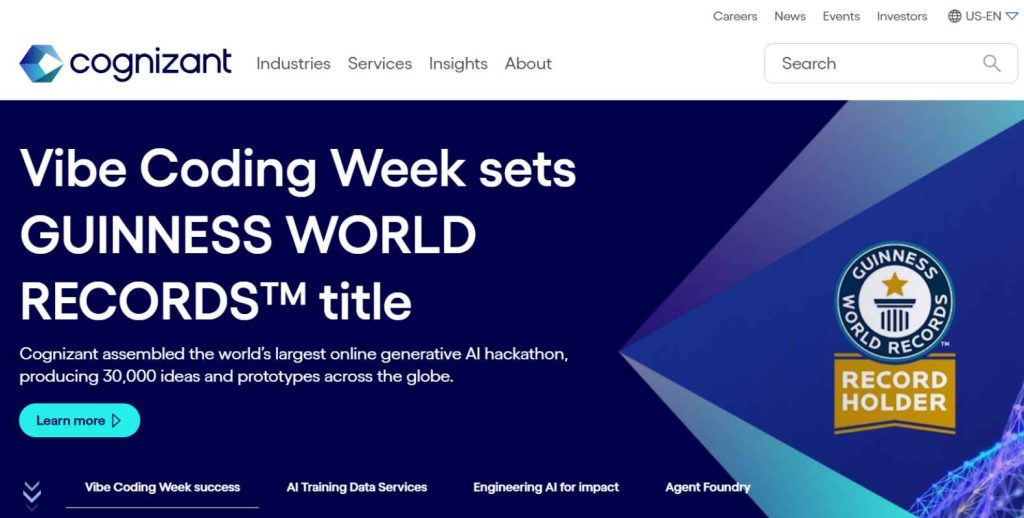
As of 2026, Cognizant has solidified its position as a leading IT outsourcing company with a total headcount of approximately 351,600 professionals. Headquartered in Teaneck, New Jersey, it offers a distinct advantage for U.S. clients through its strong domestic presence combined with massive offshore delivery capabilities in India. The company reported a robust $21.1 billion in revenue for the previous fiscal year, driven largely by its expansion into health sciences and financial services, where regulatory compliance and data security are paramount.
Cognizant is particularly recognized for its “Intuitive Operations” platform, which uses AI to automate routine IT tasks and improve system reliability. For companies looking for outsourced IT solutions that blend software engineering with business process outsourcing (BPO), Cognizant provides a balanced approach. Their current strategy focuses heavily on “Modernizing the Core,” helping legacy American businesses migrate their aging infrastructure into the cloud while implementing modern DevOps pipelines to increase deployment frequency.
3. DXC Technology
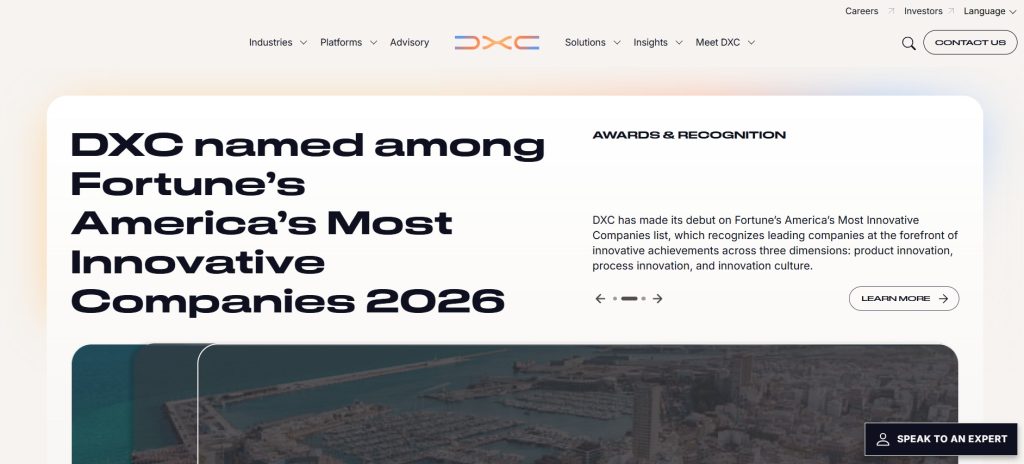
DXC Technology is a powerhouse in the IT outsourcing firms sector, projecting a total annual revenue of approximately $12.69 billion for fiscal 2026. Formed by the merger of CSC and the Enterprise Services business of Hewlett Packard Enterprise, DXC specializes in managing complex, mission-critical systems for large-scale organizations. They are renowned for their “Enterprise Technology Stack,” which covers everything from cloud and security to IT outsourcing and applications. With a focus on stability and operational excellence, they manage the infrastructure for many of the world’s largest banks and airlines.
While many providers focus solely on the “new,” DXC is an expert in managing the “existing.” They are a premier IT outsourcing service provider for companies that need to keep legacy mainframes running while gradually transitioning to the cloud. In 2026, DXC has seen significant growth in its “Digital Engineering” segment, where it helps clients build and run high-performance software environments. Their value proposition for U.S. clients is their ability to reduce operational risk during high-stakes technological transitions.
4. EPAM Systems
EPAM Systems has evolved from a boutique software engineering firm into a global leader in IT software outsourcing services, guiding toward a 2026 revenue target of over $5.7 billion. With a workforce of more than 62,000 “EPAMers” across 55+ countries, the company is famous for its “engineering-first” culture. Unlike traditional BPO firms, EPAM focuses on complex product development and digital platform engineering. They have successfully pivoted to become “AI-native,” integrating artificial intelligence and ML into every stage of the software development lifecycle to increase velocity for their clients.
For U.S. startups and tech-driven enterprises, EPAM is often the preferred choice for high-end product design and innovation. As an IT outsourcing services company, they excel at building sophisticated digital ecosystems from scratch. Their 2026 growth strategy is heavily supported by their strong presence in North America, which accounts for over $3.2 billion of their revenue, ensuring that American clients receive top-tier account management and strategic consulting alongside their global delivery teams.
5. SoftServe
SoftServe is one of the largest IT outsource companies with roots in Eastern Europe, now boasting a global presence with over 12,000 employees and its U.S. headquarters in Austin, Texas. Having crossed the $1 billion revenue mark, SoftServe has become a dominant force in digital consulting and software development services. They are highly specialized in niche areas such as Big Data, AI, and healthcare technology. Their engineering teams are known for their high degree of technical proficiency, often acting as the R&D arm for mid-to-large-scale U.S. enterprises.
What sets SoftServe apart as an IT outsourcing service provider is its deep commitment to “Experience Design” (UX/UI), ensuring that the software they build is as intuitive as it is powerful. They have established several “Centers of Excellence” focused on emerging tech like the Internet of Things (IoT) and cybersecurity. For U.S. firms seeking a high-quality nearshore or offshore partner with a proven track record of innovation, SoftServe offers a sophisticated blend of consulting and execution that rivals the largest global firms.
6. BairesDev
BairesDev has carved out a unique space in the IT outsourcing services market by focusing exclusively on the “Top 1% of IT Talent” in Latin America. With a headcount of approximately 4,100 professionals, they are the leading nearshore partner for U.S.-based companies that require real-time collaboration within similar time zones. They utilize a proprietary AI-powered recruitment platform to vet hundreds of thousands of applicants, ensuring that their clients only work with the most skilled engineers in the region.
As an outsourced IT service provider, BairesDev specializes in staff augmentation and dedicated teams, allowing U.S. companies to scale their engineering capacity almost overnight. Their clients range from Google and Adobe to high-growth Silicon Valley startups. For an American C-suite, BairesDev offers the perfect balance: the cost-efficiency of offshoring with the cultural and linguistic alignment of a domestic team, making them an ideal choice for an agile software development company and rapid prototyping.
7. ScienceSoft
Based in McKinney, Texas, ScienceSoft is a veteran IT outsourcing company with over 35 years of experience and an estimated annual revenue of $147 million. While smaller than the global giants, they punch well above their weight in terms of service quality and client satisfaction. They employ over 700 experts and are highly regarded for their “full-spectrum” approach, providing everything from IT infrastructure support to custom software development and cybersecurity penetration testing.
ScienceSoft is a top-tier choice for mid-sized U.S. businesses looking for outsourced IT support services. They are particularly strong in the healthcare, retail, and manufacturing sectors. Their value proposition is built on transparency and reliability; they are one of the few outsourced IT providers that offer a 100% success rate on their projects through rigorous quality assurance and project management protocols. For a U.S. IT director, ScienceSoft represents a “safe” and highly competent partner for long-term operational support.
8. Itransition
Itransition is a global IT software outsourcing services provider with over 2,200 employees and a strong focus on the U.S. and European markets. They are specialists in enterprise application development and software product engineering. With a tenure average of 5 years among their staff, Itransition maintains a level of institutional knowledge that is rare in the high-turnover world of IT outsourcing. They focus on delivering end-to-end solutions, from initial business analysis to post-deployment support.
For U.S. clients, Itransition serves as a comprehensive IT outsourcing service provider that can handle complex integrations within existing tech stacks. They have deep expertise in platforms like Salesforce, SAP, and Microsoft Dynamics 365. This makes them an excellent partner for “Digital Workplace” initiatives where the goal is to improve internal business processes. Their ability to blend technical skill with business-process expertise allows them to deliver ROI-focused solutions that resonate with American business leaders.
9. Chetu
Chetu is a unique player in the IT outsourcing services company space, headquartered in Sunrise, Florida, with a massive global delivery center. In 2026, they continue to grow, having reported record-breaking revenues exceeding $75 million. Chetu’s model is built on “industry-specific expertise” – they have dedicated teams for over 40 different industries, from gaming and hospitality to finance and agriculture. This ensures that their engineers already understand the specific challenges and regulations of a client’s sector.
As an IT outsource service, Chetu is known for its “no-contract” flexibility and its “on-demand” model, which is highly attractive to U.S. small and medium businesses (SMBs). They provide a dedicated account manager based in the U.S. for every project, ensuring clear communication and accountability. For American companies that need specialized software development without the overhead of a long-term, rigid contract, Chetu provides a scalable and highly professional alternative to traditional outsourcing models.
10. Accenture
Accenture remains the undisputed titan of the IT outsourcing service providers landscape, reporting a staggering $18.7 billion in revenue for the first quarter of fiscal year 2026 alone. With a global workforce that exceeds 730,000 employees, Accenture operates at a scale that few can match, specializing in massive-scale digital transformation and “Strategy & Consulting.” For U.S. enterprises, they are the go-to partner for integrating Generative AI into enterprise workflows, having already secured over $2.2 billion in advanced AI bookings this year.
The company’s strength lies in its “Industry X” initiative, which focuses on the digital redesign of manufacturing and production. As an IT outsourcing services company, Accenture doesn’t just provide staff; they provide entire business outcomes, often taking over complete business functions through their Managed Services arm. Their global reach across 120 countries ensures that they can provide onshore, nearshore, and offshore support simultaneously, making them the primary choice for Fortune Global 500 companies seeking a holistic tech overhaul.
Emerging trends shaping the future
As we look toward the future, Agentic AI and autonomous automation are radically transforming outsourced IT solutions for the American market. We are moving away from manual ticket-taking toward a world where AI agents can predict system failures and resolve them before a human even notices. Top-tier outsourced IT support services are already integrating these tools to provide lightning-fast response times and unparalleled system stability. This shift allows human engineers to focus on high-value creative tasks and strategic architecture rather than repetitive maintenance. U.S. businesses that leverage these advanced outsource IT services will find themselves at a significant advantage, benefiting from lower costs and higher operational performance.
Another major trend is the integration of Sustainability and Green IT into the outsourcing selection process, which is gaining massive traction among U.S. investors and consumers. Many organizations are using their choice of outsourcing services to meet strict ESG (Environmental, Social, and Governance) goals and SEC requirements. This involves choosing providers that utilize carbon-neutral data centers and sustainable coding practices. Furthermore, the rise of Fractional Leadership has changed the U.S. startup and mid-market landscape. Instead of hiring a full-time executive, companies can now outsource their service requirements for a CTO or CISO. This “Fractional” model provides high-level expertise at a fraction of the cost, allowing American companies to compete with enterprise-level strategy from day one.
Bottom line
Distinction between a successful enterprise and a stagnant one often lies in how effectively they leverage the global talent pool. IT outsourcing has transitioned from a mere cost-saving maneuver into a high-stakes strategic imperative. For U.S. leaders, the goal is no longer just to “offload” tasks, but to “upload” expertise that accelerates time-to-market and mitigates the complex risks of a digital-first economy. Whether you partner with a global giant like Accenture for enterprise-wide transformation or a specialized firm like Blackthorn Vision for architectural precision, the core objective remains the same: building a resilient, scalable, and innovative technical foundation.
The most successful outsourcing journeys are those rooted in transparency, cultural alignment, and a shared vision for growth. As you evaluate IT outsourcing service providers, prioritize those who offer more than just technical proficiency; look for partners who challenge your strategy, secure your intellectual property, and align their success with your business outcomes. By choosing an IT outsourcing company that acts as a true extension of your team, you aren’t just managing your IT costs – you are future-proofing your business for the next decade of technological evolution. Select your partner with the same rigor you would a co-founder, and the ROI will follow.
FAQ
How do I ensure regulatory compliance (like HIPAA, CMMC, or GDPR) when outsourcing?
Our biggest fear is intellectual property (IP) theft. How do we contractually protect our proprietary code?
U.S. IP law is robust, but enforcement changes significantly across borders. When vetting it outsourcing companies, the MSA (Master Services Agreement) must contain ironclad work-for-hire provisions, explicitly stating that all IP created belongs to you from the moment of inception. The contract must satisfy U.S. governing law (e.g., Delaware or New York) to ensure clear legal recourse. Additionally, leading outsourced it support companies enforce technical IP protection through rigid internal policies, such as mandatory secure virtual desktops (VDI), disabling USB ports, and network monitoring to prevent code leakage.
What is the ideal balance between Onshore, Nearshore, and Offshore providers?
The “Hybrid” model is the dominant U.S. strategy. This involves using it outsource companies from all three zones to maximize cost-efficiency, agility, and risk management. For high-stakes architectural design and direct executive consulting, use an onshore vCIO. For core development teams that need active daily collaboration (e.g., Agile squads), utilize nearshore talent in Latin America. For 24/7 infrastructure monitoring and back-office support, leverage an offshore team for maximum cost savings. This diverse portfolio ensures your operations are resilient to regional instability.
How do we prevent Scope creep and Hidden fees in a large, multi-year project?
Scope creep usually stems from vague project definitions. To prevent it, transition from simple time-and-materials billing to Outcome-Based Pricing models (as detailed in Section 4). Your contract with the it outsourcing service provider must explicitly define success through measurable “Acceptance Criteria” for every milestone. Implement a rigid Change Control Board (CCB) process for any new requests, ensuring every single change is documented, estimated for its budget impact, and signed off on by both a technical and financial lead before work begins.
We have a unique, custom tech stack. Will an external team be able to manage it?
The “plug-and-play” era of outsourcing is over; modern it outsourcing firms excel in managing complex, heterogeneous environments. The right outsourced it service provider will have established “Centers of Excellence” for specific technologies (like legacy mainframe modernization or niche AI modeling). During the selection process, demand to speak directly with their technical lead for your specific stack, not just a salesperson. The best vendors can provide a “Pilot Team” to conduct an audited discovery session, creating a technical feasibility roadmap before you sign a long-term agreement.
You may also like
-
 September 8, 2026Read in 16 min.
The AI-Native SDLC: From Writing Software to Orchestrating It
An AI-native SDLC cuts delivery time by about half without loosening a single quality gate. See the three eras, the toolchain and the guardrails. -
 September 4, 2026Read in 36 min.
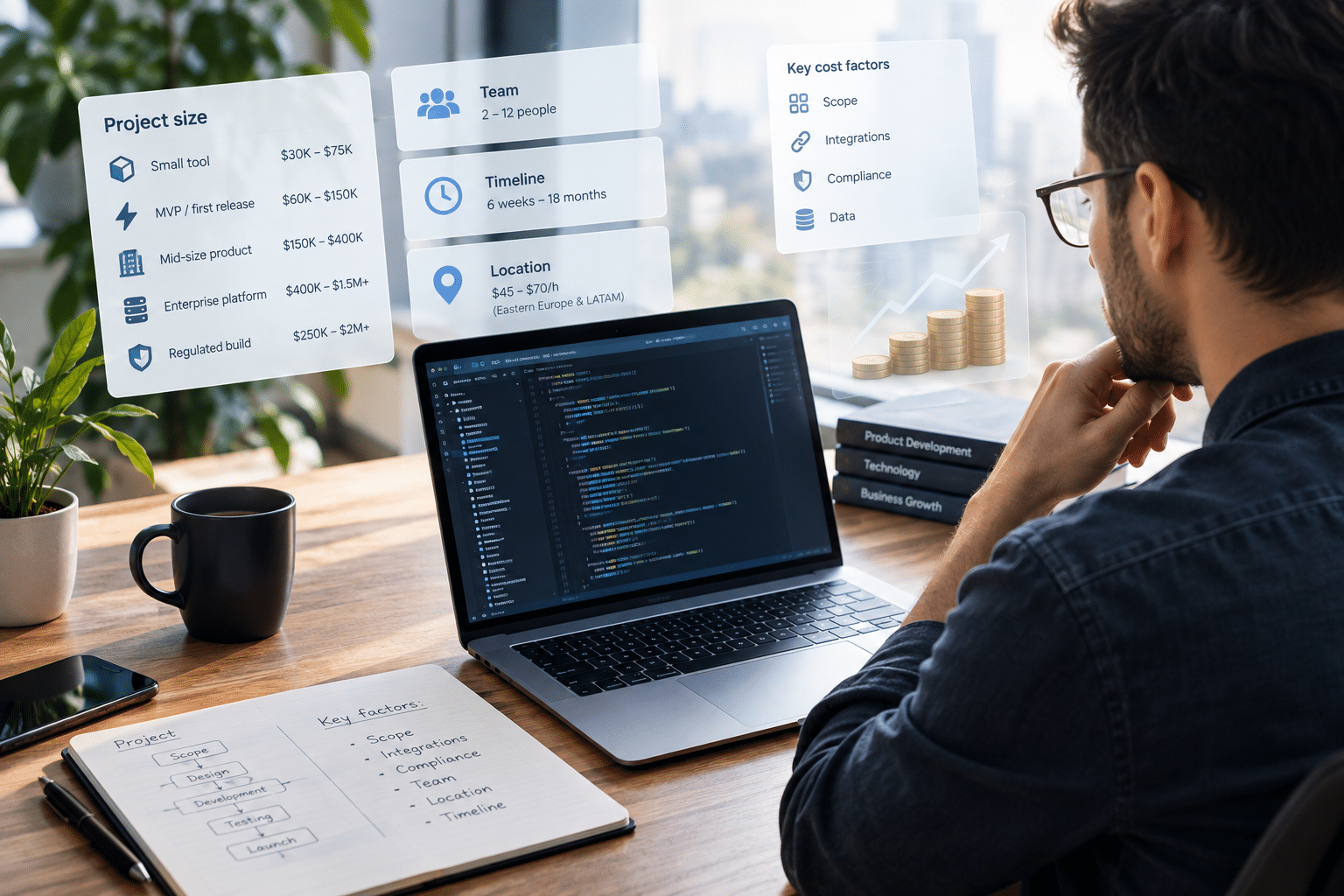
Custom software development cost: Real ranges, rate cards, and how to budget
How much custom software development costs. Explore real pricing ranges, hourly rates, key cost factors, hidden expenses, and budgeting tips. -
 September 2, 2026Read in 36 min.
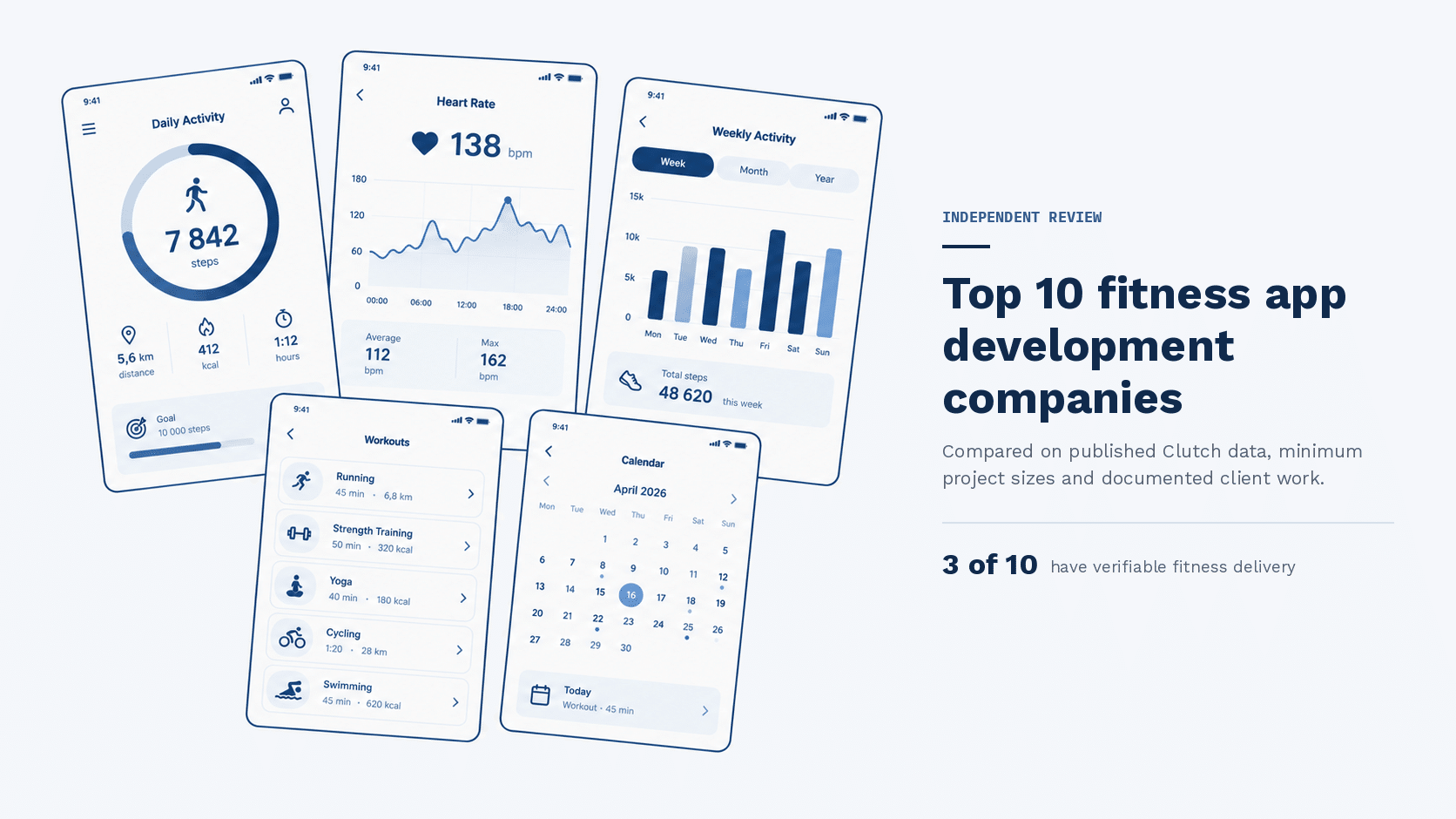
Fitness app development companies: An independent shortlist
10 fitness app development companies compared on verified data, published pricing, and real client work. Only three have documented fitness delivery. -
 August 27, 2026Read in 36 min.
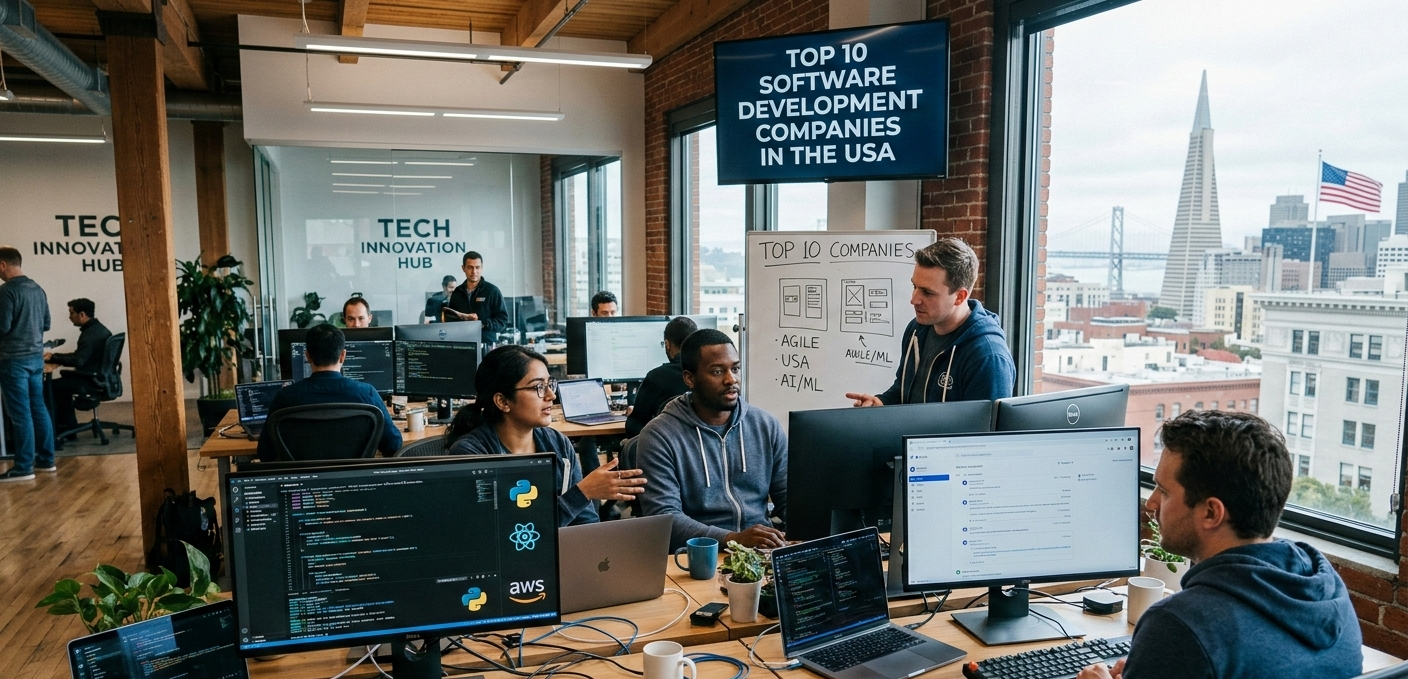
Top software development companies in the USA
Find the best US-based software developers. From AI to enterprise web apps, here are the top 30 software development companies in the USA you should hire in 2026. -
 August 19, 2026Read in 22 min.
Robotic Process Automation in healthcare: Definition, benefits, and real cases
From patient scheduling to claims processing: explore proven RPA use cases in healthcare, backed by real data, ROI benchmarks, and compliance guidance. -
July 16, 2026Read in 18 min.
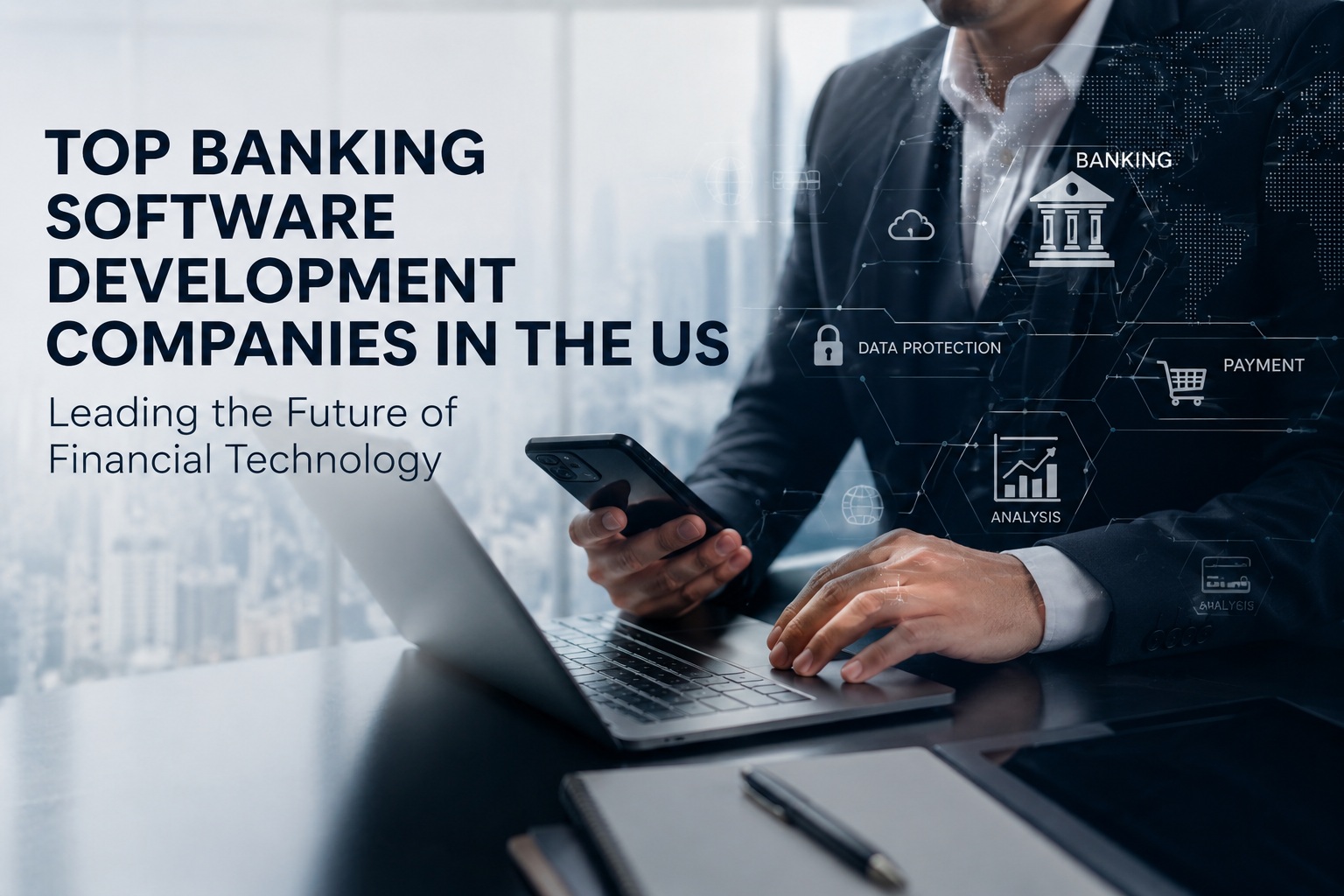
Top 10 Banking Software Development Companies in the US
An independent, verified list of the top banking software development companies in the US, plus a practical guide to choosing the right partner -
 July 16, 2026Read in 17 min.
Custom ERP software for manufacturing – Built on Azure and .NET
Off-the-shelf ERP forcing workarounds? Blackthorn Vision, a manufacturing software company, builds ERP software for manufacturing on Azure and .NET. -
 June 30, 2026Read in 10 min.
Software development company in Boston: Custom solutions for a research-driven city
Boston software development company building HIPAA-aware healthcare, biotech, and enterprise software on .NET and Azure. Microsoft Solutions Partner, 4.8/5 on Clutch -
 June 18, 2026Read in 10 min.
Software Development Company in Washington State: Custom Solutions Across the Region
Software development company serving all of Washington State. Cloud-first custom software on .NET and Azure. Microsoft Solutions Partner since 2009. -
June 17, 2026Read in 12 min.
Software Development Company in Seattle: Cloud-First Custom Solutions
Seattle software development company building cloud-first custom software on .NET and Azure. Microsoft Solutions Partner trusted since 2009. Talk to us