
Most custom applications land between $50,000 and $250,000 depending on scope and complexity, with enterprise-grade platforms regularly passing $500,000. Simple MVPs built with offshore teams can come in under $30,000, though that figure rarely survives contact with real product requirements.
Top software development companies in the USA
 36 minutes read
Content
All vendors will tell you they can build the product you need, and most of them can. Working out which one fits your budget, your time zone, and the kind of product you’re building – that is the hard part.
This list scores 30 software development companies in USA, plus the software development firms serving US buyers from abroad. All of them were scored with a single composite formula that combines independent ratings, enterprise capability, recognition, and value for money. Clutch ratings, team sizes, and hourly rates are shown in a single table so you can shortlist in about five minutes.
The state of the US software development market
The United States generates more software revenue than any other country – around $353.5 billion in 2024, and demand is still climbing. The market is projected to reach $444.6 billion by 2029, pushed along by enterprise digitization, cloud adoption, and AI features arriving on almost every product roadmap.
That scale is the major reason why finding a software development company USA buyers can rely on takes longer than it should: everyone is selling similar products and services into the same market.
What makes hiring so hard right now?
Over 60% of IT services leaders name labor-market gaps as their biggest problem. The shortage bites hardest exactly where demand is growing fastest: AI engineering, cybersecurity, and cloud architecture.
The strange part is that the number of people claiming software engineering expertise has gone up, not down. The 2022 boom absorbed almost anyone who could pass a screen, and bootcamp graduates, career switchers, and self-taught developers landed offers within weeks, joining teams that were hiring faster than they could mentor.
Plenty of those hires became strong engineers. Plenty didn’t, because they spent two or three years working inside an architecture decided by somebody else, on well-funded products where individual mistakes were not a problem. Three years of employment history doesn’t equal three years of problem-solving.
Now, active job postings sit well below 2022 peaks, down as much as 90% at some large tech employers. Smaller firms and non-tech industries chase the same shrinking pool of senior engineers.
For a company evaluating development software companies, all these factors produce a market where everyone claims expertise but few can evidence it, and where US rates keep climbing even as delivery quality gets harder to guarantee.
What’s working instead
The market’s answer to this challenge has been a shift to global delivery. 72% of businesses now outsource application and software development, while Eastern European and Latin American engineering talent works at 40-60% of US rates with comparable technical depth. The time zone and communication problems that made offshore delivery painful ten years ago have largely been sorted out by better tooling, more experienced distributed teams, and the post-pandemic normalization of remote work.
The best partners for US companies today aren’t necessarily the local ones; some of the strongest software development firms serving American clients bill from Kraków, Lviv, Tallinn, or Buenos Aires. They’re the ones with the domain expertise, market fluency, and track record to work as a solid and reliable technical partner.
Our ranking methodology: How do we choose the best software development companies in USA?
Every software development company in USA on this list was scored the same way, with a single composite score:
Independent ratings – 30%. Verified client reviews on Clutch, weighted by both score and review volume. We consider 4.9 across 84 reviews to be more informative and valuable than a 4.9 across three. We also read for reviews that describe specific project outcomes to spot consistency across numerous engagements.
Enterprise capability – 25%. Team size, delivery footprint, certifications (ISO 27001, SOC 2, Microsoft, AWS, Google Cloud) and evidence of running multi-year programs. A 5,000-person software development company and a 50-person MVP studio are both good, but for solving different problems.
Quality and recognition – 25%. Verifiable case studies, named client references, awards and industry listings such as the IAOP Global Outsourcing 100, plus engineering retention where the company publishes it. Retention is a very important criterion in our ranking, because teams that stay together ship faster throughout the years and can commit to long-term enterprise needs.
Value for money – 20%. Published hourly rate bands set against the seniority and depth delivered at that rate. This rewards firms that give you senior engineers at mid-market prices, and it costs points from anyone charging premium rates for a junior bench.
Track record and longevity were the starting point. We looked for software companies in United States with demonstrable histories of delivering complex software projects for USA clients, prioritizing those with verifiable case studies, named client references, and multi-year engagement patterns over firms whose portfolios are heavy on logos and light on detail.
Technical depth and specialization were assessed by service offering, technology stack coverage, cloud and security certifications, and – where available – the seniority and retention rates of engineering staff. A vendor that can speak concretely to how it handles architecture decisions, code review, QA, and DevOps is meaningfully different from one that lists every technology on its services page without evidence of depth.
Pricing transparency and engagement model flexibility were factored in as practical considerations for USA buyers. Vendors that offer clear rate ranges, defined engagement structures, and straightforward contract terms score better than those whose pricing requires an extended sales process to understand.
Top 30 software development companies in the USA
| # | Company | Clutch rating | Team size | Rate ($/hr) | Specialization |
|---|---|---|---|---|---|
| 1 | Cognizant | 340,000+ | High | IT services, enterprise-scale delivery | |
| 2 | Thoughtworks | 11,000 | $100-149+ | Premium engineering consultancy | |
| 3 | BairesDev | 1,000-9,999 | $50-99 | Nearshore, staff augmentation | |
| 4 | ScienceSoft | 750+ | $50-99 | Healthcare, fintech, QA & testing | |
| 5 | Intellias | 3,000 | $50-99 | Product engineering, AI, mobility | |
| 6 | Avenga | 6,000+ | $50-99 | Enterprise IT, life sciences | |
| 7 | Vention | 3,000+ | $50-99 | Custom development, dedicated teams | |
| 8 | ELEKS | 2,100+ | $50-99 | R&D, data science, consulting | |
| 9 | Ciklum | 3,000 | $50-99 | Digital engineering, R&D | |
| 10 | Blackthorn Vision | 150 | $50-99 | Microsoft, healthcare, fintech | |
| 11 | Imaginary Cloud | 100 | $50-99 | Web/product development, design | |
| 12 | LeewayHertz | 250 | $50-99 | AI, blockchain, generative AI | |
| 13 | Goji Labs | 79 | $100-149 | MVP, product design | |
| 14 | Artkai | 150 | $50-99 | Product design, UX-led development | |
| 15 | Anadea | 150 | $25-49 | Web/mobile, custom software | |
| 16 | Zibtek | 100 | $25-49 | Staff augmentation, custom development | |
| 17 | Arbisoft | 1,000+ | $25-49 | Product engineering, data, ML | |
| 18 | Simform | 1,000-9,999 | $25-49 | Cloud, AI/ML, product engineering | |
| 19 | Yalantis | 500 | $50-99 | Fintech, healthcare, logistics | |
| 20 | SoftServe | 13,000 | $50-99 | Enterprise, cloud, big data | |
| 21 | Brights | 150 | $50-99 | Web/product, mobile | |
| 22 | EPAM Systems | 55,000+ | $50-99+ | Enterprise engineering | |
| 23 | Intellectsoft | 500 | $50-99 | Enterprise software, construction tech | |
| 24 | Rootstrap | 150 | $50-99 | Digital products, mobile | |
| 25 | Designli | 50 | $100-149 | MVP focus, startups | |
| 26 | Utility | 100 | $100-149 | Product studio, mobile/web | |
| 27 | Fingent | 500 | $50-99 | Custom software, enterprise apps | |
| 28 | Itransition | 3,000+ | $50-99 | Microsoft/Azure, enterprise software | |
| 29 | Velvetech | 150 | $50-99 | Enterprise mid-market, IoT | |
| 30 | Geniusee | 250 | $50-99 | Fintech, edtech, SaaS |
The 30 best software companies in USA
The profiles below cover every top software development company in USA plus the overseas firms serving US clients. They’re listed here in no particular order; look at them as a shortlisting tool. The companies are of different specializations and sizes. You’ll notice that this list of top software development companies in USA includes both – firms that would be an excellent fit for your project and those that would be a poor one. Don’t judge by the size, years on the market, or the rating – look for those that offer exactly what you need at the rate you can afford.
Cognizant
Type: Global IT services corporation
HQ: Teaneck, NJ
Founded: 1994
By headcount, Cognizant is the largest software development company in USA on this list, at over 340,000 employees, and it operates at a scale nothing else here approaches. It covers IT services, application management, BPO, and large-scale delivery across banking, healthcare, insurance, and manufacturing.
For a global rollout across dozens of markets with follow-the-sun support, that footprint is hard to replicate. The counterweight is the one you’d expect from any organization of this size: pyramid staffing, slower decision cycles, and account management layers between you and the engineers.
Strengths: Global delivery footprint, industry-specific practices, managed services depth.
Best for: Enterprises running multi-country programs that need a vendor with an office in every market.
Thoughtworks
Type: Premium engineering consultancy
HQ: Chicago, IL
Founded: 1993
Rate: $100–149+/hr
Thoughtworks is the software engineering company where much of modern delivery practice was first documented – continuous delivery, evolutionary architecture, the Technology Radar. You’re buying engineering judgment as much as engineering hours, and the rate reflects that.
Teams tend to arrive opinionated about testing, deployment cadence, and architecture, which is exactly what some organizations need and exactly what others will find abrasive. This is one of the most expensive ways on this list to build a straightforward CRUD application. At the same time, it’s among the best ways to fix an engineering organization that keeps shipping late.
Strengths: Engineering practice leadership, architecture and delivery consulting, senior bench.
Best for: Companies who need to change their engineering culture.
BairesDev
Type: Nearshore staff augmentation and project delivery
HQ: San Francisco, CA
Rate: $50–99/hr
BairesDev is one of the largest Latin American software outsourcing firms, with several thousand engineers across Argentina, Brazil, Colombia and Mexico. Its pitch leans on selective hiring and full overlap with US working hours, and the 4.9 rating across 59 Clutch reviews backs up the delivery claim.
Engagements run from single-engineer augmentation up to full project delivery. Because the model is built around placing people quickly, quality depends more on the individuals assigned than on a house methodology, so always interview the engineers, not just the account team.
Strengths: Time zone alignment with the US, large talent pool, competitive pricing, broad tech coverage.
Best for: US product teams that need to add vetted engineers fast while working in real-time.
ScienceSoft
Type: Full-service IT consultancy
HQ: McKinney, TX
Founded: 1989
Rate: $50–99/hr
Operating since 1989, ScienceSoft covers custom development, IT consulting, cybersecurity, data analytics, and ERP/CRM work for mid-market and enterprise clients. The vertical knowledge in healthcare, banking, retail and manufacturing is real and hard to acquire quickly. It’s also one of the more compliance-oriented firms here, with ISO certifications and Microsoft and AWS partnerships that stand up to enterprise vendor review. QA and testing is a standalone strength, which is unusual and useful if you’ve inherited a doubtful codebase.
Strengths: Long track record, broad service catalog, vertical domain expertise, compliance-oriented.
Best for: Regulated mid-market companies who need domain knowledge and documentation, not just engineers.
Intellias
Type: Product engineering and digital consulting
HQ: Chicago, IL
Founded: 2002
Rate: $50–99/hr
Intellias started in Lviv, Ukraine, in 2002 and now runs around 3,000 engineers with a US headquarters in Chicago and delivery across Europe. Its distinctive strength is mobility and automotive – software-defined vehicle work with OEMs and Tier-1 suppliers, which is some of the most demanding embedded engineering there is.
Alongside that sit solid financial services, retail and telecom practices, and a growing AI portfolio. For a US buyer, this is a software engineering company with genuine specialization rather than a generalist bench, which should be considered if your product has hard real-time or safety requirements.
Strengths: Automotive and mobility depth, AI and data engineering, long-running enterprise accounts.
Best for: Mobility, IoT and financial services products that need domain-specific engineering.
Avenga
Type: Enterprise IT and consulting
HQ: Cologne, Germany
Founded: 2019
Rate: $50–99/hr
Avenga was formed in 2019 out of four firms: IT Kontrakt and Solidbrain in Poland, CoreValue in Ukraine and the US, and Sevenval in Germany. It now runs 6,000-plus specialists. The life sciences and pharma practice is the standout: validated systems, regulated data and the documentation culture that comes with them are not things most software development agencies can fake.
Insurance, finance and automotive round out the portfolio. As with any group assembled through mergers, capability varies by unit, so ask which legacy team is staffing your project.
Strengths: Life sciences and pharma depth, regulated-industry experience, large European delivery base.
Best for: Pharma, life sciences and insurance companies with validation and compliance requirements.
Vention
Type: Custom development and dedicated teams
HQ: New York, NY
Founded: 2002
Rate: $50–99/hr
Formerly iTechArt, Vention has been building for VC-backed startups and fast-growing tech companies since 2002, with engineering spread across Europe, Latin America, and the UK. Its 101 Clutch reviews at ~4.9 make it one of the most-reviewed firms on this list. Consistency across a hundred engagements is a stronger signal than a perfect score across five. The house model is dedicated teams that scale up as the product grows. Several published client stories describe going from two engineers to a dozen or more.
Strengths: Startup and scale-up experience, high review volume, elastic team scaling.
Best for: Funded startups who expect to triple their engineering headcount within a year.
ELEKS
Type: Software engineering and consulting
HQ: Tallinn, Estonia
Founded: 1991
Rate: $50–99/hr
ELEKS has been building software since 1991, which makes it one of the older independent firms working with US clients. It shows in the way the company sells: less marketing gloss, more engineering.
Around 2,100 people work across Ukraine, Poland, Croatia and Estonia, with US offices in Chicago and Las Vegas. The strongest practices are R&D, data science and technology consulting – the kind of work where the answer isn’t known at kickoff.
Strengths: R&D and data science, 30-plus years of delivery history, consulting-led engagements.
Best for: Companies with an unsolved or unclear technical problem.
Ciklum
Type: Digital engineering and R&D
HQ: London, UK
Founded: 2002
Rate: $50–99/hr
Founded in Denmark, headquartered in London, and delivering from Ukraine, Poland, Spain, Pakistan, and the US, Ciklum has spent two decades building R&D centers for clients. The model suits companies that want a captive team with their own culture and hiring input, but without setting up a legal entity abroad.
Clients include Just Eat, Flixbus, and Zurich Insurance. Roughly 3,000 people spread across a dozen countries means delivery quality varies by center, so ask which office your team will sit in.
Strengths: R&D center model, wide geographic coverage, enterprise client base.
Best for: Scale-ups and enterprises building a long-term offshore engineering hub.
Blackthorn Vision
Type: Custom software development
HQ: Ukraine, with a Wrocław office (US clients via remote delivery)
Founded: 2009
Rate: $50–99/hr
Blackthorn Vision is a software development firm that has built a strong reputation for long-term client partnerships. Per our internal data, client satisfaction averages 95% with most projects lasting longer than five years. The company serves startups and enterprises across healthcare, fintech, biotech, energy, oil & gas, and travel, covering the full development lifecycle from product discovery and UX design through implementation and post-launch optimization.
The company is ISO/IEC 27001-certified and a Microsoft Solutions Partner, with roughly 75% of engineers at senior or middle level. Those retention figures ensure that the engineer who joins your project remains with you for years.
Our work covers healthcare, fintech, biotech, energy, oil & gas, and travel, from product discovery and UX through build and post-launch support. The cultural difference clients mention most is direct engineer-to-client contact. Engagements run as dedicated teams or fixed-scope product builds.
Strengths: Long-term partnership model, direct engineer communication, high retention and team stability, experience in regulated industries, ISO 27001 security posture.
Best for: Healthcare, fintech, and energy companies wanting one stable team for a multi-year product.
See how our dedicated team model works in practice.
Imaginary Cloud
Type: Web and product development
HQ: Lisbon, Portugal (London office)
Rate: $50–99/hr
Imaginary Cloud is a compact European team of about 100, delivering web platforms and digital products with a strong design practice attached. European working hours give useful morning overlap with US East Coast teams and none with the West Coast, which is worth being honest about before signing.
Ratings are high, and engagements tend to be well-scoped product builds rather than open-ended augmentation. For a US buyer wanting European delivery standards without enterprise scale, this is would be one of the most sensible choices.
Strengths: Design-led web and product work, EU data handling, senior small-team delivery.
Best for: East Coast companies building a well-defined web product with a European partner.
LeewayHertz
Type: AI and blockchain development
HQ: San Francisco, CA
Founded: 2007
Rate: $50–99/hr
Founded in 2007 by Akash Takyar, LeewayHertz moved early into generative AI and now builds AI agents, enterprise LLM platforms, and data engineering for finance, healthcare, manufacturing, logistics, insurance and retail. In September 2024 it was acquired by The Hackett Group, which changes the proposition: you’re no longer hiring an independent boutique, you’re hiring the AI delivery arm of a listed consultancy, with the governance and the pricing pressure that implies.
Since there are only nine Clutch reviews (a thin base for a company this size), we recommend to ask directly for references in your industry.
Strengths: Generative AI and LLM application experience, blockchain depth, San Francisco base.
Best for: Companies adding AI capability to an existing product with a defined use case.
Goji Labs
Type: MVP and product design studio
HQ: Los Angeles, CA
Rate: $100–149/hr
Goji Labs has built product strategy, UX research, design and development work since 2014, concentrated in EdTech, FinTech, HealthTech and nonprofit products. The company says its partners have collectively raised over a billion dollars in venture funding, which means their products are built to survive a fundraise, not just an impressive release.
The 84 Clutch reviews at ~4.9 are the most useful signal here, because for a team of roughly 79 people that volume means the delivery experience is repeatable rather than dependent on which project manager you draw. Premium rates for the size, which buys a US team that will argue with your scope.
Strengths: MVP delivery, product design, high and well-evidenced client satisfaction.
Best for: Founders and corporate innovation teams launching a first version fast.
Artkai
Type: Product design and UX-led development
HQ: Ukraine (US-facing delivery)
Rate: $50–99/hr
Artkai runs product discovery, business analysis, UX and engineering as one workflow, with roughly 100–150 people working across fintech, healthcare and technology products. Design leads the pitch, and the portfolio backs it: this is a team for companies whose competitive problem sits in the experience layer. The ownership matters when you’re comparing it against the other boutiques on this list.
Euvic, a Polish group of about 6,000 people, took majority control in late 2023, which brings deeper bench capacity behind a small team, plus the group-level account structures that come with it. Worth asking how staffing works across the Euvic companies now, and who holds your contract.
If you are looking for heavy backend, data or infrastructure work, a firm whose center of gravity sits closer to engineering will serve you better.
Strengths: Product design and UX research, strong client ratings, design-to-delivery in one team.
Best for: Consumer and SaaS products where experience quality is the deciding factor.
Anadea
Type: Web, mobile and custom software
HQ: Ukraine (US-facing delivery)
Founded: 2000
Rate: $25–49/hr
Anadea has been building web and mobile software since 2000, with around 150 people and rates in the lowest band on this list. Twenty-five years of continuous operation is itself a filter – plenty of software development agencies don’t survive two recessions and a war.
The work is more of mainstream custom development and less of specialist engineering. They would be an exactly right choice for the many projects that need competent delivery of a well-understood system.
Strengths: Long operating history, low rates, dependable mainstream web and mobile delivery.
Best for: Budget-conscious companies building conventional web or mobile products.
Zibtek
Type: Staff augmentation and custom development
HQ: Draper, UT
Rate: $25–49/hr
Zibtek was founded in 2009 and opened its first Indian development office the same year, giving it an unusual shape for a small firm: a Utah contracting entity, US project managers, and engineering split across three global locations. Roughly 70 to 100 engineers.
The pricing is a highlight – in 2024 the company cut its published rate from $40 to $28 an hour while stating an average developer experience of 4.5 years, which is an aggressive position and one you should probe. Ask what the 4.5-year average looks like in practice on your team. Expect to bring your own product management and architecture direction.
Strengths: US entity with offshore rates, staff augmentation flexibility, straightforward contracting.
Best for: In-house teams that need extra engineering capacity at the lowest defensible rate.
Arbisoft
Type: Product engineering, data and ML
HQ: Lahore, Pakistan (US presence)
Founded: 2007
Rate: $25–49/hr
Arbisoft runs over 1,000 engineers with a focus on product engineering, data platforms and machine learning, and it has kept several very long-running engagements with US product companies. At $25–49/hr, it’s one of the strongest value plays on this list, with a ~4.9 rating.
The timezone gap is the largest here for a US buyer, so the model works best where written communication is already the norm and daily real-time overlap isn’t a hard requirement.
Strengths: Data and ML engineering, long client tenures, low rates for the seniority delivered.
Best for: Async-comfortable product teams needing sustained data or ML engineering capacity.
Simform
Type: Product engineering and staff augmentation
HQ: Ahmedabad, India (US office in Florida)
Rate: $25–49/hr
Simform is US-headquartered in Orlando, with offices in Los Angeles, Chicago, Vancouver, and Ahmedabad and more than 1,300 engineers. The company is an AWS Premier Tier Services partner with over 200 AWS-certified specialists, alongside Microsoft Solutions Partner designations in four areas and nine advanced specializations backed by 325-plus certifications.
Much of Simform’s engineering sits in India, so real-time collaboration with an East Coast team can be complicated, though US-based account management absorbs part of that.
Strengths: Cloud and DevOps expertise, strong partner certifications, cost-effective at senior level.
Best for: Funded startups and mid-market product companies who work async and want cloud depth cheaply.
Yalantis
Type: Product development
HQ: Ukraine (US-facing delivery)
Founded: 2008
Rate: $50–99/hr
Yalantis has been building since 2008 and now runs roughly 500 specialists from Warsaw with development centers across Europe. It is one of the few firms this size on the list carrying both ISO 9001 and ISO/IEC 27001 certification, which shortens the security conversation considerably if you are in a regulated sector. Domain concentration sits in fintech, healthcare, and logistics.
The company’s capability list runs quite deep: cloud and DevOps, big data and BI, ML and AI, IoT, data science and cybersecurity. The company reports a 96% customer satisfaction rate and more than fifteen partners who have stayed with it for seven years or longer.
Strengths: Fintech, healthcare and logistics domain knowledge, detailed public case studies.
Best for: Mid-market products in regulated domains needing a stable team of 5–20 engineers.
SoftServe
Type: Enterprise digital consultancy
HQ: Austin, TX
Founded: 1993
Rate: $50–99/hr
SoftServe pairs a US headquarters with roughly 13,000 engineers, most of them in Ukraine and Poland. It sits in a useful spot: enterprise-grade process and certifications, but rates well under what a US-only consultancy of similar depth would quote.
Strongest work tends to be in cloud, big data and platform modernisation, with a well-developed R&D practice and long-standing partnerships across the major cloud providers. If your program needs formal architecture governance, a named delivery director, and audit-ready documentation, this software engineering company can produce all three without a Big Four price tag.
Strengths: Enterprise process at mid-market rates, cloud and data depth, mature partner certifications.
Best for: Mid-to-large enterprises modernising a platform who want structure without US consultancy pricing.
Brights
Type: Custom software development agency
HQ: Ukraine, with a Warsaw office
Rate: $50–99/hr
Brights runs about 100 in-house specialists covering web and mobile, SaaS platforms, enterprise software, AI/ML, cloud migration and QA, with UX research and product thinking built into delivery. They have deep expertise in fintech, insurtech, supply chain, retail and media.
The company reports 300+ projects delivered across 15+ countries, an 89% client retention rate, and holds ISO 27001 certification. Engagements run fixed-price or time-and-materials depending on how settled your requirements are.
Strengths: Quality-to-cost ratio, design capability, agile delivery for product companies.
Best for: Consumer-facing and SaaS products that need design and engineering from one team.
EPAM Systems
Type: Enterprise engineering consultancy
HQ: Newtown, PA
Founded: 1993
Rate: $50–99+/hr
EPAM is the heaviest hitter here, and by revenue and headcount, a leading software development company anywhere in this market. Tens of thousands of engineers, a history rooted in Eastern European talent, and a client list that runs deep into the Fortune 500 across financial services, healthcare, retail, and media. Services cover digital transformation, AI/ML, cloud and product engineering, and their QA culture is one of the stronger ones at this scale.
EPAM is set up for multi-year programs with dedicated governance, so a short-term discovery sprint isn’t really what this machine is built for. It is also worth double-checking whether the senior people who show up in the pitch will be the ones staffed on delivery.
Strengths: Scale, enterprise credibility, deep technical bench, strong QA culture.
Best for: Large organizations running complex, long-horizon transformation programs.
Intellectsoft
Type: Custom development and consulting
HQ: Palo Alto, CA
Rate: $50–99/hr
Intellectsoft sells to enterprise and mid-market buyers with a technology-forward pitch: AR/VR, blockchain, AI and IoT alongside conventional web and mobile work. The construction technology practice is the genuine specialism. It’s a catch in an industry with real digitization pressure and few vendors who understand how a jobsite runs.
A Palo Alto address paired with delivery in Eastern Europe and Asia gives US buyers a domestic contracting entity and offshore economics, which simplifies procurement. On the interview, ask which of their capabilities has shipped a production system in the last eighteen months and request the case study. It’s important because a firm of roughly 500 people can’t be equally deep across all frontier technologies at once.
Strengths: Emerging tech focus, construction tech vertical, US-facing account management.
Best for: Enterprises wanting a US-contracted vendor for AR/VR, IoT or construction tech projects.
Rootstrap
Type: Digital product studio
HQ: Los Angeles, CA
Rate: $50–99/hr
Rootstrap blends strategy, UX, and engineering with a product studio mentality, working from LA with nearshore teams in Latin America. Nearshore delivery keeps working hours aligned with US teams.
The company has worked with Google and MasterClass, and is well regarded in startup and media/entertainment circles. The company pushes discovery work before development, which suits clients who need a thought partner rather than an order-taker. At the same time, it can frustrate those who arrive with a finished specification and just want it built.
Strengths: Product thinking, strong UX and design, startup credibility, nearshore delivery.
Best for: Startups and media companies who need help deciding what to build, not just how.
Designli
Type: Mobile and web app studio
HQ: Greenville, SC
Rate: $100–149/hr
Designli is a fully US-based boutique focused almost entirely on MVPs and early-stage products for startups and entrepreneurs. Its IdeaMap process helps non-technical founders define and scope a product before the beginning of the development, preventing the most expensive mistake in this category: building an impressive but a wrong thing.
Being wholly US-based appeals to clients who prioritize domestic teams, IP protection, and close collaboration. On the other hand, rates are higher than offshore or nearshore alternatives while competitive for a US shop of this size.
Strengths: US-based team, startup and MVP focus, strong discovery process, good with non-technical founders.
Best for: First-time founders who need scoping help as much as engineering.
Utility
Type: Digital product agency
HQ: New York, NY (offices in NY and LA)
Founded: 2013
Rate: $100–149/hr
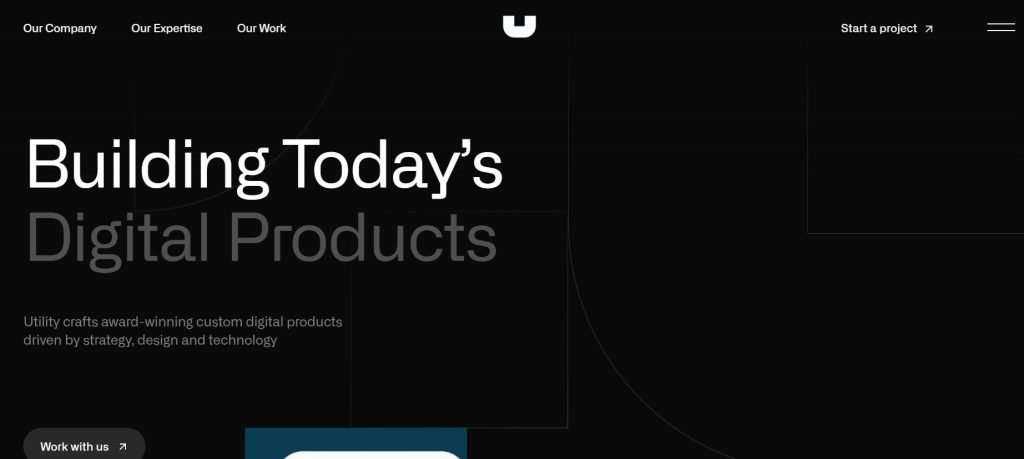
Utility is another US-based company. Located in New York, this digital product agency works on custom mobile apps, web platforms and digital experiences for enterprise brands and venture-backed startups. The client list includes Airbnb, Coca-Cola, Samsung, the NBA, Forbes, Shake Shack and Verizon.
It’s design-led and product-focused, putting strategy and UX ahead of code, with services spanning native iOS and Android, web applications, UX/UI, and AI-powered features. As a lean US boutique, the pricing is premium, but it buys a senior team with real brand credibility.
Strengths: Enterprise brand portfolio, design-led approach, US-based senior team, mobile pedigree. Best for: Consumer brands who need a flagship app built to a high finish.
Fingent
Type: Custom software and enterprise applications
HQ: New York, NY
Founded: 2003
Rate: $50–99/hr
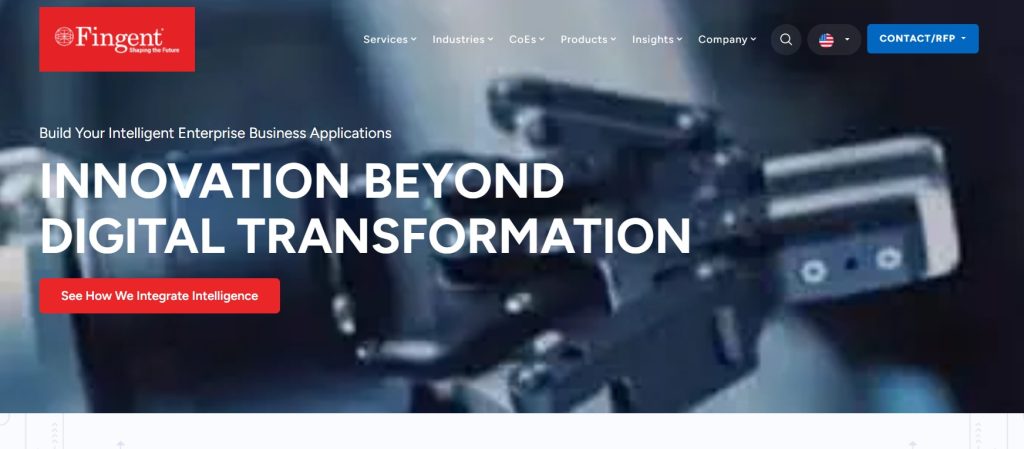
Fingent pairs a New York presence with delivery in India and around 500 people, focusing on enterprise applications, workflow automation and custom platforms for mid-market companies. Ratings sit at the top of the range, and the company tends to work on internal systems – the unglamorous software that runs a business and rarely appears in portfolios. That can be defined as their specialty and as a great one, because replacing a spreadsheet-and-email process with a working system is often worth more than another fancy customer-facing app.
Strengths: Enterprise application development, workflow automation, strong client ratings.
Best for: Mid-market companies replacing manual internal processes with custom systems.
Itransition
Type: Enterprise software development
HQ: Denver, CO
Founded: 1998
Rate: $50–99/hr
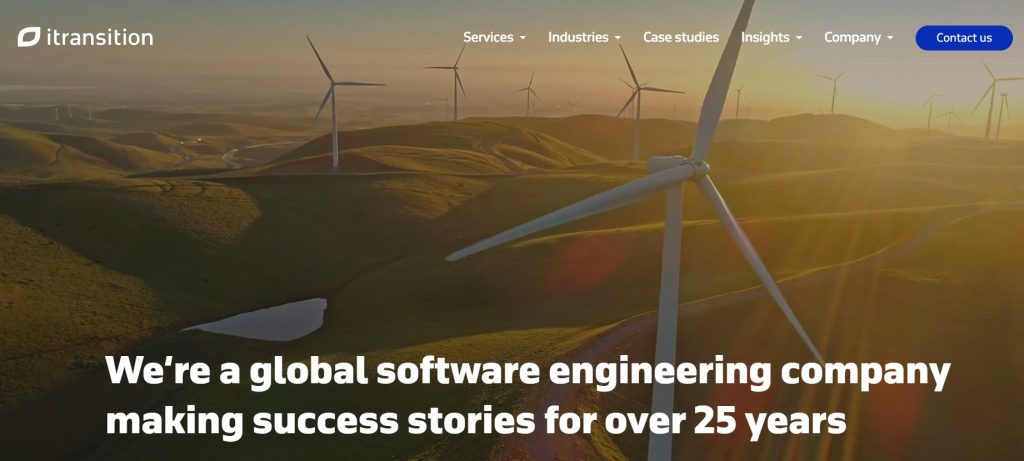
Itransition runs about 3,000 engineers and has one of the deeper Microsoft practices in this group (Azure, .NET, Dynamics 365, SharePoint) alongside data analytics, ERP and CRM work. It’s a good fit for organizations already committed to the Microsoft stack who want a partner fluent in it.
Engagements skew toward enterprise application development and modernisation of older systems. A 4.8 across 40 Clutch reviews and a US headquarters make it an easy vendor to get through procurement.
Strengths: Microsoft and Azure depth, enterprise application modernisation, procurement-friendly US presence.
Best for: Microsoft-stack enterprises modernising internal systems.
Velvetech
Type: Enterprise and mid-market development
HQ: Schaumburg, IL
Rate: $50–99/hr
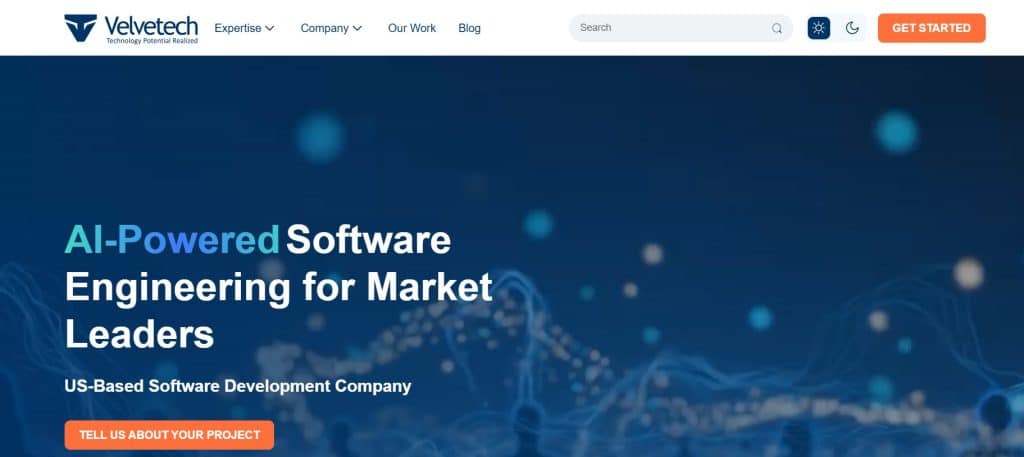
Velvetech is a US-headquartered firm of about 150 people working across insurance, financial services, healthcare and industrial IoT. For buyers who want a software development company in USA with a domestic entity and no timezone overhead, this is a good profile: you get direct access to senior experts, a US contracting entity, and no timezone management overhead, at rates well below what a comparable US consultancy charges.
A 4.9 across 22 reviews suggests consistently good job. Capacity, however, is finite, with 150 people on board. This is a partner for one serious product but not for several parallel programs.
Strengths: US-based team at mid-market rates, IoT and insurance experience, senior accessibility.
Best for: US mid-market companies who want a domestic vendor without enterprise consultancy pricing.
Geniusee
Type: Product development
HQ: Ukraine (US-facing delivery)
Rate: $50–99/hr
Geniusee works mostly with fintech, edtech, and SaaS companies, with about 250 engineers and a ~4.9 rating on Clutch. The sweet spot is a funded startup or scale-up that needs a full product team (engineering, QA, design, delivery management) without the need of actually hiring one.
Fintech work in particular tends to arrive with integration and compliance baggage, and the team has done it enough times. As with most firms this size, senior availability is the constraint worth checking beforehand.
Strengths: Fintech, edtech and SaaS focus, full product teams, strong client ratings.
Best for: Funded startups needing a complete outsourced product team rather than extra hands.
Is it risky to hire a software development firm outside the US?
Hiring a software development company in USA removes the time zone question and typically doubles or triples hourly rate, which is why most buyers at least look abroad. This is the objection that comes up in almost every first call. It gets formulated differently; here’s what we hear the most often.
“We’ll lose control of the project.”
Control comes from process, not proximity.
A dedicated team on a two-week sprint cadence with a shared backlog and a standing demo gives you complete visibility into the process. The only difference from the in-house team is that you can’t just step into the room and ask your question, you need to send a message or an email.
That’s why distributed work asks for a product owner on your side who responds within a day. If nobody on your team can play that role, the model might underperform, and no vendor can fix that for you.
“Our IP and our data won’t be safe.”
This one is contractual and verifiable.
Ask your shortlisted vendor for the ISO/IEC 27001 certificate number and check it. Ask who owns the code from the first commit and get IP assignment in writing before work starts. Ask where data is stored, which engineers hold production access, and whether background screening is standard.
Software development firms with a real security posture gladly answer these questions. Among the software development companies in USA and abroad listed here, ISO 27001 is explicitly held by Blackthorn Vision, Brights, and ScienceSoft; the rest should be asked to show documentation directly.
“Low rates mean low-quality work.”
Sometimes, but not as a rule.
Rate alone tells you almost nothing. The same $60/hour buys a senior engineer in Lviv or Kraków, or a junior in an expensive market with a large sales team to fund. To get an honest picture, ask what percentage of the team is senior or middle level, what’s the engineer retention rate, and whether you can interview the people who will be assigned.
Choosing a software development company in USA: The framework
There are four dimensions that separate the partnerships that work from the ones that disappoint. When shortlisting your software development company USA colleagues, use them as a tool or a framework that will help you to narrow your options.
Start by defining what you’re actually buying
Before you talk to any vendor, get clear on the job. There’s a massive difference between needing a team to execute a defined backlog, needing a partner to help work out what to build in the first place, and needing to add specific skills to an existing team. Vendors aren’t usually equally good at all three.
Define your success metrics before the first call, too. Is it shipping a feature by a date? Hitting an uptime target? Cutting infrastructure spend by a set percentage? Vendors who know your definition of success from day one will build their team and process around it.
Weigh cultural fit as seriously as technical fit
Cultural fit gets dismissed as a soft factor, while, in fact, it’s the best predictor of how a multi-year engagement will go. A technically strong team that communicates badly and dodges difficult conversations will underdeliver compared to a slightly less impressive team that’s direct with you.
During the interview, ask each vendor to describe a project that went wrong and how they handled it. A specific, candid answer that includes their own mistakes is a good sign. A polished generic answer is also a sign – to move on.
Timezone and language should also be considered beforehand. A 12-hour gap is completely fine for async workflows such as code review, written specs, and design feedback. It will, however, be painful for a product team that makes decisions in real time.
Check security and compliance before the shortlist
Any vendor handling sensitive data should hold ISO/IEC 27001, the international standard for information security management. For healthcare applications, HIPAA compliance isn’t negotiable, and the contract must include a signed Business Associate Agreement.
Payment products carry PCI DSS obligations that flow down to any vendor touching cardholder data. Past certificates, ask directly how they handle code ownership, IP assignment, data residency, and background screening of engineers with production access.
Pick the engagement model that matches the way you work
Fixed price suits bounded projects with stable requirements – a defined feature build, a platform migration, a design sprint. You get cost predictability, and the vendor carries schedule risk. It also rewards narrow reading of requirements and resistance to change, which makes it a poor fit for iterative product work.
Time and materials is more flexible and better for ongoing development where priorities tend to move. You pay for work delivered and carry the cost variability yourself, so it needs an active product owner to manage well.
A dedicated team gives you something neither of the others can: continuity. You engage a stable, named team (typically three to eight engineers plus a lead) on a monthly retainer, working only on your product and accumulating knowledge of it. This produces the best outcomes for complex, long-running products, and it’s the structure firms like Blackthorn Vision are built around.
Compare the engagement models we offer
Trends in US software development to plan around
Four major forces are now reshaping how products get built, what buyers expect from partners, and which software development firms are positioned to deliver.
AI and machine learning
AI is now a baseline expectation. Tools like GitHub Copilot and Cursor are standard in engineering workflows, which compresses timelines and makes raw headcount matter less than it used to.
At the product level, embedded AI features such as recommendation engines, intelligent search, conversational interfaces, and predictive analytics have become standard roadmap items. The question to ask a vendor is what their code review process looks like now and what share of first-draft code is written by a human.
Security as an engineering requirement
US regulation has pushed cybersecurity from a post-launch concern to a first-class engineering requirement. The SEC’s cybersecurity disclosure rules, California’s CPRA, and a growing patchwork of state privacy laws have made treating security as an afterthought expensive.
When selecting a partner, ask upfront if the vendor do threat modeling during architecture design. Do they run static analysis and dependency scanning in CI/CD? Retrofitting security into a mature codebase always costs more than designing for it.
Low-code and no-code in the stack
The low-code market has matured to the point where strong teams treat Retool, OutSystems, and Microsoft Power Platform as legitimate tools alongside custom code. The practical result is an architecture decision at the start of every project: which parts genuinely need custom development, and which can ship faster on a configurable platform?
That question is more important for internal tooling, admin interfaces, and MVP validation – the places where custom development overhead rarely pays for itself early.
Green IT and cloud efficiency
Sustainability has entered the conversation through infrastructure economics. Cloud computing accounts for a meaningful share of global energy use, and green software engineering is becoming a recognized discipline. Efficient software also costs less to run, so carbon efficiency and cloud cost control point the same way.
Vendors with strong DevOps and cloud architecture practice are best placed to build systems that are both fast and cheap to operate. Enterprise clients with ESG commitments are starting to include vendor sustainability in supplier assessments, which makes it a procurement consideration as well as an engineering one.
Average costs of software development in the USA
Prices quoted for software development services USA buyers purchase vary more by geography than by anything else. The biggest cost lever is who you hire and where they sit.
US enterprise-class firms charge $400 an hour or more, with some exceeding $900. Mid-market firms typically fall in the $120–250 range, and small boutique shops between $90–160. Put plainly, any software development company USA buyers hire domestically will quote three to five times what an Eastern European firm charges for comparable seniority. Those rates cover engineering time, project management, QA, account oversight, and the overhead of a structured delivery organization.
For companies open to offshore or nearshore delivery, Eastern European firms offer comparable expertise at $30–65 an hour. Asian markets, primarily India, at $20–45 — savings of 40–60% against North American rates.
What pushes costs above the estimate?
Complexity has the strongest impact on the pricing. AI/ML features, real-time data processing, regulatory compliance, and complex integrations all need senior engineers and more time. The technology stack matters too. Niche or emerging technologies like blockchain or advanced ML command premium rates because the talent pool is small, while established frameworks like React or Django price more competitively.
The less obvious drivers are organizational. Slow decision-making on the client side, unclear requirements at kickoff, and stakeholders who join the project too late can easily make the timing and the bill grow.
What to do next
The US market offers more choice than it ever has. At the same time, the abundance is the problem as much as the opportunity.
The 30 software development companies in USA and beyond profiled here span a range of delivery models, geographies, price points and specialties, and some of them would definitely do good work for you. There is no single top software development company that fits every project.
Crearly define your goals, narrow the list with the data, filter each software development company in USA or overseas by the rate and the specialization that matches your product, and you’ll be down to five or six names. Then ask each one the questions from the objection section: seniority mix, retention, ISO 27001 status, and who exactly will be on your team.
Talk to our team
Not sure whether a dedicated team, staff augmentation, or fixed-scope delivery fits your product? Book a 30-minute call with our consultant. We’ll tell you which model matches your timeline and budget, and say so if that turns out to be another firm on this list.
FAQ
How much does it cost to build a custom app in the USA?
How current are the ratings in this list?
Clutch data on these top custom software development companies was collected in July 2026. Ratings and review counts change weekly as new reviews are verified, so check the profile of any company you’re seriously considering on Clutch before making a decision.
Do I need an NDA before the first meeting?
For an initial discovery call, no, and most vendors won’t sign one at that stage. Once you start sharing proprietary product details, technical architecture, or business logic, an NDA is reasonable to ask for, and any credible vendor will sign one without fuss.
How do US companies handle data security and compliance (HIPAA, SOC 2, GDPR)?
Reputable vendors handle compliance at the architecture level. Ask specifically whether they’ve shipped HIPAA-compliant products before, whether they’ll sign a BAA, and what their SOC 2 or ISO 27001 status is. Don’t assume compliance is included — confirm it in the contract.
Fixed price vs. time and materials: which is better for my project?
Fixed price works when requirements are fully defined and unlikely to change. Time and materials suits ongoing product development where priorities evolve — more flexibility, but it needs an engaged product owner on your side to control cost.
Are there hidden costs in custom software development?
Yes. The ones that catch clients out are post-launch maintenance, infrastructure and hosting, third-party API licensing, QA and security testing, and the scope changes that surface once real users touch the product. Agree from the start which of these are inside the price, and budget a contingency of up to 20%.
What is the average hourly rate for software development in the USA?
US-based developers range from $75 to $150 an hour as independent contractors, with agencies charging $120 to $250 or more. Nearshore teams run $40–80. Eastern European teams typically fall between $20 and $65. Rates in the table above reflect published Clutch bands as of July 2026.
How long does a typical software development project take?
A basic MVP usually takes three to six months. A full-featured SaaS or mobile product runs six to twelve. Complex enterprise systems often take a year or more. Timeline depends heavily on how well requirements were defined before development began.
What’s the difference between a software development agency, a firm and a corporation?
Mostly size and self-description, not legal status. “Software development agencies” usually means smaller design-and-build shops; software development firms tend to be mid-sized engineering companies; a software development corporation is generally a large, often listed, IT services organization. You’ll also see “software programming company” and “IT software development company” used for the same thing, mostly by firms optimizing for search rather than describing a real difference. A software programming company and an IT software development company are the same animal as everything else on this list. The label tells you roughly what scale to expect and nothing about quality — check ratings, retention and certifications instead.
Should I hire a US-based company or outsource?
It depends on how you work. A software development company in USA offers easier collaboration, stronger IP protection, and no timezone friction, at a real cost premium. Outsourcing, particularly to Eastern European teams, delivers comparable technical quality at 40–60% lower rates, provided you put clear communication structures in place.
You may also like
-
 September 8, 2026Read in 16 min.
The AI-Native SDLC: From Writing Software to Orchestrating It
An AI-native SDLC cuts delivery time by about half without loosening a single quality gate. See the three eras, the toolchain and the guardrails. -
 September 4, 2026Read in 36 min.
Custom software development cost: Real ranges, rate cards, and how to budget
How much custom software development costs. Explore real pricing ranges, hourly rates, key cost factors, hidden expenses, and budgeting tips. -
 September 2, 2026Read in 36 min.
Fitness app development companies: An independent shortlist
10 fitness app development companies compared on verified data, published pricing, and real client work. Only three have documented fitness delivery. -
 August 19, 2026Read in 22 min.
Robotic Process Automation in healthcare: Definition, benefits, and real cases
From patient scheduling to claims processing: explore proven RPA use cases in healthcare, backed by real data, ROI benchmarks, and compliance guidance. -
July 16, 2026Read in 18 min.
Top 10 Banking Software Development Companies in the US
An independent, verified list of the top banking software development companies in the US, plus a practical guide to choosing the right partner -
 July 16, 2026Read in 17 min.
Custom ERP software for manufacturing – Built on Azure and .NET
Off-the-shelf ERP forcing workarounds? Blackthorn Vision, a manufacturing software company, builds ERP software for manufacturing on Azure and .NET. -
 June 30, 2026Read in 10 min.
Software development company in Boston: Custom solutions for a research-driven city
Boston software development company building HIPAA-aware healthcare, biotech, and enterprise software on .NET and Azure. Microsoft Solutions Partner, 4.8/5 on Clutch -
 June 18, 2026Read in 10 min.
Software Development Company in Washington State: Custom Solutions Across the Region
Software development company serving all of Washington State. Cloud-first custom software on .NET and Azure. Microsoft Solutions Partner since 2009. -
June 17, 2026Read in 12 min.
Software Development Company in Seattle: Cloud-First Custom Solutions
Seattle software development company building cloud-first custom software on .NET and Azure. Microsoft Solutions Partner trusted since 2009. Talk to us -
 June 11, 2026Read in 22 min.
Top 10 SEO Companies in the USA: An Honest, Research-Backed Guide
We compared 40+ professional SEO agencies on verified reviews, case studies, pricing, and AI search expertise — and ranked the top 10 with honest pros and cons.