



Absolutely. Java remains a top choice for enterprise-grade applications due to its stability, massive ecosystem, and “Write Once, Run Anywhere” capability. With the release of modern features like Virtual Threads (Project Loom) and GraalVM for high-performance cloud-native apps, Java is as competitive as ever for microservices, Big Data, and AI-driven backends.
Selecting the best Java development companies
 19 minutes read
Content
Java remains the foundation of global enterprise software development services. Its “Write Once, Run Anywhere” philosophy has evolved into a “Run Anywhere, Scale Everywhere” reality, making it sound choice foror organizations building future-proof applications. Today, a Java development company must do more than manage syntax; they must architect systems that leverage Java’s solid security frameworks and platform independence to reduce vendor lock-in across multi-cloud environments. From hiquantitative tradinglatforms to complex supply chain management systems, Java’s enterprise-grade stability ensumakes certain thatsion-critical worklocontinue resilientient under immense pressure.
For decision-makers, the difficulty lies in market saturation. While many firms claim to offer Java software development services, only a few are able to effectively integrate modern technologies such as GraalVM for sub-second launch times or Project Loom for high-performance concurrency. This article functions as a comprehensive roadmap to help CTOs and Product Owners evaluate potential partners based on technical depth, delivery models, and their ability to turn legacy hurdles into competitive advantages.
To help you navigate this complexity, we recommend identifying vendors using an actionable framework built around key criteria:
- Proven experience with modern Java frameworks and cloud platforms
- Demonstrable skills in performance optimization and security best practices
- Track record in large-scale systems integration and legacy modernization
- Commitment to transparent communication and agile methodologies
- Evidence of industry-specific expertise and relevant compliance certifications
- Availability of end-to-end services from business analysis through ongoing support
By using these criteria, you will have a clear framework for selecting a Java software company that corresponds to your long-term digital vision.
Core competencies of a top-tier Java development company
A premier Java software development company is defined by its mastery of the entire ecosystem, beginning with the Spring and Jakarta EE (formerly J2EE) frameworks. In the current landscape, expertise in Spring Boot and Spring Cloud is non-negotiable, as these tools are essential for building the microservice architectures that power modern digital products. Furthermore, top-tier firms demonstrate a deep understanding of reactive programming and asynchronous communication patterns, ensuring that the Java application development services they provide result in highly responsive, resource-efficient systems capable of handling millions of concurrent users.
Beyond the backend, the most competent providers excel in cloud-native development. This involves a shift from simply hosting code in the cloud to designing applications specifically for containerized environments using Docker and Kubernetes. A leading Java development services company will also prioritize observability and security-first design, integrating tools like OpenTelemetry and implementing DevSecOps practices from the earliest stages of the SDLC. This holistic approach makes certain that the resulting software is not only functional but also maintainable, secure, and ready to integrate with advanced AI and big data analytics modules.
Critical evaluation framework: How to choose
Selecting the right Java development team requires a rigorous evaluation framework that goes beyond comparing hourly rates. The first pillar of this framework is technical depth, which involves investigating whether a company’s engineers are active contributors to the Java community or possess advanced certifications in cloud architecture. You should look for a Java web development company that doesn’t just follow instructions but acts as a consultant, offering “build vs. buy” evaluations and architectural audits. Assessing their experience with performance tuning and JVM optimization is critical, especially for applications where latency directly impacts the bottom line.
To make your evaluation process more actionable, consider asking prospective vendors targeted questions such as:
- Can you provide specific examples of JVM tuning or garbage collection strategies you have implemented to address performance issues?
- How do you approach architectural audits for complex enterprise projects, and what key metrics do you assess?
- What is your process for identifying and resolving memory leaks and thread contention in production systems?
- Are your engineers regular contributors to open-source Java projects or active participants in technology conferences?
- How do you leverage automated testing and CI/CD pipelines to ensure code quality at scale?
These questions will help surface each vendor’s level of technical expertise and their ability to act as true partners in complex Java development projects.
The second pillar is industry-specific experience and cultural alignment. A Java programming services provider might be technically proficient, but if they lack experience in highly regulated sectors like FinTech or Healthcare, they may struggle with compliance requirements such as SOC2 or HIPAA. During the selection process, prioritize firms that demonstrate a “product mindset” over a “project mindset.” This means they focus on long-term scalability and user outcomes rather than just meeting immediate ticket requirements. In practice, a company with a product mindset actively participates in shaping the product vision, suggests improvements based on user feedback, and stays engaged after launch to ensure ongoing success. For example, they might propose iterative feature releases, track key performance indicators for business impact, or advocate for architectural decisions that simplify future enhancements. Transparent communication, proactive risk management, and a proven track record of successful Java software outsourcing partnerships are the hallmarks of a reliable vendor.
Top 10 Java development companies
1. Blackthorn Vision
Blackthorn Vision has carved out a niche as a high-end Java software development company specializing in complex enterprise transformations. Their approach is deeply rooted in solving business-critical challenges through modernized architectures. They are particularly adept at custom Java development services, focusing on transitioning legacy monolithic systems into agile, microservices-based environments. This process involves not just rewriting code, but reimagining the data flow to ensure long-term stability and high performance.
The company is also a leader in embedding advanced features such as AI and machine learning into the Java ecosystem. As a certified solutions partner, their Java development team is known for building responsive, data-driven applications that serve high-load industries. Their service portfolio includes everything from API development to comprehensive application maintenance, making them a one-stop shop for enterprises looking to reduce security vulnerabilities while improving operational efficiency.
2. N-iX
N-iX is a global powerhouse and a premier Java software development service provider with over two decades of experience. They are renowned for their “Pragmatic AI” approach, leveraging Java to build robust backends for generative AI and data-intensive applications. Their expertise spans telecom, finance, and supply chain management, and they often act as a core Java development outsourcing partner for Fortune 500 companies. With certifications in AWS, Microsoft Azure, and GCP, they excel at delivering cloud-native Java solutions that are both scalable and globally compliant.
What sets N-iX distinctive is its focus on high-velocity delivery and risk management. Their Java developers’ outsourcing model is built on transparency, utilizing AI-augmented development to accelerate coding and testing cycles. They provide extensive Java application development services, including legacy modernization and product engineering, ensuring that their clients stay ahead of the curve. Their deep-seated commitment to ISO 27001 and SOC 2 standards makes them a go-to choice for organizations requiring the highest levels of data security.
3. Vention
Vention (formerly VentureDive/Vention Teams) is highly regarded for its ability to rapidly scale engineering teams, making it a top-tier Java app development company for fast-growing tech firms. They specialize in “homebrewed” Java solutions, leveraging a broad stack that includes Spring, Grails, and JVM-based languages such as Kotlin and Scala. Their Java web application development services are particularly strong in the EdTech, FoodTech, and Gaming sectors, where they focus on creating engaging, high-performance user experiences backed by rock-solid Java logic.
Vention’s service model is designed to keep enterprises nimble. They offer comprehensive Java migration and integration services to help businesses achieve platform independence. Their expertise also extends to the Internet of Things (IoT), where they combine Java with Big Data tools such as Hadoop and Spark to build innovative, sensor-driven ecosystems. For companies looking to hire dedicated Java developers or outsourcing experts, Vention provides a smooth integration of talent that corresponds to the client’s internal culture and technical standards.
4. Eleks
Eleks is a sophisticated Java software development company known for its research-and-development mindset. They don’t just build software; they act as technological visionaries, often helping clients define the very architecture of their future products. Their Java application development services are underpinned by a strong “Software Engineering & Development Office” that drives innovation in Big Data, DevOps, and complex system design. This makes them an ideal partner for bespoke custom software development Java projects that require deep mathematical and analytical expertise.
The engineers at Eleks are encouraged to become thought leaders, often speaking at global conferences and maintaining advanced certifications. This high level of internal expertise translates into superior performance for the Java development services company, especially in complex domains such as logistics and retail. Whether it is building a new data platform or optimizing a backend for global scale, Eleks focuses on delivering “future-proof” architecture that seamlessly integrates with a client’s existing IT ecosystem.
5. BairesDev
BairesDev is widely recognized as the fastest-growing Java development company in the USA and across the Americas. They have pioneered a “Top 1% Talent” recruitment model, making certain that every engineer on their Java development team is among the elite in their field. This focus on high-quality human capital makes them a preferred choice for Java software outsourcing among tech giants like Google and Salesforce. Their services are defined by extreme flexibility, allowing clients to choose between staff augmentation or end-to-end project delivery.
Their expertise in custom Java application development services covers a wide range of industries, from Fintech to eCommerce. BairesDev is particularly praised for its collaborative culture and flawless integration with a client’s in-house processes. By focusing on identifying dependencies and resolving bottlenecks quickly, they deliver a Java application development services company experience that consistently exceeds expectations in both speed-to-market and code reliability.
6. Software Mind
Software Mind is a boutique Java software company that prides itself on creating “impactful software” through close-knit partnerships. They focus on custom Java development that helps businesses differentiate themselves in crowded markets. Their teams are experts in modern Java versions (including Java 21 and beyond), ensuring they use the latest productivity-boosting features such as Virtual Threads and Pattern Matching. This technical edge allows them to provide Java web development services that are both modern and highly efficient.
They operate with a strong emphasis on the “DevOps culture,” integrating CI/CD and automated testing into every phase of the Java development service. This ensures that their clients receive a product that is ready for continuous evolution. Software Mind’s approach to Java application development services is holistic, often involving business analysts and UX designers early in the process to ensure the technical solution fits perfectly with the user’s needs and the business’s bottom line.
7. Andersen Lab
Andersen Lab is a prominent Java web application development company with a massive global footprint and a reputation for rapid project kickoff. They maintain a vast pool of pre-vetted specialists, enabling them to provide a Java development team for almost any project scale within days. Their Java programming services are particularly strong in the healthcare and financial sectors, where they focus on building secure, compliant, and highly interoperable systems.
Beyond standard web apps, Andersen Lab excels in Java website development services that require complex integrations with third-party APIs and cloud infrastructures. They offer a transparent, controlled development process that ensures stakeholders have full visibility into the project’s progress. Their commitment to industry standards and best practices makes them a reliable partner for Java development outsourcing when time-to-market and reliability are the primary drivers of success.
8. Sigma Software
Sigma Software is a premier custom Java software development provider that excels in uniting hardware and software expertise. They are particularly strong in the IoT and Automotive sectors, where Java’s stability is critical for embedded systems and real-time data processing. As a Java software development service ranked among the world’s top 100 outsourcing companies, Sigma focuses on optimizing total cost of ownership (TCO) for clients by building scalable, low-maintenance architectures.
Their service model includes everything from “Envisioning” and PoC development to long-term 24/7 support. This makes them an excellent provider of Java app development services for startups and established enterprises alike. Sigma Software is known for its “controllable and transparent” development style, which uses continuous integration principles to ensure every build is of the highest quality. Their ability to handle both cross-platform mobile apps and bespoke enterprise web platforms makes them a versatile ally in any digital transformation.
9. Diceus
Diceus stands out as a Java web development company with a deep specialization in multi-modular systems and resource management tools. They have a strong background in using Java Enterprise frameworks such as Spring, Hibernate, and Struts to build new products with clear, user-friendly designs. Their Java development services often focus on high-performance mobile and web applications that require complex business logic, particularly for the finance and telecommunications industries.
One of Diceus’s core strengths is its expertise in legacy migration. They offer secure ways to reengineer and migrate customer software to modern Java applications, ensuring that no data is lost and that the new system is fully compatible with modern cloud environments. For businesses looking for custom Java development services, Diceus provides a clear roadmap, from technology stack selection to post-launch maintenance, assuring a smooth and predictable partnership.
10. Tieto
Tieto is a seasoned Java application development services company with a focus on large-scale digital evolution and cybersecurity. They are well-versed in the latest Java ecosystems, including Spring Boot, Microservices, and Kubernetes, making them a leader in building cloud-native enterprise solutions. Their Java software development service is often sought for projects that require a high level of integration between backend Java systems and modern frontend technologies such as React.
With a strong emphasis on Agile ceremonies and DevSecOps, Infopulse ensures that its Java development team delivers software that is not only functional but also highly secure against modern threats. They act as strategic consultants, helping clients deal with the complexities of API management and cloud infrastructure (AWS/Azure). Their long-standing presence in the European and North American markets makes them a trusted name for Java application development companies looking for stability, compliance, and top-tier engineering talent.
The landscape of Java development services
The scope of Java development services has expanded significantly to fulfill the diverse needs of the modern digital economy. At the forefront is custom Java web development, focused on building robust server-side logic for complex portals and e-commerce platforms. Concurrently, Java web application development services have shifted toward headless architectures, where Java-based backends provide powerful APIs for modern frontend frameworks such as React or Angular. This modularity allows businesses to provide a seamless, high-performance user experience across all devices and platforms.
In addition to web-centric solutions, the offerings of Java application development services companies often include enterprise-scale mobile development and big data integration. Java remains the primary language for Hadoop, Spark, and Kafka, making it the “big data backbone” for organizations that rely on real-time analytics. Whether a business requires custom Java development for a niche internal tool or a mass-market consumer app, the services must cover the entire lifecycle – from initial discovery and UI/UX design to automated QA and continuous post-launch support. This ensures that the Java website development company you hire can scale its efforts as your data and user base grow.
Delivery models: Finding the right fit
Understanding the various delivery models offered by a Java development service is important for optimizing your budget and timeline. The most common model is Java developers outsourcing via staff augmentation, which allows companies to quickly fill specific skill gaps within their existing teams. This is ideal for short-term workload surges or for projects that require specialized knowledge of a particular Java library or cloud tool. However, for long-term strategic initiatives, many organizations prefer the Dedicated Development Center (DDC) model, in which a Java software development service provides a full-time, self-managed team that functions as an extension of the client’s IT department.
When selecting the most appropriate delivery model, CTOs and product leaders should consider several key factors:
- Project size and complexity: Staff augmentation is most suitable for small to midsize projects or when you need to rapidly supplement your team with hard-to-find Java expertise. DDCs are preferable for large-scale, ongoing programs where consistency and deep collaboration are essential.
- Risk tolerance: If uncertainty about project scope or requirements is high, the flexibility of staff augmentation may be beneficial, allowing you to easily scale resources up or down. For organizations that prioritize control, security, and predictable outcomes, a DDC or managed team approach can minimize operational risks.
- Internal expertise: Mature organizations with senior in-house technical leaders may benefit most from staff augmentation, while firms lacking deep Java expertise often achieve better results by engaging a partner through the DDC model.
- Time-to-market: Staff augmentation can accelerate delivery on urgent or time-sensitive projects by quickly adding specialized developers, whereas a DDC may offer greater efficiency for multi-phase rollouts that require ongoing support.
By aligning your delivery model choice with your specific organizational needs, risk profile, and desired level of partnership, you set the foundation for a successful Java development engagement.
Another popular approach is project-based outsourcing, which is typically governed by a fixed-price or time-and-materials agreement. This model is best suited for well-defined projects where the Java app development company takes full responsibility for end-to-end software delivery. For those looking for maximum flexibility, Java-based custom software development providers often offer hybrid models that combine onshore consulting with offshore engineering. By selecting the right delivery model, companies can guarantee they have the necessary Java development team capacity to innovate rapidly without the overhead costs associated with traditional in-house hiring.
Regional focus: The USA market perspective
While the talent pool for Java is global, the USA-based Java development company remains a primary hub for high-level architectural design and strategic consulting. Many of the world’s most complex enterprise systems are designed in collaboration with US-based firms that specialize in handling the nuances of the North American market. These companies often serve as the bridge between global engineering teams and domestic stakeholders, ensuring that Java development outsourcing initiatives meet local business standards and user expectations. The emphasis here is often on high-touch communication and deep alignment with American corporate culture and agile methodologies.
Furthermore, a Java application development company with a strong presence in the USA is often better positioned to handle strict regulatory environments and data privacy laws. Enterprises in sectors like defense, finance, and healthcare often require their Java development services to adhere to specific domestic security protocols. This regional expertise confirms that the custom Java application development services provided are not only technically sound but also fully compliant with local juridical frameworks. For many large-scale enterprises, having a partner with a local footprint provides an extra layer of accountability and ease of collaboration, which is vital to the success of mission-critical projects.
The cost of Java development: Beyond the hourly rate
When evaluating Java development companies, it is vital to look past the initial hourly rate and consider the Total Cost of Ownership (TCO). A lower-cost Java software company might offer cheaper labor initially, but if code quality is poor, the long-term costs of maintenance, bug fixes, and technical debt will quickly outweigh any initial savings.
TCO is made up of several key components that should be factored into your decision-making process:
- Ongoing maintenance and support: Regular updates, monitoring, and troubleshooting to keep systems running smoothly.
- Upgrades and enhancements: The cost of implementing new features or making technology stack improvements over time.
- Bug fixes and security patches: Resources required to address vulnerabilities and software defects as they arise.
- Integration and compatibility: Ensuring that new modules or external systems are connected smoothly without costly rework.
- Documentation and knowledge transfer: Time and effort spent on thorough documentation for ease of future handovers or onboarding.
- Training and onboarding: Expenses related to ramping up new team members or end users.
- Infrastructure and hosting: Costs associated with cloud services, server usage, and scaling applications to meet demand.
High-quality custom Java software development focuses on writing clean, modular, and well-documented code that is easy to scale and maintain. Investing in a partner that focuses on automated testing and CI/CD pipelines ensures that the software remains stable and adaptable to future business needs.
Beyond the code itself, the value of Java app development services often lies in the “extras” that a top-tier provider brings to the table. This includes business analysis to ensure the software solves the right problems, UX/UI design to drive user adoption, and cloud optimization to keep infrastructure costs low. A professional Java web application development company will help you identify areas where you can save money by using open-source libraries or serverless architectures. Ultimately, the goal is to find a Java development outsourcing partner that balances competitive pricing with a commitment to high engineering standards, ensuring your investment yields a high-performing, durable digital asset.
Bottom line
Navigating the world of Java development services requires a balance of technical scrutiny and strategic judgment. As we have explored, the right Java development company is one that views itself as a partner in your growth, offering not just coding skills but a deep understanding of cloud-native ecosystems, security, and enterprise logic. By using the evaluation framework provided – focusing on technical depth, industry experience, and delivery models – you can filter through the noise to find a Java application development services provider that truly matches your organizational goals.
As you move forward, remember that the most successful digital transformations are built on a foundation of trust and transparent communication. Whether you are seeking custom Java development for a new startup or looking to modernize a legacy system within a global corporation, the quality of your partnership will define the quality of your software. Take the time to conduct thorough interviews, check client references, and even start with a small pilot project. With the right Java development team by your side, you can leverage the full power of the Java ecosystem to build applications that are as resilient as they are innovative.
FAQ
Is Java still relevant for new projects?
Should I choose Java or Python for my backend?
The choice depends on your project goals. Java is typically better for high-performance, large-scale enterprise systems where execution speed and type safety are critical. Python is often preferred for rapid prototyping, data science, and machine learning models due to its concise syntax. Many modern architectures use both—Java for the heavy-lifting backend and Python for specialized AI modules.
What are the main benefits of using Java for enterprise software?
Java offers several key advantages for large-scale projects:
- Scalability: It handles high-load environments effectively.
- Security: Strong built-in security features and a mature set of libraries for encryption and authentication.
- Multithreading: Superior ability to perform multiple tasks simultaneously.
- Huge Talent Pool: Finding experienced Java developers is easier compared to niche or newer languages.
What is the difference between Java and JavaScript?
Despite the similar names, they are entirely different. Java is a statically typed, compiled language used primarily for backend/server-side development and Android apps. JavaScript is an interpreted, dynamic language used primarily for frontend/client-side interactivity in web browsers (though it can also be used on the server via Node.js).
What is the role of the JVM (Java Virtual Machine)?
The JVM is the engine that allows Java applications to run on any device or operating system. It translates Java bytecode into machine-specific code and manages system memory through Garbage Collection, which automatically clears out unused data to prevent memory leaks.
What are the most popular Java frameworks today?
The Spring Ecosystem (specifically Spring Boot and Spring Cloud) is the industry standard for building microservices and web apps. Other notable frameworks include:
- Jakarta EE: For traditional enterprise applications.
- Quarkus & Micronaut: Optimized for “serverless” and cloud-native environments.
- Hibernate: The leading tool for database integration (ORM).
How do I verify the skills of a Java development company?
Look for a combination of:
- Portfolio: Experience in your specific industry (e.g., FinTech, Healthcare).
- Certifications: Partnership status with AWS, Google Cloud, or Oracle.
- Code Quality: Ask about their use of CI/CD, automated testing (JUnit/Mockito), and adherence to SOLID principles.
- Community Presence: Contribution to open-source Java projects is a sign of high-level expertise.
Can Java be used for modern mobile app development?
Yes. Java is the native language for Android development. While Kotlin has become the preferred choice for new Android apps, millions of existing enterprise mobile applications are built on Java, and it remains fully supported within the Android ecosystem.
What is the typical cost of Java development services?
Costs vary significantly based on geography and the complexity of the project. Generally, Java development outsourcing offers a balance of high-quality engineering and cost-efficiency. Instead of focusing solely on the hourly rate, look at the Total Cost of Ownership (TCO)—high-quality code delivered by an expert team reduces long-term maintenance and scaling costs.
You may also like
-
 March 31, 2026Read in 14 min.
Top progressive web app development companies
Partner with a leading progressive web application development company. Explore our list of top PWA developers in the USA and globally, offering high-speed, offline-ready, and SEO-friendly web app solutions -
 March 23, 2026Read in 23 min.
Why data warehouses fail and how to design one that doesn’t
top building data swamps. Explore the evolution of DWH design, including ELT workflows, Data Vault 2.0, and high-performance cloud modeling strategies -
 March 18, 2026Read in 13 min.
Choosing React Native app development company
Partner with a premier react native development company. Compare the top 10 firms offering elite react native app development services for high-performance apps. -
 March 17, 2026Read in 15 min.
Choosing the Right Computer Vision Development Company for Your Project
From computer vision consulting to full-scale software development, learn how modern vision systems automate defect detection and optimize operations across healthcare, retail, and manufacturing. -
 March 16, 2026Read in 12 min.
AI in data governance: Everything technology leaders need to know
Master Data Governance for AI. Learn how to manage data drift, bias mitigation, and active metadata using NIST standards. Expert guide on MLOps, RAG security, and EU AI Act compliance for 2026. -
 March 16, 2026Read in 16 min.
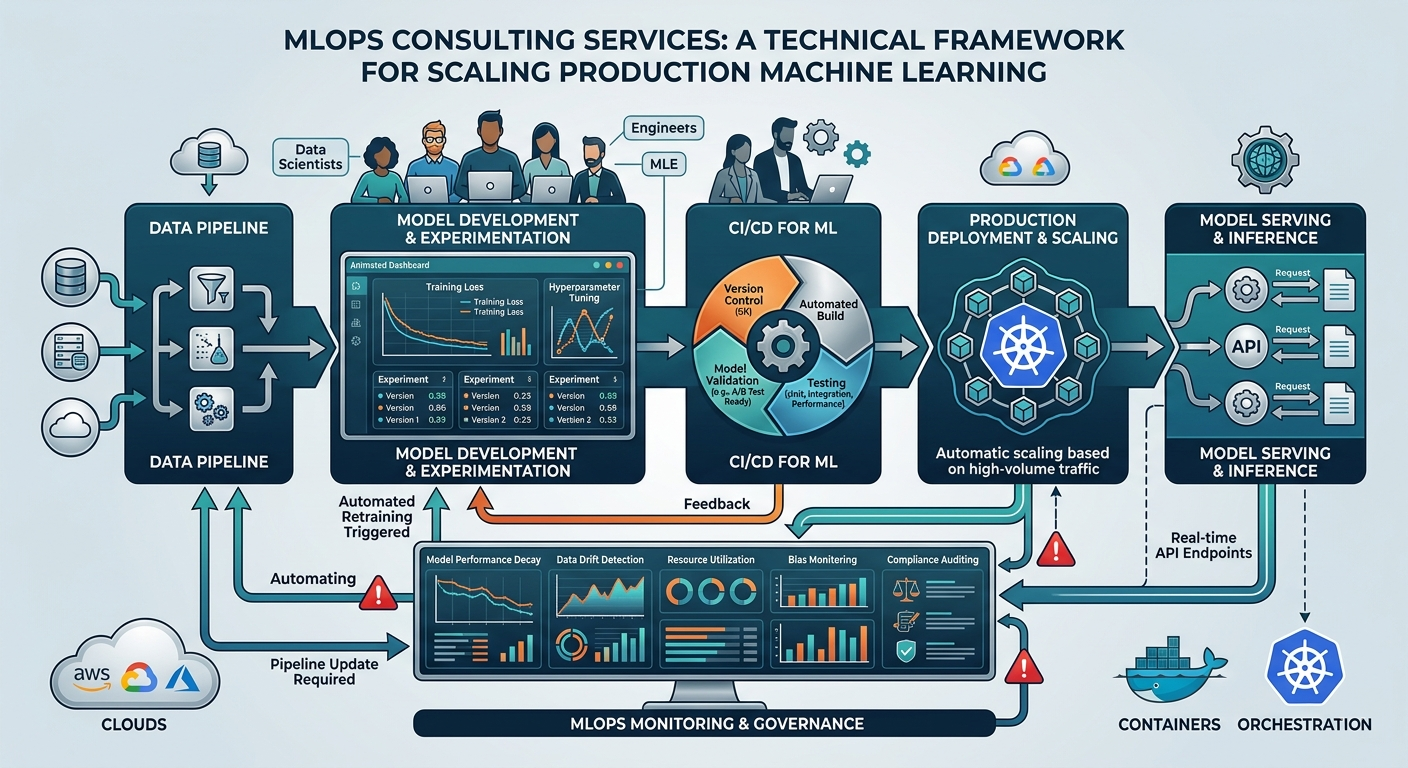
MLOps consulting services: A technical framework for scaling production machine learning
Operationalize ML with expert MLOps consulting. We bridge the gap between Data Science and DevOps using CI/CD/CT pipelines, automated drift detection, and feature stores to reduce Time-to-Value and technical debt. -
 March 12, 2026Read in 12 min.
Choosing your generative AI development company
Compare the best generative AI companies for your enterprise. From custom LLMs to agentic workflows, discover the top partners driving innovation and ROI in the AI-first era. -
 March 6, 2026Read in 15 min.
PyTorch vs TensorFlow: What’s the difference and which one wins
Stop choosing between research and production. Learn how Keras 3 and multi-backend architectures are unifying the AI ecosystem. A professional developer’s deep dive into performance, cost, and scalability. -
 March 5, 2026Read in 15 min.
Choosing the best MVP development companies
Top-rated agencies providing bespoke MVP software development services to help startups validate ideas and scale fast -
 March 4, 2026Read in 19 min.
Top software testing companies: Leading QA partners
Leading software testing companies. Compare top QA service providers, evaluation criteria, and industry trends to find your ideal partner. -
 February 28, 2026Read in 22 min.
Top 10 software development companies in the USA
Find the best US-based software developers. From AI to enterprise web apps, here are the top 10 software development companies in the USA you should hire in 2026. -
 February 25, 2026Read in 12 min.
Top 10 Node.js Development Companies
Industry's leading Node.js development companies. Our deep-dive review covers technical maturity, cloud-native expertise, and architectural standards to help you find the perfect software partner. -
 February 23, 2026Read in 16 min.
Top 10 mobile application development companies: Selection & industry leaders
Top 10 mobile application development companies for your next project. Compare top-rated mobile app developers, explore custom app development company profiles, and learn the secrets to a successful technical partnership. -
 February 23, 2026Read in 12 min.
How to choose the best Android app development agency: Rankings & selection criteria
Compare the leading Android development companies. Our guide highlights the top 10 firms for enterprise architecture, security, and custom app engineering. -
 February 19, 2026Read in 18 min.
IT Managed Service Providers (MSPs): Why does your business need one?
Stop guessing. Compare the 10 leading IT Managed Service Providers (MSPs) for any-sized companies. Find proven security, cloud, and 24/7 support. View the comparison! -
 February 19, 2026Read in 45 min.
Top 30 software development companies: Categories, red flags, and the selection strategy
We’ve analyzed the top 30 software development companies based on expertise, client results, and innovation. Find your ideal match here! -
 February 11, 2026Read in 18 min.
Top 10 Cloud migration companies: Strategic architecture of cloud migration
Compare the top 10 cloud migration companies based on architectural depth, FinOps integration, and modernization capabilities. Expert insights into AWS, Azure, and GCP transformation strategies for enterprise leaders. -
 February 10, 2026Read in 12 min.
Top 10 Flutter development companies: Entities, ecosystems, and strategic selection
Compare the world’s leading Flutter agencies. Our expert analysis covers the top 10 firms, evaluating their mastery of Dart, Skia performance, and Clean Architecture. -
 February 6, 2026Read in 19 min.
Top 10 React development companies: Architecting high-performance digital products
Top-rated React development companies for your next project. Our expert guide analyzes the best React JS web development agencies on performance, scalability, and tech standards -
 February 3, 2026Read in 24 min.
Web application development companies: How to choose the right partner
Find the right web app development company. Explore services, technologies, engagement models, and 10 expert tips for choosing your strategic development partner. -
 February 3, 2026Read in 11 min.
Top 10 Python Development Companies
Looking for a top Python development company? Compare the industry's leading Python software development agencies. Get insights on pricing, expertise, and how to hire a Python development firm that scales your business. -
 January 27, 2026Read in 15 min.
Top cloud application development companies you should follow
Best Cloud Application Development companies for your project. Compare expertise in AWS, Azure, & GCP. See client reviews, specialization, and costs for top Cloud-Native firms -
 January 23, 2026Read in 21 min.
Dedicated development team model: Definition, benefits, and nuances
Scale your product fast with a Dedicated Development Team. Compare DDT vs. outsourcing, analyze costs, and get a management blueprint for success. -
 January 21, 2026Read in 15 min.
Best energy software development companies to partnership
Top 10 energy sector software development leaders. Learn how to choose the right partner for your renewable energy software project. -
 January 19, 2026Read in 8 min.
The Low-Code Revolution in Oil & Gas: Accelerating Digital Transformation
From real-time well monitoring to automated safety permits - see how low-code applications drive operational efficiency and ESG compliance in the energy sector’s volatile market. -
 January 19, 2026Read in 18 min.
Top 10 desktop application development companies to watch
Compare the world’s best desktop development firms. From legacy modernization to high-performance C++ and cross-platform Electron apps, find your perfect vendor here. -
 December 24, 2025Read in 10 min.
Software development company in Florida: What we do, how we work, and where we add value
Florida's premier custom software partner for enterprise-grade applications. We specialize in fintech, healthcare, and scalable cloud systems. Innovate with Florida experts. -
 December 9, 2025Read in 10 min.
Custom software development for San Diego businesses
Find out about the demands of software development in San Diego and how local companies are adapting to technology needs. -
 December 9, 2025Read in 9 min.
Specifics and perspectives of custom software development in Los Angeles
Find out why choosing a custom software development company in Los Angeles is essential for evolving industries like fintech and healthcare. -
 December 6, 2025Read in 8 min.
Software development in San Francisco: Custom solutions for Area
Find out how software development in San Francisco sets standards in technology and customer satisfaction. -
 November 28, 2025Read in 14 min.
Custom software development in Houston: State and perspectives
Partner with a leading custom software development company in Houston to harness the power of technology for your growth. -
 November 28, 2025Read in 12 min.
Custom software development Dallas businesses need
Find out how a custom software development company in Dallas can elevate your business in a booming tech landscape filled with opportunities. -
 November 27, 2025Read in 11 min.
Software development services in Austin
Find out how a custom software development company in Austin can elevate your business in a booming tech landscape filled with opportunities. -
 November 12, 2025Read in 34 min.
Top FinTech software development companies: The core of modern finance
Compare the top-rated FinTech software developers based on expertise in AI, Blockchain, and compliance. Choose your perfect partner now! -
 November 4, 2025Read in 12 min.
AI in biotech: Application, specifics, and challenges
How AI and Machine Learning are transforming biotechnology, accelerating drug discovery, genome sequencing, and personalized medicine. Learn the applications, challenges, and future. -
 October 28, 2025Read in 20 min.
The best AI development companies in the US
The definitive guide to hiring the best AI development company. See our ranking by MLOps maturity, GenAI expertise, and verified client ROI. Get transparent costs and a partnership blueprint -
 October 20, 2025Read in 16 min.
How to hire the best ReactJS developers in a constantly growing market
Hire the top ReactJS developers. Get pre-vetted, senior React & Next.js engineers matched to your project in 48 hours. Start risk-free -
 October 16, 2025Read in 25 min.
Top 10 chatbot development companies
Leading chatbot development companies. Our expert guide helps you choose the best firm for AI chatbot solutions, custom development, and seamless integration -
 October 9, 2025Read in 17 min.
Top biotech software companies: Choosing the right tech partner for life-changing innovations
Leading biotech software companies impacting drug discovery, R&D, and lab operations. See how their innovative platforms are speeding up scientific breakthroughs. -
 September 30, 2025Read in 16 min.
All you need to know about custom software development for small business
Stop wasting time on workarounds! Discover how custom software development empowers your small business with tailored workflows, maximum efficiency, and predictable ROI. -
 September 4, 2025Read in 14 min.
Top 10 leading application modernization companies
Top 10 application modernization companies that can transform your business with cloud, AI, and microservices for agility and growth -
 August 28, 2025Read in 14 min.
Develop once, run everywhere: .NET Core cross-platform development
Struggling with multi-OS development? Discover how .NET empowers you to build versatile, high-performance applications that run seamlessly across Windows, macOS, and Linux with ease. -
 August 21, 2025Read in 14 min.
Why offshore .NET development is the best choice for your business
Struggling with talent shortages or escalating development costs? Explores how embracing offshore .NET development can be the strategic advantage your business needs to build innovative solutions faster and more cost-effectively. -
 August 18, 2025Read in 14 min.
.NET vs Java: Comparison, use cases, pros and cons
Unsure whether to use .NET or Java? This guide breaks down their strengths, weaknesses, and ideal applications to help you pick the best technology. -
 August 11, 2025Read in 24 min.
Top 10 Angular development companies to keep an eye on
Leading Angular development companies. Expert Angular developers offering top-tier web application development, consulting, and solutions for your next project. -
 August 7, 2025Read in 15 min.
Hire Angular developers: What you need to know
Need hire Angular developers? Get access to skilled, dedicated Angular teams for your web projects. We provide expert Angular solutions with flexible engagement models. Contact us today! -
 August 1, 2025Read in 9 min.
Why choose Angular for web development
Why Angular is a leading choice for web development. Learn about its powerful features, scalability, and benefits for building robust, high-performance applications. -
 August 1, 2025Read in 12 min.
Hiring .NET developers: Step-by-step guide
Frustrated with the challenges of hiring skilled .NET developers? This article provides a proven framework to help you find, vet, and hire the right talent for your team, avoiding common recruiting mistakes. -
 February 13, 2025Read in 15 min.
What is HMI development, and why is it trending now?
Human-Machine Interface (HMI) development is revolutionizing the way humans interact with machines, driving innovation across industries. -
 December 11, 2024Read in 10 min.
Python vs Java: Key differences, pros, and cons for developers
Key differences between Python and Java, including syntax, performance, and use cases. Find out which language suits your project best -
 October 10, 2024Read in 11 min.
The future of web development: WordPress vs React.js?
Confused between WordPress or React.js? Explore our detailed comparison to find out which platform suits your needs best -
 August 8, 2024Read in 14 min.
AD and Azure AD: What is the difference, and which is better for you?
Differences between Azure Active Directory (AAD) and traditional Active Directory (AD) in this comprehensive comparison. -
 August 5, 2024Read in 15 min.
ESG software development services: Effective ESG software solutions
Innovative ESG software solutions can help your business achieve its sustainability goals. Develop customized software that enhances environmental, social, and governance (ESG) performance, ensuring compliance and driving positive impact -
 July 31, 2024Read in 7 min.
Benefits of Azure Active Directory
Key benefits of Azure Active Directory(AD), including enhanced security, simplified management, and cost savings for your business -
 April 22, 2024Read in 12 min.
Software modernization: What is it & why it matters
Discover the essence of software modernization and its pivotal role in contemporary software development. Uncover why it's crucial. -
 April 22, 2024Read in 20 min.
Legacy app modernization: A comprehensive guide
Revitalize your business with our guide on legacy application modernization. Transform your legacy systems to make them more efficient and innovative. -
 April 22, 2024Read in 16 min.
Digital product design: What is it and why you need it
Unlock innovation with expert digital product design insights. Explore the latest trends and strategies for creating exceptional user experiences. -
 April 21, 2024Read in 11 min.
Healthcare product design: Tips for app development success
Explore the art of healthcare product design in our latest blog post. Discover how innovative design principles are shaping the future of medical solutions -
 April 18, 2024Read in 9 min.
Azure app modernization: Benefits of migrating to Microsoft
Key benefits of Azure app modernization and how migrating to Microsoft can enhance performance, scalability, and compliance -
 March 11, 2024Read in 12 min.
How to choose asset management software for oil and gas in 2026
Explore more ways to optimize operations and streamline processes in oil and gas. Follow our tips to choose the best-fit assent management software in 2026 -
 March 11, 2024Read in 13 min.
AI software development for oil and gas: A comprehensive guide
Explore the transformative power of artificial intelligence software development for oil and gas and the practices of global industry leaders in our blog. -
 March 11, 2024Read in 19 min.
Cloud application modernization: How to improve your app
Cloud application modernization makes app more competitive and business more profitable. The key strategies, tips, and its benefits — in this article! -
 March 11, 2024Read in 12 min.
Enterprise application modernization: Revolutionize your business
Future-proof your business with our guide to enterprise app modernization. Learn strategic approaches, key technologies, and best practices for legacy system transformation and enhanced agility -
 March 11, 2024Read in 12 min.
LIMS integration: Benefits & how it works
Can LIMS integration be called a CRM for laboratories? What to keep in mind during LIMS software development and integration? Find out more in our article. -
 March 11, 2024Read in 11 min.
Active directory integration: What is it & how to do it effectively
Discover seamless Active Directory integration strategies in our latest blog post. Optimize user management with the Blackthorn Vision team! -
 March 5, 2024Read in 15 min.
Mobile app UX design: Basics that will improve user experience
Mobile app UX design differs from the web. Explore these differences, the process, and the main pitfalls with our experts in this article. -
 March 5, 2024Read in 11 min.
HIPAA compliance checklist for healthcare software development 2026
Check the updated HIPAA security guidelines to ensure the safety and privacy of patients' data, it is important to adhere it when creating applications -
 March 5, 2024Read in 9 min.
How to use business process automation to improve oil and gas production
Discover how business process automation can help optimize oil and gas production and improve your bottom line. -
 March 3, 2024Read in 14 min.
Desktop to web migration: everything you need to know
Planning a desktop to web migration? Get essential insights on strategy, technical challenges, approaches, and how to successfully modernize your legacy application. -
 March 3, 2024Read in 11 min.
The process of application migration to the cloud: stages, approaches, and tools
Find out how to effectively migrate your legacy system and data to the cloud without disrupting your business processes. -
 March 3, 2024Read in 16 min.
Benefits of outsourcing software development
Key advantages of outsourcing software development for businesses. Learn how outsourcing can reduce costs, increase efficiency, and provide access to specialized expertise -
 March 3, 2024Read in 13 min.
Boosting cloud security in healthcare with Azure Cloud Services
Explore the most common challenges in the cloud security of healthcare organizations and discover our tips on eliminating them efficiently. -
 March 3, 2024Read in 19 min.
Healthcare app design: how to create a great user experience
Struggling with medical app UX? Get insights into user-centered design, crucial security measures, and future trends to create impactful healthcare applications. -
 March 3, 2024Read in 16 min.
MVP vs. prototype in startup software development: what’s the difference?
Crucial differences between MVP and Prototype in startup software development. Learn how Blackthorn Vision leverages both to build successful products, reduce risk, and accelerate your time-to-market -
 March 3, 2024Read in 12 min.
How to build a custom EHR solution: tips for decision makers
We can augment your talent pool with dedicated developers proficient in healthcare business automation. Check the success stories from our clients. -
 March 3, 2024Read in 7 min.
What is software as a medical device and why it matters for the healthcare industry
From developing SaMD and SiMD to building efficient EHR systems, we unleash the value of business process automation for healthcare providers. -
 March 3, 2024Read in 6 min.
An overview of medical biotechnology in 2026 and beyond
We offer a full cycle of software development for leading biotech companies - from idea visualization to building an MVP and fully-fledged product. -
 March 3, 2024Read in 9 min.
Smart farming: agricultural technology of the future
We have expertise in data analytics, AI, and Machine Learning to build game-changing software tailored for your agricultural business. -
 March 3, 2024Read in 7 min.
BV people: a talk with Head of HR and recruitment in Blackthorn Vision
BV people: a talk with the Head of HR and Recruitment on candidate selection, the company's ideals, and the current state of the Ukrainian IT industry. -
 March 3, 2024Read in 9 min.
What is robotic process automation and how it changes the travel and hospitality industry
How does RPA work and, most importantly, how to utilize it in your travel and hospitality business? Find out in our new article now. -
 March 3, 2024Read in 12 min.
An overview of agricultural biotechnology in 2026
We cooperated with agricultural biotechnology industry leaders to design software that helps scientists and farmers automate and optimize all processes. -
 March 3, 2024Read in 10 min.
Everything you need to know about Microsoft Azure: benefits, use cases, applications
Microsoft Azure is a leading cloud service provider that offers numerous opportunities for businesses to optimize and secure their operations and services. -
 March 3, 2024Read in 10 min.
Smart manufacturing technology and trends for 2026 and beyond
Stay updated on the latest manufacturing technology trends, that drives innovation, efficiency, and growth in the industry to boost your project. -
 March 3, 2024Read in 8 min.
How to choose and manage your dedicated development team
While there are many benefits of working with dedicated software development teams, it’s not a universal solution. Discover why it is so. -
 March 3, 2024Read in 8 min.
What is the best cloud deployment model? Types of cloud computing that will benefit your business
With the guidance of our post, you can better understand various cloud computing deployment strategies. Examine cloud solutions for your company's needs. -
 March 3, 2024Read in 10 min.
Offshore vs. Nearshore outsourcing: what’s best for your business?
What is the difference between the three outsourcing types, and which one is better for your business? Please read our article to find out! -
 March 3, 2024Read in 14 min.
How to develop a medical app for doctors: everything you need to know
The mobile health industry is one of the most rapidly growing segments worldwide. Learn more about the mHealth industry in our new article. -
 March 3, 2024Read in 14 min.
Business analyst: a leading player in your software development team
Your guide to the Business Analyst's vital role in software development teams, including Agile practices, key responsibilities, techniques, and delivering real business value. -
 March 3, 2024Read in 9 min.
Hyperautomation – the future of business processes
Now business processes - Hyperautomation are increasingly not following stable and predictable scenarios. It creates a need for a new type of automation. -
 March 3, 2024Read in 6 min.
The future of Oil and Gas: industry trends and software solutions
Keep up to date on the most recent oil and gas the industry trends, which are driving modifications in technology, sustainability, and energy exploration. -
 March 3, 2024Read in 6 min.
What is an MVP, and why is it necessary? Minimum viable product examples
Even if you have just a basic vision of what your app should do, we will develop a presentable product that you can pitch to investors. -
 March 3, 2024Read in 14 min.
Top 5 soft skills to work in it successfully and resources to develop them
Are soft skills the new hard skills? Can you make a successful career in IT if you are not an effective communicator or lack creativity? -
 March 3, 2024Read in 15 min.
Main reasons to hire software developers in Ukraine
Considering software development outsourcing in Ukraine? Strategic benefits – from accessing global talent and cutting costs to accelerating time-to-market. Understand key risks & how to build successful, secure partnerships -
 March 3, 2024Read in 5 min.
Mobile app development: Xamarin.Forms — a cross-platform solution that responds to modern challenges
When it comes to mobile development, there is a wide variety of solutions. Xamarin.Forms is a cross-platform solution that responds to modern challenges. -
 February 27, 2024Read in 8 min.
Top 10 programming languages of the future for web and mobile app development
Let’s have a look at the most popular programming languages that may become your business workhorse. -
 February 6, 2024Read in 16 min.
Pharmaceutical software development: Unleashing pharma innovation
Explore the future of pharmaceutical software development: innovative solutions revolutionizing healthcare efficiency & precision.