



Assess alignment across four dimensions: technical capability in your stack, experience within your industry, governance maturity, and communication standards. Request comparable case studies and review delivery artefacts, not only marketing summaries. Validate client feedback and cross-reference with the official software development agency’s case studies.
Top 30 software development companies: Categories, red flags, and the selection strategy

 45 minutes read
Content
The global software development market is expanding. According to Statista, global IT services revenue is projected to reach approximately US$1.57 trillion in 2026, driven by a 3.81% CAGR (2026-2030) to exceed US$1.8 trillion by 2030. Continued growth expected across consulting, application development, and managed services segments.
Software development now sits at the center of business operations, it’s not anymore a supporting function. Cloud-native architectures, AI-powered applications, cybersecurity integration, and API-first ecosystems have shifted engineering from execution to competitive differentiation.
Hence, enterprise development firms and specialized engineering agencies have matured significantly. Independent platforms such as Clutch and GoodFirms now index thousands of software development providers globally, increasing transparency in client reviews, case studies, and technical positioning.
The market is huge, and the vendors are countless. How to choose the right partner when there are so many, and most of them claim the same expertise?


Ship Your MVP in 60 Days!
Claim Your Free Tech Strategy Session
What is it hard for businesses to find a technical partner?
For CEOs, CTOs, founders, and product leaders, selecting a software development partner is a board-level decision with numerous implications, including financial, operational, and compliance.
Several structural challenges complicate vendor selection for them:
- Service convergence. Most vendors claim expertise in cloud, AI, DevOps, cybersecurity, and cross-platform development.
- Marketing asymmetry. Capability claims often exceed documented case evidence.
- Ecosystem complexity. Decisions must account for Microsoft Azure, AWS, Google Cloud, SAP, Salesforce, and other platform dependencies.
- Compliance and security risk. Healthcare (HIPAA), finance (PCI-DSS), and EU operations (GDPR) introduce regulatory exposure.
- Cost model opacity. Engagement structures vary across time-and-material, fixed-price, dedicated teams, and outcome-based contracts.
This guide is for leadership teams that face difficulty distinguishing which type of software development company best aligns with their scale, risk tolerance, budget structure, and long-term product strategy.
Selection methodology
Selecting software development firms for building a partnership requires a structured evaluation framework grounded in technical capability, delivery maturity, industry alignment, and verified market credibility.
Rather than prioritizing brand visibility alone, our review evaluates companies across four weighted dimensions:
- Technical proficiency and ecosystem depth
- Market credibility and independent reviews
- Industry-specific delivery experience
- Communication standards and Agile maturity
Technical proficiency and tech stack diversity
Despite popular belief, technical breadth is not measured by the number of technologies listed on a website. Instead, it is evaluated by ecosystem integration, architectural competence, and demonstrated execution across modern software paradigms.
Key indicators we assessed:
- Cloud platform expertise (Microsoft Azure, AWS, Google Cloud)
- Enterprise ecosystems (SAP, Salesforce, Oracle)
- Front-end and cross-platform frameworks (.NET, Java, React, Angular, Flutter)
- AI/ML integration capabilities
- DevOps and CI/CD maturity
- Security architecture and compliance awareness
Enterprise buyers increasingly require partners capable of multi-cloud or hybrid-cloud architecture. Additionally, AI integration is no longer optional. McKinsey reports that AI adoption across business functions has accelerated significantly since 2020, influencing demand for development partners with applied AI engineering experience.
Ratings and client testimonials
Independent review platforms such as Clutch, GoodFirms, and G2, grant possibility to spot patterns in vendor’s cooperation strategies, green and red flags, and build an understanding of the company’s or the team’s reliability.
Why do we trust these platforms? To begin with, Clutch’s verification process requires client confirmation. This provides additional credibility in comparison to self-published testimonials. However, ratings alone are insufficient without contextual analysis. A 5.0 rating based on 10 reviews does not carry the same weight as a 4.7 rating based on 300+ verified engagements.
Therefore, we considered review volume and review patterns alongside numeric scores.
Industry-specific experience
Industry specialization reduces execution risk. Software development agencies demonstrating repeatable industry engagement, domain experts, and regulatory familiarity deserve more attention and should be weighted more heavily.
Sectors we examined include:
- FinTech (PCI-DSS, financial compliance environments)
- Healthcare (HIPAA, interoperability standards)
- SaaS and B2B platforms
- Enterprise automation
- Retail & eCommerce
- Government and regulated industries
Regulatory exposure significantly affects architectural decisions. For example:
- Healthcare solutions must align with HIPAA in the U.S.
- Financial platforms require strict security and transaction auditing.
- European projects must align with GDPR compliance standards.
Communication standards and agile maturity
Technical capability holds no weight without delivery governance. Execution discipline and cross-functional collaboration strongly correlate with digital initiative success. Enterprise firms typically operate structured PMO environments, while boutique agencies often provide higher executive-level involvement. Both models can be effective depending on organizational scale.
Evaluation criteria for communication includes:
- Agile methodology maturity (Scrum, SAFe, Kanban adoption)
- Sprint transparency and reporting standards
- Stakeholder communication cadence
- Product ownership models
- DevOps automation pipelines
- Dedicated engagement structures vs. staff augmentation
Now, let’s look at the list of the top 30 best software development companies, from worldwide-known tech giants to small, but respectable boutique agencies.
Get a Ballpark Estimate
Turn Your Roadmap Into Reality
Top-10 global tech giants
These top software development companies define the platforms, tooling, and enterprise standards that shape how custom software is built worldwide. They are not typical outsourced development agencies. Treat them as ecosystem anchors: your development partner’s effectiveness often depends on how well they build on these stacks.
Microsoft
Official website: https://www.microsoft.com
Azure: https://azure.microsoft.com
GitHub: https://github.com
Why Microsoft belongs on this list
Microsoft influences modern software delivery end-to-end: cloud infrastructure (Azure), application runtime and frameworks (.NET), developer workflows (GitHub), productivity and collaboration (Microsoft 365), and enterprise identity/security (Entra, Defender). For many organizations, selecting a development partner is also selecting a partner’s ability to deliver inside Microsoft’s ecosystem.
Where Microsoft shows up in real delivery
- Cloud migration and modernization: Azure landing zones, governance, hybrid workloads, Windows/Linux hosting.
- Enterprise app development: .NET, C#, SQL Server, integration services, API management.
- Data and AI: Azure AI services, data platforms, MLOps tooling, enterprise-grade access controls.
- Security and compliance: enterprise identity, policy enforcement, audit-friendly architecture patterns.
Strength signals buyers tend to prioritize
- Ecosystem coherence: fewer moving parts when teams standardize on Azure + .NET + Microsoft security.
- Enterprise governance maturity: architecture patterns built with regulated environments in mind.
- Talent availability: easier hiring and onboarding for common Microsoft stacks.
When Microsoft is the right ecosystem anchor
- You are already standardized on Microsoft identity, productivity, and security tooling.
- You need a clear enterprise governance model for cloud and app delivery.
- Your roadmap includes Azure-native data and AI capabilities.

Alphabet (Google)
Official website (Alphabet): https://www.abc.xyz
Google Cloud: https://cloud.google.com
Kubernetes (project): https://kubernetes.io
Why Google belongs on this list
Google has shaped the foundations of cloud-native software through engineering practices and infrastructure standards adopted across the industry. Google Cloud is often selected for data-heavy platforms, analytics, AI workloads, and teams that want strong cloud-native primitives.
Where Google shows up in real delivery
- Cloud-native platform builds: containerized apps, orchestration, service networking patterns.
- Data and analytics: cloud data warehousing, streaming, analytics at scale (service selection varies by architecture).
- AI/ML delivery: managed AI tooling and infrastructure for experimentation, training, and deployment.
Strength signals buyers tend to prioritize
- Cloud-native orientation: strong fit for modern architectures using containers and managed services.
- Data-centric workloads: Google Cloud is frequently evaluated where analytics and ML are central.
- Engineering influence: Practices around reliability and operational discipline have an industry-wide impact.
When Google is the right ecosystem anchor
- Your product strategy is data-first or ML-heavy.
- You need strong managed services for modern, cloud-native deployments.
- You are building platforms where analytics and scale planning are key decision inputs.
Oracle
Official website: https://www.oracle.com
Oracle cloud infrastructure: https://www.oracle.com/cloud/
Why Oracle belongs on this list
Oracle remains central to many enterprise back ends: databases, ERP environments, and mission-critical transactional systems. When companies talk about “software development” in Oracle-heavy contexts, they often mean modernization, integration, and extension work around Oracle estates.
Where Oracle shows up in real delivery
- Database-centered application development: transactional systems, performance-sensitive workloads, data integrity requirements.
- ERP/enterprise application integration: custom extensions, data synchronization, integration layers.
- Legacy modernization: replatforming, refactoring, and incremental migration strategies for long-lived systems.
Strength signals buyers tend to prioritize
- Enterprise durability: Oracle technologies often sit underneath systems that cannot tolerate downtime.
- Transactional performance and data consistency: strong fit for finance, supply chain, and high-integrity workloads.
- Clear enterprise integration patterns: common in large, multi-system environments.
When Oracle is the right ecosystem anchor
- You run critical systems on Oracle databases or Oracle enterprise apps.
- You need modernization that preserves continuity, auditability, and data integrity.
- You expect a multi-year transformation with controlled risk.
SAP
Official website: https://www.sap.com
SAP S/4HANA: https://www.sap.com/products/erp/s4hana.html
Why SAP belongs on this list
SAP sits underneath core enterprise operations in manufacturing, retail, logistics, utilities, and large-scale financial operations. When a company’s “software strategy” runs through SAP, development decisions are constrained by process models, integration patterns, and governance expectations that come with ERP-centric environments.
Where SAP shows up in real delivery
- ERP modernization and migration programs: S/4HANA transitions, integration redesign, and reporting consolidation.
- Extensions and integration layers: building custom apps that connect to SAP data and workflows without destabilizing the core.
- Process automation and analytics: integration between operational systems and analytics layers for planning and performance management.
Strength signals buyers tend to prioritize
- Process standardization: SAP often becomes the system of record for business-critical workflows.
- Governance alignment: well-established controls for access, audit, and change management.
- Industry depth: strong fit where operational complexity is high and process discipline matters.
When SAP is the right ecosystem anchor
- Your business relies on ERP-based process integrity and auditability.
- You need to integrate multiple operational systems into a coherent operating model.
- You are planning modernization that must preserve continuity for core operations.
Salesforce
Official website: https://www.salesforce.com
Salesforce platform: https://www.salesforce.com/products/platform/overview/
Why Salesforce belongs on this list
Salesforce shapes customer operations: CRM, sales automation, service workflows, and enterprise customer data practices. Custom development here often means platform customization, integration work, and building apps on top of Salesforce tooling rather than building an entire product from scratch.
Where Salesforce shows up in real delivery
- CRM implementation and customization: objects, workflows, automations, dashboards, and role-based access models.
- Integration programs: Salesforce connected to ERP, data warehouses, billing systems, support tooling, and product analytics.
- Platform app development: internal apps and extensions built using Salesforce’s development model.
Strength signals buyers tend to prioritize
- Standardized customer data and processes: a strong fit for companies formalizing go-to-market operations.
- Ecosystem depth: an extensive marketplace and partner landscape.
- Workflow automation: clear business value when sales/service processes require orchestration.
When Salesforce is the right ecosystem anchor
- Revenue operations and customer engagement are central to your operating model.
- You need consistent visibility across sales, service, and marketing workflows.
- You can commit to governance around the data model and workflow design.
Adobe
Official website: https://www.adobe.com
Adobe Experience Manager: https://business.adobe.com/products/experience-manager/adobe-experience-manager.html
Why Adobe belongs on this list
Adobe is an ecosystem leader in digital experience, content operations, and marketing technology. In enterprise development contexts, Adobe’s relevance often centers on web experience platforms and content-heavy environments where governance, personalization, and performance requirements are strict.
Where Adobe shows up in real delivery
- Experience platforms: enterprise sites and portals built with Adobe Experience Manager (AEM).
- Content supply chains: workflows for asset creation, versioning, approvals, and publication controls.
- Marketing tech integration: connecting content systems to analytics and personalization stacks.
Strength signals buyers tend to prioritize
- Enterprise-grade content governance: permissions, workflow control, auditability.
- Scalable experience delivery: used by large brands managing high-volume content ecosystems.
- Integration posture: strong alignment with enterprise marketing and customer experience tooling.
When Adobe is the right ecosystem anchor
- Your organization manages content at scale across regions, products, or business lines.
- You need strong governance and role-based workflows for content operations.
- Customer experience platforms are part of a broader digital transformation program.
IBM
Official website: https://www.ibm.com
IBM Consulting: https://www.ibm.com/consulting
Why IBM belongs on this list
IBM spans platform influence and delivery execution. Unlike several ecosystem leaders above, IBM also operates at scale as a transformation partner through IBM Consulting. It is frequently involved in large modernization programs where legacy systems, regulated constraints, and long-term governance are central.
Where IBM shows up in real delivery
- Legacy modernization at enterprise scale: mainframe-adjacent transformation, staged refactoring, platform re-architecture.
- Hybrid cloud programs: integration across on-prem and cloud environments with governance requirements.
- Security and compliance-led delivery: projects where auditability, policy enforcement, and operational resilience are major success criteria.
Strength signals buyers tend to prioritize
- Program governance: ability to run multi-year transformation portfolios with structured delivery oversight.
- Regulated-industry credibility: common involvement in finance, insurance, government, and critical infrastructure work.
- Breadth of capability: ability to combine architecture strategy with implementation and managed operations.
When IBM is the right fit
- Your program requires deep enterprise governance and multi-stakeholder coordination.
- You are modernizing complex, high-risk legacy estates.
- You need delivery models that align with regulated requirements.
Atlassian
Official website: https://www.atlassian.com
Jira: https://www.atlassian.com/software/jira
Confluence: https://www.atlassian.com/software/confluence
Why Atlassian belongs on this list
Atlassian is an ecosystem shaper through delivery infrastructure rather than outsourced engineering. Jira and Confluence influence how product and engineering teams plan work, run delivery cycles, document decisions, and maintain transparency across stakeholders. For vendor selection, Atlassian matters because delivery maturity is often visible through how teams use these tools.
Where Atlassian shows up in real delivery
- Delivery governance: sprint visibility, backlog hygiene, progress reporting, dependency management.
- Cross-team alignment: documentation, knowledge management, incident postmortems, and decision logs.
- Operational scaling: workflows that support large programs with multiple teams and stakeholders.
Strength signals buyers tend to prioritize
- Transparency: clear sprint reporting, structured issue tracking, and documented acceptance criteria.
- Process maturity: consistent workflows often correlate with lower delivery risk.
- Audit-ready collaboration: strong traceability for requirements and decisions.
When Atlassian is the right ecosystem anchor
- You need scalable Agile governance with visible delivery metrics.
- Your product teams require a single system of record for work tracking and documentation.
- Vendor oversight and accountability are important to internal stakeholders.
ServiceNow
Official website: https://www.servicenow.com
Platform overview: https://www.servicenow.com/platform.html
Why ServiceNow belongs on this list
ServiceNow is a workflow and service management platform that shapes internal operations across IT, HR, security, and enterprise service delivery. In many organizations, the platform becomes the foundation for internal tooling and workflow automation, which influences how custom development is executed and governed.
Where ServiceNow shows up in real delivery
- Enterprise workflow automation: ITSM, ITOM, HR service delivery, security operations workflows.
- Platform implementation and customization: building request flows, approvals, service catalogs, and integrations.
- Integration and data synchronization: connecting ticketing workflows to monitoring, identity, asset management, and enterprise applications.
Strength signals buyers tend to prioritize
- Operational visibility: measurable improvements in service workflows and response models.
- Governance-friendly automation: strong fit for organizations requiring access controls and audit trails.
- Platform scalability: used widely across large enterprises with complex internal operations.
When ServiceNow is the right ecosystem anchor
- Your organization relies on service workflows and internal governance at scale.
- You want workflow automation tied to measurable operational outcomes.
- You have the process maturity to define, enforce, and maintain standards.
Enterprise development and outsourcing
EPAM Systems
Founded in 1993, EPAM Systems is one of the best-known publicly traded global engineering and consulting software development firms with delivery centers across Europe, the Americas, and Asia. It operates at enterprise scale, often engaging in multi-country transformation programs.
Core strengths
- Enterprise product engineering at scale
- Cloud modernization and platform re-architecture
- Strong design + engineering integration
- Multi-team governance frameworks
- Mature DevOps and CI/CD practices
Typical engagement model
- Large dedicated engineering teams
- Enterprise transformation programs
- Long-term managed engineering engagements
Industry focus
Financial services, healthcare, travel, retail, media, and enterprise software.
Why enterprises choose EPAM
- Ability to scale rapidly across multiple geographies
- Strong architecture governance for complex estates
- Balanced consulting + engineering capability
- Proven experience in regulated environments
Cognizant
Cognizant is a multinational IT services firm delivering digital engineering, consulting, and managed services. It often competes in large transformation programs involving application modernization and enterprise operations.
Core strengths
- Large-scale digital transformation programs
- Managed services + build-run models
- Enterprise cloud migration
- AI and automation integration
- Process-driven delivery frameworks
Typical engagement model
- End-to-end transformation programs
- Outsourced IT operations combined with development
- Hybrid consulting + execution engagements
Industry focus
Healthcare, life sciences, financial services, retail, and manufacturing.
Why enterprises choose Cognizant
- Structured governance and reporting models
- Ability to manage complex vendor ecosystems
- Mature delivery discipline for large organizations
Thoughtworks
Thoughtworks is known for its engineering culture, architecture rigor, and influence on Agile and DevOps practices. It frequently works with enterprises seeking modernization and architectural transformation.
Core strengths
- Strong engineering standards and code quality focus
- Architecture-first delivery mindset
- Modern cloud-native builds
- Agile transformation advisory
- Emphasis on sustainable engineering practices
Typical engagement model
- Architecture-led modernization
- Product re-platforming
- Engineering enablement alongside delivery
Industry focus
Financial services, retail, media, public sector, and technology platforms.
Why enterprises choose Thoughtworks
- Reputation for technical rigor
- Clear architectural frameworks
- Strong emphasis on engineering quality and governance
BairesDev
BairesDev is a large nearshore software development company with delivery anchored in Latin America and a client base that includes startups and enterprise organizations. The company positions itself around access to senior engineering talent, with coverage across web, mobile, data, and enterprise application development. Buyers typically consider BairesDev when they want time zone alignment with North America while still scaling engineering capacity beyond what local hiring can provide.
Core strengths
- Nearshore delivery model suited to US time zones
- Broad engineering coverage across modern stacks
- Emphasis on senior developer staffing and screening
- Capability to scale teams for ongoing product work
Typical engagement model
BairesDev commonly operates through dedicated team and staff augmentation structures, often embedding engineers into an existing product organization. This model works when the client already has product leadership and architecture direction in place, and needs dependable execution capacity with predictable communication rhythms.
Industry focus
B2B software, fintech-adjacent products, consumer platforms, and enterprise modernization.
Why enterprises choose BairesDev
- Faster ramp-up than local hiring in many markets
- Strong alignment with US-based stakeholders
- Ability to support longer-running product roadmaps
ScienceSoft
ScienceSoft is an IT consulting and software development company with a long market presence and broad coverage across custom development, modernization, QA, and managed services. It tends to appeal to organizations that want a structured vendor capable of handling full-cycle delivery, including discovery, implementation, testing, and long-term support. The company’s positioning is often associated with predictability and process discipline, which can be important for regulated or compliance-conscious environments.
Core strengths
- Full-cycle software development and modernization
- Strong QA and testing orientation
- Experience with enterprise systems and integration work
- Delivery models that support long-term maintenance
Typical engagement model
ScienceSoft often engages on end-to-end projects as well as extended delivery partnerships that include support and incremental development. This structure is useful when the client wants a vendor that can own both build and post-launch responsibility, rather than handing off to internal teams immediately after release.
Industry focus
Healthcare, finance, manufacturing, retail, and enterprise software.
Why enterprises choose ScienceSoft
- Coverage across engineering plus testing and support
- Practical delivery discipline and documentation standards
- Suitability for organizations needing stability over experimentation
Intellias
Intellias is an engineering services company known for work in automotive, mobility, and enterprise technology programs, with delivery centers across Europe and beyond. It is often selected for projects where complex domain logic and long-term product evolution matter more than rapid MVP delivery. The company’s reputation is tied to structured engineering delivery and the ability to support sophisticated platforms that integrate with large partner ecosystems.
Core strengths
- Strong capability in complex enterprise engineering programs
- Domain experience in automotive and mobility ecosystems
- Mature delivery approach for long-running initiatives
- Integration-heavy platform work and modernization
Typical engagement model
Intellias frequently operates as a strategic delivery partner with dedicated teams aligned to product lines or domains. This tends to work well when the client values continuity and institutional knowledge, and when the roadmap includes multiple releases and long-term platform expansion rather than one-off builds.
Industry focus
Automotive, mobility, fintech-adjacent enterprise systems, digital platforms.
Why enterprises choose Intellias
- Depth in domain-heavy engineering environments
- Strong delivery continuity for multi-year programs
- Ability to support integration and platform complexity
Avenga
Avenga operates as a global technology and consulting partner with a footprint across Europe, the Americas, and Asia. It is often positioned as a delivery partner for enterprises that need cross-functional teams spanning software engineering, data, and digital transformation support. In practice, Avenga tends to work best in structured environments where requirements are tied to business outcomes, and where delivery governance matters as much as raw engineering capacity.
Core strengths
- Enterprise-grade delivery across product engineering and modernization
- Cross-functional capability that can include consulting and delivery enablement
- Experience supporting regulated and process-heavy organizations
- Strong emphasis on structured project execution and governance
Typical engagement model
Avenga commonly provides dedicated teams and end-to-end delivery engagements, with the ability to support both build phases and post-launch continuity. It fits organizations that prefer a partner able to take ownership of deliverables rather than purely supplying staff augmentation, while still integrating cleanly into the client’s operating rhythm.
Industry focus
Financial services, healthcare, industrial and enterprise systems, digital platforms.
Why enterprises choose Avenga
- Balanced mix of delivery capacity and structured execution standards
- Capability to align engineering work with broader transformation goals
- Suitable for multi-stakeholder environments where coordination is a core challenge
Vention
Vention is an engineering services company known for scaling delivery teams across web, mobile, cloud, data, and product development. It is often used by businesses that want to accelerate delivery without building an in-house organization of equivalent scale, particularly when speed of team assembly is critical. Vention’s model is frequently described as flexible, with a focus on assembling teams aligned to product needs and embedding them into client workflows.
Core strengths
- Ability to scale multidisciplinary teams quickly
- Coverage across modern stacks, including mobile and cloud-heavy builds
- Experience supporting both startups and larger enterprises
- Emphasis on structured team composition and delivery oversight
Typical engagement model
Vention commonly works through dedicated team models and augmentation-style engagements. It typically fits best when the client has a clear product roadmap and wants dependable execution capacity, while retaining internal control over product strategy. For many buyers, the appeal is access to engineers with varied specializations without long hiring cycles.
Industry focus
SaaS, fintech-adjacent products, healthcare technology, marketplaces, enterprise platforms.
Why enterprises choose Vention
- Flexible scaling aligned to roadmap priorities
- Strong capability for ongoing delivery and iterative development
- Useful model for organizations balancing speed with predictable delivery structure
ELEKS
ELEKS is a well-established software engineering and consulting provider with strong roots in Eastern Europe and a track record in enterprise digital transformation. It is often engaged for modernization programs, data-driven platform work, and complex enterprise software initiatives that require architectural discipline. ELEKS is also known for combining engineering execution with consultative support, which can be valuable for organizations that need help defining solution direction as well as building it.
Core strengths
- Strong architecture capability for complex enterprise systems
- Modernization and platform re-architecture experience
- Data, analytics, and product engineering depth
- Delivery maturity suited to long-running enterprise programs
Typical engagement model
ELEKS frequently operates as a strategic partner delivering end-to-end workstreams, sometimes including discovery and advisory phases. This can be useful when a client needs to reduce uncertainty early, validate architecture choices, then transition into delivery with continuity in the same team.
Industry focus
Finance, logistics, healthcare, enterprise software, and data-centric platforms.
Why enterprises choose ELEKS
- Proven ability to handle complex, integration-heavy programs
- Delivery frameworks aligned with enterprise governance expectations
- Strong fit for modernization initiatives that require steady execution and architectural oversight
Ciklum
Ciklum is a global digital solutions and software engineering company with delivery hubs across and beyond Europe. It is often selected by mid-market and enterprise organizations that want consistent engineering execution combined with product-oriented delivery practices. Ciklum’s relevance typically shows up in multi-team builds, modernization programs, and long-term product development where predictable velocity and operational discipline matter as much as technical choices.
Core strengths
- Scalable engineering teams for long-running product roadmaps
- Strong delivery practices for iterative development
- Experience supporting modernization and platform evolution
- Capability across web, mobile, cloud, data, and QA functions
Typical engagement model
Ciklum commonly works through dedicated team structures and end-to-end delivery pods aligned to specific product areas. This suits companies that want continuity and accumulated domain knowledge over time, rather than rotating contributors. For organizations with internal product ownership, Ciklum can function as an execution arm that integrates into existing governance while maintaining consistent delivery cadence.
Industry focus
Retail, fintech-adjacent platforms, digital commerce, enterprise software, and customer-facing applications.
Why enterprises choose Ciklum
- Stable delivery engine for continuous development
- Ability to support multiple concurrent workstreams
- Fit for organizations prioritizing delivery predictability and collaboration
Boutique agencies
These 10 firms are smaller than enterprise outsourcers, but can outperform them in focus areas: specialist domains, design-driven product execution, high-touch leadership involvement, and narrow technical expertise. Choose them if you want closer collaboration and sharper accountability.
Blackthorn Vision
Official website
Clutch, GoodFirms
Blackthorn Vision is a custom software development and consulting partner, appealing to companies that want a tighter collaboration model than large vendors typically provide. Boutique firms like this are frequently evaluated by product teams that require direct access to senior specialists, faster decision loops, and delivery teams that can operate with high accountability across the full lifecycle.
Core strengths
- Full-cycle custom development with various engagement models
- Engineering teams that can work closely with product stakeholders
- Strong fit for product-led builds requiring consistent feedback loops
- Ability to focus deeply on narrower scopes without enterprise overhead
Typical engagement model
Blackthorn Vision tends to work best as dedicated teams or compact delivery squads supporting discovery through release. The model is typically relationship-driven: clients choose them when they want more direct involvement from senior leadership and a team that can adapt quickly without lengthy internal escalation chains.
Industry focus
Varies by engagement; often product platforms, web applications, and custom business systems. Fintech, Oil&Gas, Energy, Healthtech, AI.
Why teams choose Blackthorn Vision:
- Closer access to decision-makers and senior specialists
- Faster iteration cycles and tighter collaboration
- Good fit for focused builds with clear scope control
- Cross-functional capability spanning engineering, QA, and implementation support
Imaginary Cloud
Imaginary Cloud is a boutique product development and software engineering agency known for combining engineering with design-led execution. They are often selected by founders and product leaders who want a partner that can shape user experience and product direction alongside implementation, particularly in early-to-growth stages where the product is evolving quickly.
Core strengths
- Product-oriented engineering with strong UX alignment
- Strong fit for building and iterating customer-facing applications
- Ability to support discovery, design, and engineering in one flow
- Often effective for MVP-to-scale transitions when roadmap clarity improves over time
Typical engagement model
Imaginary Cloud typically runs compact, cross-functional teams that include engineering and design capabilities. This tends to suit companies that want fewer handoffs and a consistent cadence from product discovery into delivery, with clear stakeholder access and iterative releases.
Industry focus
Startups, digital products, and customer-facing platforms across multiple sectors.
Why teams choose Imaginary Cloud
- Strong alignment between product thinking and engineering execution
- Effective collaboration for fast iteration cycles
- Useful for teams that value UX quality and roadmap flexibility
LeewayHertz
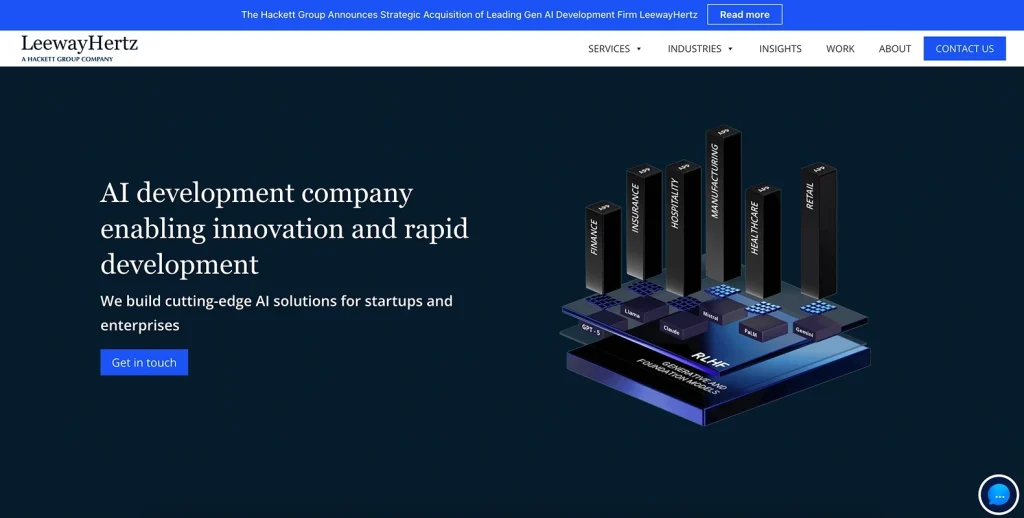
LeewayHertz positions itself as a specialist-oriented development company with a strong presence in emerging technology delivery, often associated with AI, blockchain, and enterprise application development. It tends to appeal to organizations that want a partner capable of building POC quickly, then translating validated ideas into production systems with appropriate architecture and security controls. In practice, LeewayHertz fits best when a product leader wants a vendor that can cover both experimentation and production execution, while keeping delivery structured.
Core strengths
- Engineering delivery across web, mobile, and enterprise platforms
- Strong association with AI and data-driven applications builds
- Experience delivering PoCs and product MVPs with a path to production
Typical engagement model
LeewayHertz is commonly engaged as a project-based vendor for PoCs, MVP builds, and platform modules, and can also operate through dedicated teams for longer roadmaps. The most productive engagements tend to start with tight problem framing and measurable success criteria, then expand into broader delivery once scope and feasibility are proven.
Industry focus
Enterprise products, fintech-adjacent platforms, and technology-forward solutions.
Why teams choose LeewayHertz
- Fast validation cycles paired with production build capability
- Useful for organizations exploring AI-first or automation-heavy roadmaps
- Good fit for teams that need a vendor comfortable with uncertainty early
Goji Labs
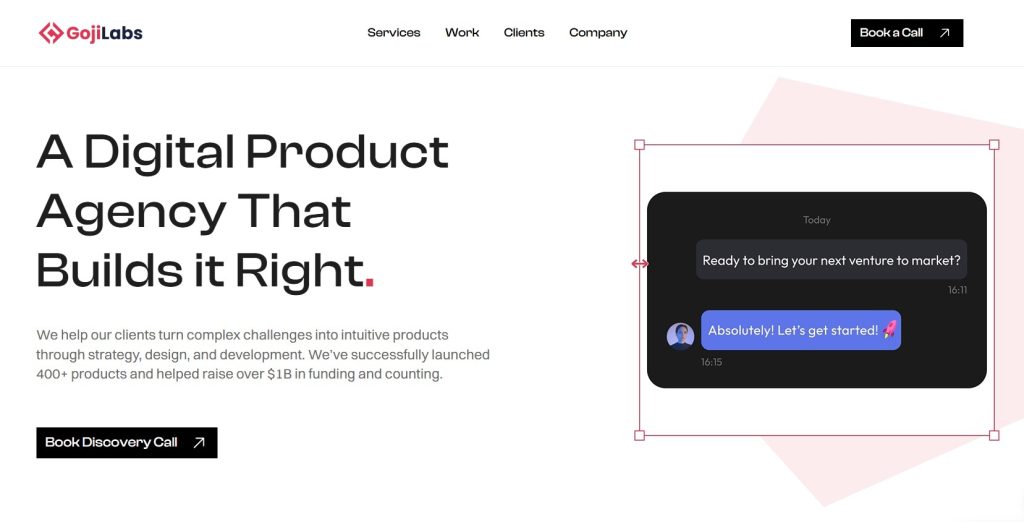
Goji Labs is a boutique product development studio that often attracts startups and product teams looking for a partner that blends strategy, UX, and engineering. The agency is usually chosen when the product direction needs shaping, not just implementation. Goji Labs’ positioning typically aligns with design-led builds, rapid iteration, and close collaboration with founders and product owners.
Core strengths
- Product discovery and UX-driven delivery
- Strong fit for MVP builds and iterative product development
- Cross-functional teams bridging design and engineering
- Clear stakeholder collaboration model suitable for fast-moving roadmaps
Typical engagement model
Goji Labs often runs compact squads that handle discovery through build, with structured checkpoints to reduce misalignment. This model works particularly well when the product owner wants a single partner to translate business goals into usable product increments without handing off between multiple vendors.
Industry focus
Startups, marketplaces, consumer products, internal tools, and digital platforms.
Why teams choose Goji Labs
- Strong product thinking alongside execution
- Useful for early-stage builds where UX and roadmap learning are central
- High-touch collaboration model with clear stakeholder access
Artkai
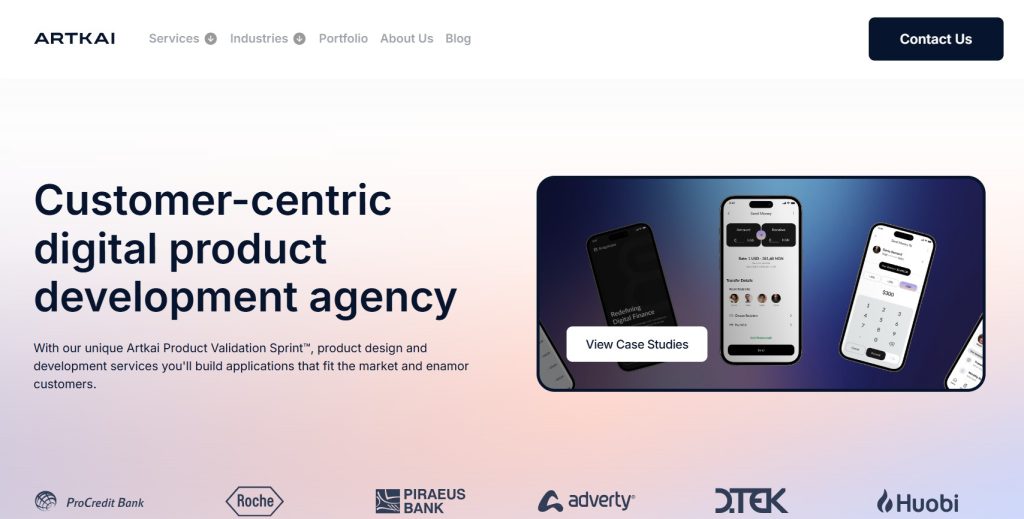
Artkai is often positioned as a digital product agency with a strong emphasis on design systems, frontend engineering quality, and product experience. It is typically selected when user interface quality and product usability are core to business value, and when teams want an agency that can deliver both design and implementation to a high standard rather than treating UX as an afterthought.
Core strengths
- Frontend engineering execution for modern web products
- Strong UI/UX and design system capability
- Product delivery focused on usability and interaction quality
- Useful for customer-facing platforms where experience quality drives adoption
Typical engagement model
Artkai-style engagements usually take the form of project delivery or embedded product teams working alongside client stakeholders. The model suits organizations that want a strong design-to-code workflow and predictable iteration cycles, often with an emphasis on clean frontend architecture and maintainable UI components.
Industry focus
Digital products across SaaS, consumer platforms, and customer-facing enterprise portals.
Why teams choose Artkai
- High bar for product design and frontend delivery
- Effective for experience-critical applications
- Strong fit when UI consistency and design systems matter
Anadea
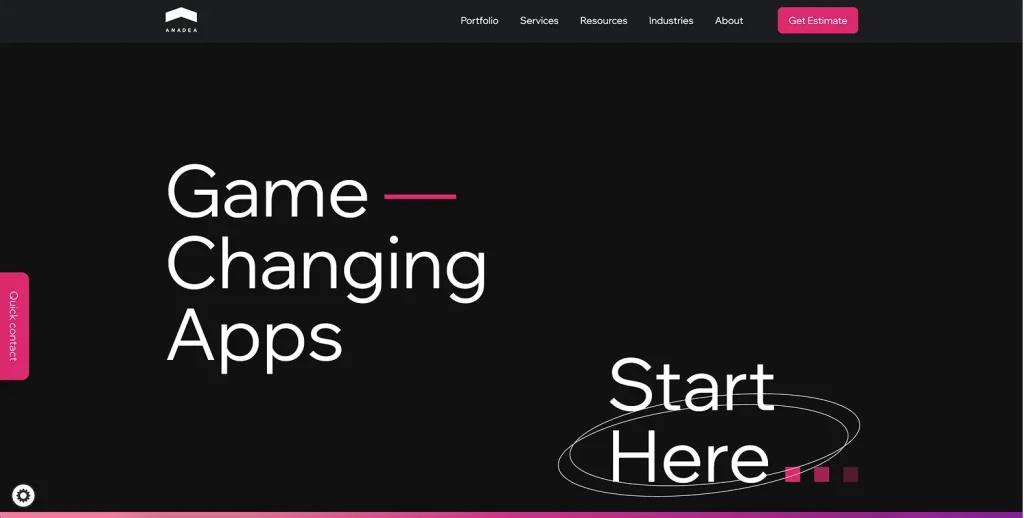
Anadea is a boutique IT software development company that often appeals to product teams looking for full-cycle engineering support without the overhead of a large enterprise vendor. This type of partner is usually evaluated for pragmatic execution: building core product functionality, maintaining delivery momentum, and providing stable engineering continuity as the product evolves. Anadea tends to work best when the client has a clear business objective and wants a vendor that can translate it into a working system with predictable collaboration.
Core strengths
- Full-cycle custom software development
- Web and mobile application delivery with long-term maintenance support
- Practical execution for product builds where scope is defined and delivery cadence matters
- Often suitable for teams that want a smaller vendor with consistent communication lines
Typical engagement model
Anadea is commonly engaged through dedicated teams or project-based delivery, depending on the stage of the product.
Industry focus
Product platforms and business applications across domains.
Why teams choose Anadea
- Stable, end-to-end delivery model
- Good fit for mid-sized builds where execution consistency matters
- Often easier stakeholder access than large vendors
Zibtek
Zibtek is positioned as a custom software development company supporting businesses that need engineering execution through nearshore or offshore delivery models. It often appears in vendor evaluations where buyers want a partner capable of building applications end-to-end while maintaining transparent communication practices. Zibtek’s relevance typically sits in practical delivery: building web and mobile products, supporting iterative development cycles, and providing teams that can operate as an extension of the client organization.
Core strengths
- Custom software development across web and mobile
- Team extension models supporting ongoing product roadmaps
- Practical delivery suited to iterative builds and feature expansion
- Ability to support both early-stage and established product teams
Typical engagement model
Zibtek commonly operates through dedicated team models and staff augmentation-style delivery, embedding developers into client workflows. This structure can work well when the client has product ownership and needs scalable execution capacity without local hiring bottlenecks.
Industry focus
Digital products and business applications across multiple sectors.
Why teams choose Zibtek
- Flexible engagement models for ongoing delivery
- Useful for organizations seeking an extension of in-house engineering
- Emphasis on communication cadence and stakeholder alignment
Arbisoft
Arbisoft is a software engineering company with a reputation for supporting product development across web, mobile, and data-driven applications. It is often shortlisted by teams looking for a partner that can handle complex builds with disciplined execution, particularly when long-term continuity is important. Arbisoft tends to be evaluated for its ability to contribute across the lifecycle: development, QA, and ongoing product improvements in a stable delivery model.
Core strengths
- Product engineering across web and mobile platforms
- Capability for data-driven and integration-heavy applications
- Delivery discipline suited to long-running engagements
- Quality assurance and process consistency focus
Typical engagement model
Arbisoft is frequently engaged via dedicated teams aligned to a client’s product area, which allows knowledge accumulation and reduces churn. This model suits organizations that want the vendor to operate as a long-term partner rather than a short-term project shop.
Industry focus
SaaS products, education technology, enterprise applications, and data-centric platforms.
Why teams choose Arbisoft
- Continuity and stability for multi-release roadmaps
- Strong fit for product teams prioritizing delivery consistency
- Useful blend of engineering and QA capability
Simform
Simform is a software development and digital engineering company commonly evaluated by product teams and enterprise buyers seeking scalable delivery capacity without sacrificing delivery structure. It is often positioned as a partner for modernization and product engineering, with emphasis on predictable execution, cross-functional team composition, and ongoing development partnerships rather than one-off builds. Simform tends to fit organizations that already have a clear product direction and need a dependable engineering engine to deliver across multiple releases.
Core strengths
- Product engineering and application development across web and mobile
- Cloud and modernization support, often tied to platform evolution
- Delivery structures designed for continuous development cycles
- Cross-functional coverage that may include QA, DevOps, and UI capabilities
Typical engagement model
Simform frequently operates through dedicated teams aligned to a product area, sometimes supported by delivery management and process frameworks that provide cadence and visibility.
Industry focus
SaaS platforms, fintech-adjacent products, digital transformation initiatives, and enterprise applications.
Why teams choose Simform
- Effective for organizations prioritizing steady delivery velocity
- Useful balance between scale and structured execution
- A good fit for long-term product roadmaps requiring consistent iteration
Yalantis
Yalantis is a product development company known for building digital products and enterprise applications with a strong emphasis on the delivery process, product thinking, and user-facing quality. It is often shortlisted by founders and product leaders who want more than implementation, including guidance on product structure, delivery planning, and maintainable architecture. Yalantis tends to perform well in engagements that require the coexistence of iterative delivery, stakeholder collaboration, and structured engineering practices.
Core strengths
- Full-cycle product development across web and mobile
- Strong alignment between product, design, and engineering execution
- Experience with complex digital platforms and multi-release roadmaps
- Delivery maturity suitable for organizations needing visibility and process discipline
Typical engagement model
Yalantis commonly delivers through dedicated cross-functional teams that can include product and design capabilities alongside engineering.
Industry focus
Healthcare technology, fintech-adjacent platforms, enterprise applications, logistics, and SaaS products.
Why teams choose Yalantis
- Strong fit for product-led organizations that need structured iteration
- Balanced emphasis on engineering quality and stakeholder collaboration
- Useful for roadmap-driven development requiring continuity over time
Deeper analysis: Key things to pay attention to
Tech stack
A “top software development company” label is meaningless without context. Technical fit depends on what you are building, what you are integrating with, and what you must govern over time. The market has broadly converged on a few mainstream stacks; the differences show up in ecosystem depth, hiring availability, and how cleanly teams can ship and maintain systems at scale.
Below is a practical comparison of common stack families you will see across top software development companies.
Microsoft-centric enterprise stacks: .NET, Azure, SQL Server
Typical use cases
Enterprise portals, internal platforms, regulated systems, workflow-heavy applications, and modernization programs anchored in Microsoft identity and governance.
What to look for in a partner
- Proven .NET architecture skills (not only API implementation)
- Azure delivery depth: networking, identity, policy, observability
- Clear integration patterns for enterprise data sources
- Strong testing discipline and release governance
Java-centric enterprise stacks: Java, Spring, Kubernetes, AWS/GCP/Azure
Typical use cases
High-throughput back ends, large-scale platforms, banking and insurance systems, and integration-heavy environments where long-lived maintainability is a priority.
What to look for in a partner
- Mature Spring ecosystem practice and clear layering discipline
- Container platform experience in production (Kubernetes operations, not just “we use it”)
- Strong observability and incident readiness
- API design maturity for distributed systems
JavaScript/TypeScript product stacks: React/Angular/Vue, Node.js, Next.js
Typical use cases
SaaS products, dashboards, content-heavy platforms, and consumer-facing experiences with rapid iteration cycles.
What to look for in a partner
- Frontend architecture discipline: state management, modularization, performance budgets
- TypeScript-first delivery standards
- Secure API integration practices
- A clear approach to server-side rendering and web performance
Mobile-native and cross-platform stacks: Swift/Kotlin, Flutter, React Native
Typical use cases
Consumer apps, field operations, regulated mobile workflows, multi-platform products with shared feature sets.
What to look for in a partner
- Mobile release governance: store compliance, staged rollouts, crash monitoring
- Secure data handling and device-level risk controls
- Clear approach to offline mode, sync, and performance constraints
- Integration discipline for back-end APIs and identity
Data and AI-enabled stacks: Python, ML frameworks, LLM integration patterns
Typical use cases
AI-assisted workflows, document automation, recommendation engines, forecasting, agent-style orchestration, analytics-heavy products.
What to look for in a partner
- Clear data pipeline ownership: ingestion, transformation, governance
- Model evaluation discipline and monitoring plans
- Security posture for sensitive data and third-party model access
- Operational readiness (versioning, testing, rollback plans)
What to request to validate tech fit (non-negotiable)
- 2-3 case studies matching your domain
- Team composition, including named tech lead
- Architecture approach (how decisions are made and documented)
- Security practices (what’s standard and what’s a paid add-on)
- Delivery artefacts sample (sprint report, roadmap format, QA checklist)
Pricing models
It’s not uncommon for two vendors to quote the same hourly rate and then produce very different outcomes. The result depends on the seniority mix, the delivery process, rework levels, and the degree to which scope is controlled. Therefore, a business decision-maker needs to be aware of various pricing models and factors that impact them.
Most software development companies package commercial terms into a few standard models.
Time and materials
How it works
You pay for the time spent by the delivery team at agreed rates. You can pay hourly, daily, or monthly.
Best fit
- Product development with evolving requirements
- Modernization, with a high scope of uncertainty
- Teams that can manage backlog priorities and accept iterative delivery
What to verify
- Seniority mix (how much senior vs mid/junior work is included)
- Delivery reporting cadence and scope control
- Definition of “done” and acceptance criteria discipline
- Change management process, even when the scope is flexible
Common commercial risk
Open-ended burn when product ownership is weak, or backlog discipline is inconsistent.
Fixed price
How it works
A defined scope is delivered for a set cost, typically tied to milestones.
Best fit
- Well-scoped projects with stable requirements
- Compliance-driven builds requiring defined deliverables
- Discrete modules with clear acceptance tests
What to verify
- What is excluded (integration, performance tuning, security hardening, post-launch support)
- Change request terms and pricing rules
- Definition of warranty periods and bug-fix boundaries
- Testing scope and non-functional requirements coverage
Common commercial risk
Scope friction: “fixed price” becomes “fixed scope,” and real needs appear after build starts.
Dedicated team
How it works
You hire a stable team capacity (monthly) aligned with your product area, often including delivery management.
Best fit
- Ongoing roadmaps and multi-release delivery
- Organizations needing continuity and an accumulated product context
- Cases where you want vendor-managed staffing stability
What to verify
- Team stability, commitments, and replacement policy
- Who owns architecture decisions and technical governance
- How delivery performance is measured (cycle time, defect rates, on-time delivery)
- Clear escalation routes and decision-making responsibility
Common commercial risk
Dependency risk if knowledge remains vendor-only. Require documentation and shared ownership.
Staff augmentation
How it works
Individual engineers augment your internal team, managed primarily by your organization.
Best fit
- Strong in-house product and engineering leadership
- Need for fast capacity growth in a known stack
- Clear internal standards and code review processes
What to verify
- Screening standards and verification of seniority
- Onboarding speed and replacement guarantees
- Communication overlap hours and team integration plan
Common commercial risk
Fragmentation if the augmented staff are not aligned to internal standards and architecture.
What should I request in any pricing model?
Clutch and GoodFirms are useful for patterns in client feedback or independent vendor selection, but pricing comparisons still require direct, standardized proposals. To compare vendors fairly, request the same commercial artefacts from each:
- Team composition and seniority plan
- Delivery governance: reporting cadence, sprint routines, escalation path
- Quality practices: testing scope, security checks, release process
- Definition of deliverables, acceptance criteria, and what “support” includes
- Commercial assumptions and exclusions in writing
How to choose your ideal technical partner?
Technical capability alone doesn’t guarantee a fruitful partnership. Success grows from alignment: scope clarity, governance maturity, communication discipline, and decision-making speed.
For CEOs, CTOs, founders, and product leaders, the ultimate task is not to find the best company, but to find the one that matches your current stage, risk profile, and internal capability.
Potential red flags
Strong vendors welcome scrutiny while weak vendors try to avoid it at any cost. The following signals typically warrant caution.
- No named technical owner. If a proposal lists generic “senior developer” roles but no accountable technical lead, architecture decisions may drift. You should know who owns long-term system integrity before work begins.
- Vague delivery structure. Phrases like “Agile methodology” without detail are not enough at the stage of a project discussion. Ask for sprint cadence, reporting format, escalation route, and decision-making framework.
- Case studies without details. A credible case study should outline the problem addressed, the solution offered, the features delivered, the duration, and measurable business outcomes.
- Unrealistic fixed-price commitments for complex systems. Distributed platforms, AI-enabled workflows, or multi-integration environments rarely remain static. If pricing ignores scope volatility, either quality or transparency will suffer.
- Weak security articulation. Security should not be an optional add-on. Vendors should clearly explain their code review practices, dependency management, access control, and data protection approach.
Cultural fit is a must
Technical alignment can be engineered; cultural misalignment only compounds over time. To reach a maximum cultural fit with your future technical partner, evaluate the following criteria.
- Decision-making speed. If your organization moves quickly, a vendor with rigid escalation layers may slow execution. Conversely, if your governance is formal and compliance-heavy, a highly informal boutique partner may struggle to adapt.
- Communication standards. Clarify time-zone overlap, meeting cadence, documentation requirements, and how you see the balance between written and verbal communication. Many delivery issues are communication mismatches rather than technical failures.
- Ownership mentality. Strong partners challenge unclear requirements and propose improvements. Passive vendors implement instructions without questioning assumptions. The former reduces risk; the latter increases rework.
- Transparency under pressure. Ask directly how the company handles missed deadlines or defects. Look for structured mitigation approaches, not reassurances.
20 questions to ask in the interview
Architecture and technical governance
- Who will be the named technical lead, and what authority do they have?
- How do you document architecture decisions?
- How do you prevent architecture drift across sprints?
- What is your process for handling technical debt?
- Can you provide a recent example of a system you modernized and the trade-offs involved?
Delivery and process
- What does a typical sprint look like in your organization?
- What artefacts will we receive weekly?
- How do you measure delivery performance?
- What happens if a milestone is missed?
- How do you control scope expansion?
Security and risk management
- What secure coding practices are standard?
- How do you manage third-party dependencies?
- How do you handle incident response?
- How do you ensure intellectual property protection?
- Where will source code and environments be hosted?
Commercial and team structure
- What is the exact seniority mix of the proposed team?
- How often do teams rotate members?
- What is your policy for replacing underperforming contributors?
- What costs are excluded from the proposal?
- What support period is included after release?
Trends in software development: What to expect
Technology cycles move more quickly than organizational capability. Therefore, trends that matter to CEOs, CTOs, and product leaders are not solely technological and include ones that alter structures, delivery velocity, risk exposure, or competitive differentiation.
Below are the shifts currently shaping vendor selection, platform strategy, and long-term software investment decisions.
- AI moves from feature to operating model
The shift is toward AI embedded in day-to-day workflows: support, sales ops, finance ops, engineering, and knowledge management. The business question changes from “Can we add AI?” to “How do we run AI safely, measure impact, and keep it reliable over time?”
- Architecture becomes pragmatic and stage-driven
Companies are getting more selective about complexity. The winning pattern is a modular design that matches team maturity and growth stage, with distribution introduced when it pays for itself (scale, compliance, reliability).
- Security shifts left, right, and into the supply chain
Buyers increasingly expect secure engineering practices as standard: dependency controls, SBOM awareness, access governance, and incident readiness. Security posture increasingly becomes a selection filter for technical partners.
- Product engineering replaces project delivery
More work is organised around long-running product teams, continuous iteration, and measurable outcomes, instead of one-off builds. This changes vendor expectations: continuity, governance, and ownership matter as much as coding capacity.
- Modernisation becomes incremental by default
Big rewrites keep losing to staged modernisation: modularisation, platform refactoring, selective extraction, and risk-managed migration. Businesses prefer approaches that keep revenue systems stable while improving change speed.
Source: McKinsey on transformation execution and outcomes https://www.mckinsey.com/business-functions/mckinsey-digital/our-insights
- Nearshoring and distributed teams are becoming increasingly normalised Location is less important than good time management. Pre-agreed overlap hours and communication channels, along with clear documentation standards, blur borders and time zones, allowing for productive, convenient, and affordable cooperation.
Conclusion
Selecting a software development partner is a structural decision that affects speed, risk exposure, capital allocation, and long-term competitiveness. The companies listed in this review operate at different scales and under different delivery philosophies. Therefore, the correct choice depends on their alignment with your current operational maturity, product stage, budget, and expectations.
High-touch boutique partners such as Blackthorn Vision are the best fit for early-stage or tightly scoped initiatives. If you are looking for a partner for a PoC or MVP development, drop us a line, and we’ll be ready to kick off ASAP.
If you’re seeking a reliable vendor for multi-year transformation programs, integration-heavy platforms, or regulated environments, we are ready to build a team for your specific project and provide the governance and cross-functional capacity you require.
FAQ
How do I determine if a software development firm is the right fit for my project?
Should I choose a partner based on their location or their specific technical stack?
Location influences time-zone overlap and communication dynamics. The technical stack influences maintainability and integration feasibility. However, governance maturity and delivery discipline typically outweigh both as long-term success factors. Nearshoring and distributed collaboration have become standard across the industry.
What is the standard process for project management and communication in these companies?
Most mature firms operate in iterative sprint cycles with defined reporting cadence, backlog management, and escalation procedures. Leading DevOps research frameworks, such as DORA, highlight measurable delivery performance indicators. Vendors should be able to articulate how they measure delivery health.
How do I ensure my intellectual property and data remain secure during development?
The best software development company would ensure contractual clarity regarding IP ownership, repository control, and hosting environments. Confirm secure coding standards, access control practices, and dependency management policies.
What are the Red Flags I should look out for during the initial consultation?
The most prominent red flags include:
- No named technical lead
- Vague process descriptions
- Case studies lacking context or measurable outcomes
- Overly optimistic fixed-price commitments for complex systems
- Limited clarity on security practices
How do software development companies typically structure their pricing and engagement models?
The suitability of each pricing model depends on scope certainty and internal governance capability. Common models include:
- Time and materials
- Fixed-price milestones
- Dedicated teams or managed squads
- Staff augmentation
- Hybrid milestone-based agreements
What is the difference between hiring a boutique agency versus a large enterprise firm?
Boutique agencies typically provide tighter collaboration, direct access to senior contributors, and faster iteration for focused scopes. Large enterprise firms offer greater scalability, structured governance, multi-team coordination, and integration experience. The distinction becomes more pronounced as architectural complexity and compliance exposure increase.
What are the most important criteria to consider when evaluating a development agency?
Key criteria include:
- Demonstrated technical proficiency in your required stack
- Domain-specific experience
- Delivery governance and reporting transparency
- Security and compliance practices
- Team seniority mix and stability
You may also like
-
 April 1, 2026Read in 17 min.
The strategic hub: Why global leaders choose software development outsourcing in Ukraine
Why global leaders choose software development outsourcing in Ukraine. Explore the top 10 IT companies, specialized tech stacks, and how to scale your business with a dedicated Ukrainian development team. -
 March 31, 2026Read in 19 min.
Selecting the best Java development companies
Leading Java development companies. Analyzes top-tier Java software development services, evaluation criteria, and delivery models to help you find the perfect strategic partner for scalable enterprise solutions -
 March 31, 2026Read in 14 min.
Top progressive web app development companies
Partner with a leading progressive web application development company. Explore our list of top PWA developers in the USA and globally, offering high-speed, offline-ready, and SEO-friendly web app solutions -
 March 23, 2026Read in 23 min.
Why data warehouses fail and how to design one that doesn’t
top building data swamps. Explore the evolution of DWH design, including ELT workflows, Data Vault 2.0, and high-performance cloud modeling strategies -
 March 18, 2026Read in 13 min.
Choosing React Native app development company
Partner with a premier react native development company. Compare the top 10 firms offering elite react native app development services for high-performance apps. -
 March 17, 2026Read in 15 min.
Choosing the Right Computer Vision Development Company for Your Project
From computer vision consulting to full-scale software development, learn how modern vision systems automate defect detection and optimize operations across healthcare, retail, and manufacturing. -
 March 16, 2026Read in 12 min.
AI in data governance: Everything technology leaders need to know
Master Data Governance for AI. Learn how to manage data drift, bias mitigation, and active metadata using NIST standards. Expert guide on MLOps, RAG security, and EU AI Act compliance for 2026. -
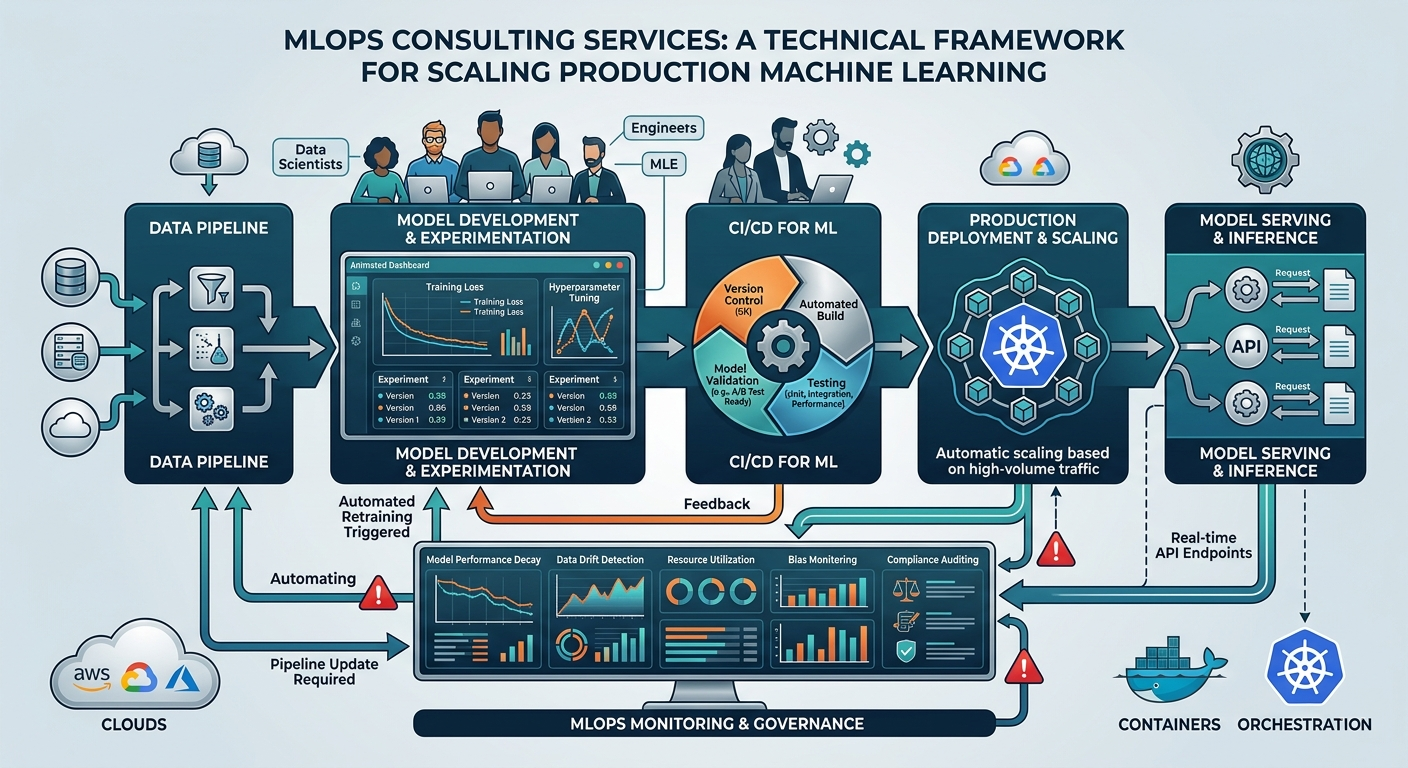 March 16, 2026Read in 16 min.
MLOps consulting services: A technical framework for scaling production machine learning
Operationalize ML with expert MLOps consulting. We bridge the gap between Data Science and DevOps using CI/CD/CT pipelines, automated drift detection, and feature stores to reduce Time-to-Value and technical debt. -
 March 12, 2026Read in 12 min.
Choosing your generative AI development company
Compare the best generative AI companies for your enterprise. From custom LLMs to agentic workflows, discover the top partners driving innovation and ROI in the AI-first era. -
 March 6, 2026Read in 15 min.
PyTorch vs TensorFlow: What’s the difference and which one wins
Stop choosing between research and production. Learn how Keras 3 and multi-backend architectures are unifying the AI ecosystem. A professional developer’s deep dive into performance, cost, and scalability. -
 March 5, 2026Read in 15 min.
Choosing the best MVP development companies
Top-rated agencies providing bespoke MVP software development services to help startups validate ideas and scale fast -
 March 4, 2026Read in 19 min.
Top software testing companies: Leading QA partners
Leading software testing companies. Compare top QA service providers, evaluation criteria, and industry trends to find your ideal partner. -
 February 28, 2026Read in 22 min.
Top 10 software development companies in the USA
Find the best US-based software developers. From AI to enterprise web apps, here are the top 10 software development companies in the USA you should hire in 2026. -
 February 25, 2026Read in 12 min.
Top 10 Node.js Development Companies
Industry's leading Node.js development companies. Our deep-dive review covers technical maturity, cloud-native expertise, and architectural standards to help you find the perfect software partner. -
 February 23, 2026Read in 16 min.
Top 10 mobile application development companies: Selection & industry leaders
Top 10 mobile application development companies for your next project. Compare top-rated mobile app developers, explore custom app development company profiles, and learn the secrets to a successful technical partnership. -
 February 23, 2026Read in 12 min.
How to choose the best Android app development agency: Rankings & selection criteria
Compare the leading Android development companies. Our guide highlights the top 10 firms for enterprise architecture, security, and custom app engineering. -
 February 19, 2026Read in 18 min.
IT Managed Service Providers (MSPs): Why does your business need one?
Stop guessing. Compare the 10 leading IT Managed Service Providers (MSPs) for any-sized companies. Find proven security, cloud, and 24/7 support. View the comparison! -
 February 11, 2026Read in 18 min.
Top 10 Cloud migration companies: Strategic architecture of cloud migration
Compare the top 10 cloud migration companies based on architectural depth, FinOps integration, and modernization capabilities. Expert insights into AWS, Azure, and GCP transformation strategies for enterprise leaders. -
 February 10, 2026Read in 12 min.
Top 10 Flutter development companies: Entities, ecosystems, and strategic selection
Compare the world’s leading Flutter agencies. Our expert analysis covers the top 10 firms, evaluating their mastery of Dart, Skia performance, and Clean Architecture. -
 February 6, 2026Read in 19 min.
Top 10 React development companies: Architecting high-performance digital products
Top-rated React development companies for your next project. Our expert guide analyzes the best React JS web development agencies on performance, scalability, and tech standards -
 February 3, 2026Read in 24 min.
Web application development companies: How to choose the right partner
Find the right web app development company. Explore services, technologies, engagement models, and 10 expert tips for choosing your strategic development partner. -
 February 3, 2026Read in 11 min.
Top 10 Python Development Companies
Looking for a top Python development company? Compare the industry's leading Python software development agencies. Get insights on pricing, expertise, and how to hire a Python development firm that scales your business. -
 January 27, 2026Read in 15 min.
Top cloud application development companies you should follow
Best Cloud Application Development companies for your project. Compare expertise in AWS, Azure, & GCP. See client reviews, specialization, and costs for top Cloud-Native firms -
 January 23, 2026Read in 21 min.
Dedicated development team model: Definition, benefits, and nuances
Scale your product fast with a Dedicated Development Team. Compare DDT vs. outsourcing, analyze costs, and get a management blueprint for success. -
 January 21, 2026Read in 15 min.
Best energy software development companies to partnership
Top 10 energy sector software development leaders. Learn how to choose the right partner for your renewable energy software project. -
 January 19, 2026Read in 8 min.
The Low-Code Revolution in Oil & Gas: Accelerating Digital Transformation
From real-time well monitoring to automated safety permits - see how low-code applications drive operational efficiency and ESG compliance in the energy sector’s volatile market. -
 January 19, 2026Read in 18 min.
Top 10 desktop application development companies to watch
Compare the world’s best desktop development firms. From legacy modernization to high-performance C++ and cross-platform Electron apps, find your perfect vendor here. -
 December 24, 2025Read in 10 min.
Software development company in Florida: What we do, how we work, and where we add value
Florida's premier custom software partner for enterprise-grade applications. We specialize in fintech, healthcare, and scalable cloud systems. Innovate with Florida experts. -
 December 9, 2025Read in 10 min.
Custom software development for San Diego businesses
Find out about the demands of software development in San Diego and how local companies are adapting to technology needs. -
 December 9, 2025Read in 9 min.
Specifics and perspectives of custom software development in Los Angeles
Find out why choosing a custom software development company in Los Angeles is essential for evolving industries like fintech and healthcare. -
 December 6, 2025Read in 8 min.
Software development in San Francisco: Custom solutions for Area
Find out how software development in San Francisco sets standards in technology and customer satisfaction. -
 November 28, 2025Read in 14 min.
Custom software development in Houston: State and perspectives
Partner with a leading custom software development company in Houston to harness the power of technology for your growth. -
 November 28, 2025Read in 12 min.
Custom software development Dallas businesses need
Find out how a custom software development company in Dallas can elevate your business in a booming tech landscape filled with opportunities. -
 November 27, 2025Read in 11 min.
Software development services in Austin
Find out how a custom software development company in Austin can elevate your business in a booming tech landscape filled with opportunities. -
 November 12, 2025Read in 34 min.
Top FinTech software development companies: The core of modern finance
Compare the top-rated FinTech software developers based on expertise in AI, Blockchain, and compliance. Choose your perfect partner now! -
 November 4, 2025Read in 12 min.
AI in biotech: Application, specifics, and challenges
How AI and Machine Learning are transforming biotechnology, accelerating drug discovery, genome sequencing, and personalized medicine. Learn the applications, challenges, and future. -
 October 28, 2025Read in 20 min.
The best AI development companies in the US
The definitive guide to hiring the best AI development company. See our ranking by MLOps maturity, GenAI expertise, and verified client ROI. Get transparent costs and a partnership blueprint -
 October 20, 2025Read in 16 min.
How to hire the best ReactJS developers in a constantly growing market
Hire the top ReactJS developers. Get pre-vetted, senior React & Next.js engineers matched to your project in 48 hours. Start risk-free -
 October 16, 2025Read in 25 min.
Top 10 AI chatbot development companies
Leading chatbot development companies. Our expert guide helps you choose the best firm for AI chatbot solutions, custom development, and seamless integration -
 October 9, 2025Read in 17 min.
Top biotech software companies: Choosing the right tech partner for life-changing innovations
Leading biotech software companies impacting drug discovery, R&D, and lab operations. See how their innovative platforms are speeding up scientific breakthroughs. -
 September 30, 2025Read in 16 min.
All you need to know about custom software development for small business
Stop wasting time on workarounds! Discover how custom software development empowers your small business with tailored workflows, maximum efficiency, and predictable ROI. -
 September 4, 2025Read in 14 min.
Top 10 leading application modernization companies
Top 10 application modernization companies that can transform your business with cloud, AI, and microservices for agility and growth -
 August 28, 2025Read in 14 min.
Develop once, run everywhere: .NET Core cross-platform development
Struggling with multi-OS development? Discover how .NET empowers you to build versatile, high-performance applications that run seamlessly across Windows, macOS, and Linux with ease. -
 August 21, 2025Read in 14 min.
Why offshore .NET development is the best choice for your business
Struggling with talent shortages or escalating development costs? Explores how embracing offshore .NET development can be the strategic advantage your business needs to build innovative solutions faster and more cost-effectively. -
 August 18, 2025Read in 14 min.
.NET vs Java: Comparison, use cases, pros and cons
Unsure whether to use .NET or Java? This guide breaks down their strengths, weaknesses, and ideal applications to help you pick the best technology. -
 August 11, 2025Read in 24 min.
Top 10 Angular development companies to keep an eye on
Leading Angular development companies. Expert Angular developers offering top-tier web application development, consulting, and solutions for your next project. -
 August 7, 2025Read in 15 min.
Hire Angular developers: What you need to know
Need hire Angular developers? Get access to skilled, dedicated Angular teams for your web projects. We provide expert Angular solutions with flexible engagement models. Contact us today! -
 August 1, 2025Read in 9 min.
Why choose Angular for web development
Why Angular is a leading choice for web development. Learn about its powerful features, scalability, and benefits for building robust, high-performance applications. -
 August 1, 2025Read in 12 min.
Hiring .NET developers: Step-by-step guide
Frustrated with the challenges of hiring skilled .NET developers? This article provides a proven framework to help you find, vet, and hire the right talent for your team, avoiding common recruiting mistakes. -
 February 13, 2025Read in 15 min.
What is HMI development, and why is it trending now?
Human-Machine Interface (HMI) development is revolutionizing the way humans interact with machines, driving innovation across industries. -
 December 11, 2024Read in 10 min.
Python vs Java: Key differences, pros, and cons for developers
Key differences between Python and Java, including syntax, performance, and use cases. Find out which language suits your project best -
 October 10, 2024Read in 11 min.
The future of web development: WordPress vs React.js?
Confused between WordPress or React.js? Explore our detailed comparison to find out which platform suits your needs best -
 August 8, 2024Read in 14 min.
AD and Azure AD: What is the difference, and which is better for you?
Differences between Azure Active Directory (AAD) and traditional Active Directory (AD) in this comprehensive comparison. -
 August 5, 2024Read in 15 min.
ESG software development services: Effective ESG software solutions
Innovative ESG software solutions can help your business achieve its sustainability goals. Develop customized software that enhances environmental, social, and governance (ESG) performance, ensuring compliance and driving positive impact -
 July 31, 2024Read in 7 min.
Benefits of Azure Active Directory
Key benefits of Azure Active Directory(AD), including enhanced security, simplified management, and cost savings for your business -
 April 22, 2024Read in 12 min.
Software modernization: What is it & why it matters
Discover the essence of software modernization and its pivotal role in contemporary software development. Uncover why it's crucial. -
 April 22, 2024Read in 20 min.
Legacy app modernization: A comprehensive guide
Revitalize your business with our guide on legacy application modernization. Transform your legacy systems to make them more efficient and innovative. -
 April 22, 2024Read in 16 min.
Digital product design: What is it and why you need it
Unlock innovation with expert digital product design insights. Explore the latest trends and strategies for creating exceptional user experiences. -
 April 21, 2024Read in 11 min.
Healthcare product design: Tips for app development success
Explore the art of healthcare product design in our latest blog post. Discover how innovative design principles are shaping the future of medical solutions -
 April 18, 2024Read in 9 min.
Azure app modernization: Benefits of migrating to Microsoft
Key benefits of Azure app modernization and how migrating to Microsoft can enhance performance, scalability, and compliance -
 March 11, 2024Read in 12 min.
How to choose asset management software for oil and gas in 2026
Explore more ways to optimize operations and streamline processes in oil and gas. Follow our tips to choose the best-fit assent management software in 2026 -
 March 11, 2024Read in 13 min.
AI software development for oil and gas: A comprehensive guide
Explore the transformative power of artificial intelligence software development for oil and gas and the practices of global industry leaders in our blog. -
 March 11, 2024Read in 19 min.
Cloud application modernization: How to improve your app
Cloud application modernization makes app more competitive and business more profitable. The key strategies, tips, and its benefits — in this article! -
 March 11, 2024Read in 12 min.
Enterprise application modernization: Revolutionize your business
Future-proof your business with our guide to enterprise app modernization. Learn strategic approaches, key technologies, and best practices for legacy system transformation and enhanced agility -
 March 11, 2024Read in 12 min.
LIMS integration: Benefits & how it works
Can LIMS integration be called a CRM for laboratories? What to keep in mind during LIMS software development and integration? Find out more in our article. -
 March 11, 2024Read in 11 min.
Active directory integration: What is it & how to do it effectively
Discover seamless Active Directory integration strategies in our latest blog post. Optimize user management with the Blackthorn Vision team! -
 March 5, 2024Read in 15 min.
Mobile app UX design: Basics that will improve user experience
Mobile app UX design differs from the web. Explore these differences, the process, and the main pitfalls with our experts in this article. -
 March 5, 2024Read in 11 min.
HIPAA compliance checklist for healthcare software development 2026
Check the updated HIPAA security guidelines to ensure the safety and privacy of patients' data, it is important to adhere it when creating applications -
 March 5, 2024Read in 9 min.
How to use business process automation to improve oil and gas production
Discover how business process automation can help optimize oil and gas production and improve your bottom line. -
 March 3, 2024Read in 14 min.
Desktop to web migration: everything you need to know
Planning a desktop to web migration? Get essential insights on strategy, technical challenges, approaches, and how to successfully modernize your legacy application. -
 March 3, 2024Read in 11 min.
The process of application migration to the cloud: stages, approaches, and tools
Find out how to effectively migrate your legacy system and data to the cloud without disrupting your business processes. -
 March 3, 2024Read in 16 min.
Benefits of outsourcing software development
Key advantages of outsourcing software development for businesses. Learn how outsourcing can reduce costs, increase efficiency, and provide access to specialized expertise -
 March 3, 2024Read in 13 min.
Boosting cloud security in healthcare with Azure Cloud Services
Explore the most common challenges in the cloud security of healthcare organizations and discover our tips on eliminating them efficiently. -
 March 3, 2024Read in 19 min.
Healthcare app design: how to create a great user experience
Struggling with medical app UX? Get insights into user-centered design, crucial security measures, and future trends to create impactful healthcare applications. -
 March 3, 2024Read in 16 min.
MVP vs. prototype in startup software development: what’s the difference?
Crucial differences between MVP and Prototype in startup software development. Learn how Blackthorn Vision leverages both to build successful products, reduce risk, and accelerate your time-to-market -
 March 3, 2024Read in 12 min.
How to build a custom EHR solution: tips for decision makers
We can augment your talent pool with dedicated developers proficient in healthcare business automation. Check the success stories from our clients. -
 March 3, 2024Read in 7 min.
What is software as a medical device and why it matters for the healthcare industry
From developing SaMD and SiMD to building efficient EHR systems, we unleash the value of business process automation for healthcare providers. -
 March 3, 2024Read in 6 min.
An overview of medical biotechnology in 2026 and beyond
We offer a full cycle of software development for leading biotech companies - from idea visualization to building an MVP and fully-fledged product. -
 March 3, 2024Read in 9 min.
Smart farming: agricultural technology of the future
We have expertise in data analytics, AI, and Machine Learning to build game-changing software tailored for your agricultural business. -
 March 3, 2024Read in 7 min.
BV people: a talk with Head of HR and recruitment in Blackthorn Vision
BV people: a talk with the Head of HR and Recruitment on candidate selection, the company's ideals, and the current state of the Ukrainian IT industry. -
 March 3, 2024Read in 9 min.
What is robotic process automation and how it changes the travel and hospitality industry
How does RPA work and, most importantly, how to utilize it in your travel and hospitality business? Find out in our new article now. -
 March 3, 2024Read in 12 min.
An overview of agricultural biotechnology in 2026
We cooperated with agricultural biotechnology industry leaders to design software that helps scientists and farmers automate and optimize all processes. -
 March 3, 2024Read in 10 min.
Everything you need to know about Microsoft Azure: benefits, use cases, applications
Microsoft Azure is a leading cloud service provider that offers numerous opportunities for businesses to optimize and secure their operations and services. -
 March 3, 2024Read in 10 min.
Smart manufacturing technology and trends for 2026 and beyond
Stay updated on the latest manufacturing technology trends, that drives innovation, efficiency, and growth in the industry to boost your project. -
 March 3, 2024Read in 8 min.
How to choose and manage your dedicated development team
While there are many benefits of working with dedicated software development teams, it’s not a universal solution. Discover why it is so. -
 March 3, 2024Read in 8 min.
What is the best cloud deployment model? Types of cloud computing that will benefit your business
With the guidance of our post, you can better understand various cloud computing deployment strategies. Examine cloud solutions for your company's needs. -
 March 3, 2024Read in 10 min.
Offshore vs. Nearshore outsourcing: what’s best for your business?
What is the difference between the three outsourcing types, and which one is better for your business? Please read our article to find out! -
 March 3, 2024Read in 14 min.
How to develop a medical app for doctors: everything you need to know
The mobile health industry is one of the most rapidly growing segments worldwide. Learn more about the mHealth industry in our new article. -
 March 3, 2024Read in 14 min.
Business analyst: a leading player in your software development team
Your guide to the Business Analyst's vital role in software development teams, including Agile practices, key responsibilities, techniques, and delivering real business value. -
 March 3, 2024Read in 9 min.
Hyperautomation – the future of business processes
Now business processes - Hyperautomation are increasingly not following stable and predictable scenarios. It creates a need for a new type of automation. -
 March 3, 2024Read in 6 min.
The future of Oil and Gas: industry trends and software solutions
Keep up to date on the most recent oil and gas the industry trends, which are driving modifications in technology, sustainability, and energy exploration. -
 March 3, 2024Read in 6 min.
What is an MVP, and why is it necessary? Minimum viable product examples
Even if you have just a basic vision of what your app should do, we will develop a presentable product that you can pitch to investors. -
 March 3, 2024Read in 14 min.
Top 5 soft skills to work in it successfully and resources to develop them
Are soft skills the new hard skills? Can you make a successful career in IT if you are not an effective communicator or lack creativity? -
 March 3, 2024Read in 5 min.
Mobile app development: Xamarin.Forms — a cross-platform solution that responds to modern challenges
When it comes to mobile development, there is a wide variety of solutions. Xamarin.Forms is a cross-platform solution that responds to modern challenges. -
 February 27, 2024Read in 8 min.
Top 10 programming languages of the future for web and mobile app development
Let’s have a look at the most popular programming languages that may become your business workhorse. -
 February 6, 2024Read in 16 min.
Pharmaceutical software development: Unleashing pharma innovation
Explore the future of pharmaceutical software development: innovative solutions revolutionizing healthcare efficiency & precision.