



There isn’t a single threshold that applies across all IT managed services companies, but most of the MSPs listed typically operate in environments ranging from around 50 employees to several thousand. Smaller MSP-first firms often focus on organizations in the 50–300 employee range, where internal IT teams are lean and need structured external support.
IT Managed Service Providers (MSPs): Why does your business need one?

 18 minutes read
Content
IT department in your company is no longer a support.
It’s infrastructure, security, compliance, data integrity, employee productivity, and increasingly, risk management. When systems slow down, access controls fail, backups don’t work, or a security incident hits, it impacts the company financially and puts its reputation at risk.
The same happens when the company is growing, but its internal IT department doesn’t have the capacity to support the growth. When the team is busy closing tickets and keeping systems running — or firefighting — it doesn’t have time for improvement, modernization, or risk reduction.
That’s when managed IT services companies save the day.


Need an MSP Today?
Schedule a free 15-minute consultation to determine the best provider for your mid-market needs.
What are IT managed services and their providers?
An IT Managed Service Provider (MSP) is a third-party organization that assumes ongoing responsibility for defined parts of your IT operations under a formal service agreement.
The important word here is ongoing.
IT managed services companies are not a break-fix contractors you call when something fails. An MSP operates continuously, monitoring, maintaining, patching, securing, documenting, and reporting. Depending on the engagement model, they may handle:
- Infrastructure monitoring (servers, networks, endpoints)
- Help desk and user support
- Cloud operations
- Cybersecurity monitoring and response
- Backup and disaster recovery
- Identity and access management
- Compliance support
MSP relationships are structured under Service Level Agreements (SLAs) that define response times, uptime expectations, escalation paths, and accountability mechanisms.
There are generally three engagement structures:
- Fully managed IT services: The provider takes primary responsibility for daily IT operations.
- Co-managed IT services: The MSP works alongside your internal IT team, covering specialized functions or 24/7 monitoring while leadership remains internal.
- Specialized managed services: Focused coverage for areas like cybersecurity or cloud management.
The right structure depends on your internal capacity, regulatory exposure, growth plans, and tolerance for operational risk.
It’s important to understand that managed services don’t replace IT leadership. They introduce an operational structure where internal bandwidth or specialization may be limited. And once that’s clear, let’s move to the more practical question: how exactly does that structure benefit your team?
What your teams win from partnering with IT managed service providers?
For organizations balancing digital transformation, cybersecurity exposure, and budget control, managed IT services companies often become operational stabilizers. Below are the five primary ways they support internal IT teams and executive priorities.
Cost optimization
Hiring and retaining experienced IT specialists across networking, cloud, security, compliance, and infrastructure is expensive. Salaries, certifications, ongoing training, and recruitment cycles create both financial and operational strain.
With an managed IT services companies, instead of expanding internal headcount for every new initiative or compliance requirement, companies gain access to cross-functional expertise under a structured monthly agreement.
Access to specialized expertise
Modern IT environments require deep specialization. Cloud architecture, zero-trust security, compliance frameworks (HIPAA, SOC 2, CMMC), identity management, and DevOps automation all demand focused expertise.
Building that range of skills internally is difficult, especially for mid-market organizations.
MSPs employ teams of certified specialists across domains, offering access to Cloud architects, security analysts, compliance advisors, network engineers, and backup, and disaster recovery experts.
Having acces to such a breadth, organizations can adopt modern architectures and governance standards without maintaining a large in-house bench of specialists.
Continuous support
Internal IT teams are often stretched thin. Routine support requests compete with strategic projects, resulting in delayed initiatives and burnout. MSPs provide 24/7 monitoring, incident response, and structured escalation processes. Continuous monitoring identifies vulnerabilities and performance bottlenecks before they escalate into outages.
This results in faster issue resolution, proactive system monitoring, reduced downtime and consistent SLA-backed support.
Ensuring security
Cybersecurity threats continue to escalate in sophistication and frequency. Ransomware, phishing, supply chain attacks, and insider threats pose financial and reputational risks.
Many MSPs now operate as Managed Security Service Providers (MSSPs), offering:
- Endpoint detection and response (EDR)
- Security information and event management (SIEM)
- Vulnerability scanning
- Patch management
- Backup and disaster recovery
- Compliance monitoring
For regulated industries, this structured security posture is often essential to maintaining certifications and passing audits.
Ability to scale
Business growth, mergers, geographic expansion, or seasonal demand shifts require IT systems that can scale quickly. Internal teams may struggle to provision infrastructure, onboard users, and maintain performance at speed.
MSPs offer scalable service models that adapt to workforce expansion, Cloud workload increases, new office locations, application rollouts, and infrastructure modernization initiatives. This flexibility allows organizations to align IT capacity with business growth without constant restructuring of internal teams.
Found Your Next Partner?
Share this list with your CTO or IT Manager and start the conversation!
How to choose the best IT managed services provider for your organization?
Or, more precisely, how to choose the MSP that is actually right for you company?
Most MSPs can keep systems running; the difference lies in the way they handle complexity, accountability, and growth. Here’s the criteria to evaluate.
Does it aligns with your business model?
An MSP that primarily supports 20-50 person companies has a completely different operational DNA than one supporting multi-site organizations with regulatory exposure. Their tooling, staffing depth, reporting structure, and escalation maturity reflect that.
You should be asking:
- Who are their typical clients?
- What industries do they specialize in?
- What compliance frameworks do they regularly support?
- What percentage of their clients are of the same size as your company?
If you operate in healthcare, financial services, government contracting, or manufacturing, your regulatory exposure is crucial. HIPAA, SOC 2, ISO 27001, CMMC — these influence logging requirements, access control policies, retention standards, and audit trails. You don’t want to be someone’s first compliance-heavy client. You want a provider that already has structured processes in place because they’ve done this before.
How deep and mature are their security capabilities?
Security deserves its own lens. All IT managed services companies claims cybersecurity. The question is: what does that mean operationally?
To be sertain, you should clarify the following:
- Do they operate or partner with a Security Operations Center (SOC)?
- Are alerts monitored 24/7 or only during business hours?
- What EDR/XDR platforms do they deploy?
- How often do they conduct vulnerability scans?
- What’s their documented incident response workflow?
If the answers feel general (“we monitor threats and keep you secure”), push deeper. A mature MSP can explain detection timeframes, escalation thresholds, client notification procedures, ransomware containment strategy, and backup verification frequency. If an incident happens, you’ll want documented processes, not improvisation.
What do their Service Level Agreement (SLA), Structure, Reporting, and Governance look like?
Many business owners don’t pay required attention to SLAs. When reviewing one, look for:
- Response time vs. resolution time (they are not the same)
- Guaranteed uptime percentages
- After-hours coverage policies
- Escalation tiers
- Reporting frequency (monthly? quarterly?)
- Performance reviews
Also ask: who owns governance? Is there a dedicated account manager? Do they provide quarterly business reviews? Do they present infrastructure improvement recommendations, or just ticket summaries? A strong MSP report on trends, recurring risks, capacity planning, and lifecycle management.
Do they have potential for scalability and long-term partnership?
Think beyond your current infrastructure. If you plan to expand into new regions, acquire competitors, increase remote workforce headcount, or migrate more workloads to the cloud — can you do all this with your current provider? A provider built purely around reactive support will struggle during rapid growth or consolidation events.
Instead, a promising one will have the following:
- Multi-location support capabilities
- Cloud architecture expertise (Azure, AWS, hybrid)
- Experience with M&A IT integration
- Structured onboarding processes
- Ability to standardize infrastructure across sites
What pricing models do they offer?
Some IT managed services companies advertise low per-user pricing but exclude advanced security layers, backup testing, or after-hours coverage. Those add-ons have a tendency to compound quickly. Don’t look for the cheapest proposal. Look for predictable cost structure and defined boundaries.
You need clarity on:
- What is included vs. excluded?
- Are cybersecurity tools bundled or billed separately?
- Are project-based services extra?
- What triggers additional charges?
- Is there a minimum user/device threshold?
Do your communication standards match?
This may sound intangible, but it matters a lot. Your MSP will interact with your leadership team, your department heads, employees, and, otentially, your auditors. You want structured, calm, clear communicators.
Pay attention to how quickly they respond during sales discussions, how detailed their proposals are, whether they ask intelligent questions about your business, and whether they talk about risk and governance. If they treat onboarding casually, they will treat operations casually too.
A structured evaluation approach
If you want a clean evaluation process, consider the following:
- Define your internal gaps first (security, cloud, capacity, compliance).
- Shortlist three providers aligned with your size and industry.
- Request detailed proposals including SLA documentation.
- Review security frameworks.
- Conduct reference calls.
Now that you know how to evaluate providers, let’s look at a list of established MSPs.
10 best managed IT service providers
If you’re scanning this list as a business owner, here’s the framing to use: you’re not trying to find “the best MSP in the world.” You’re trying to find the best operational fit for your environment, risk exposure, and growth plans.
Some of the providers below are global IT services firms with a managed services arm. Others are MSP-first organizations. That is importnat, because it affects how standardized their delivery is, how flexible they are, and whether you’ll feel like a priority account.
With that in mind, here they are.
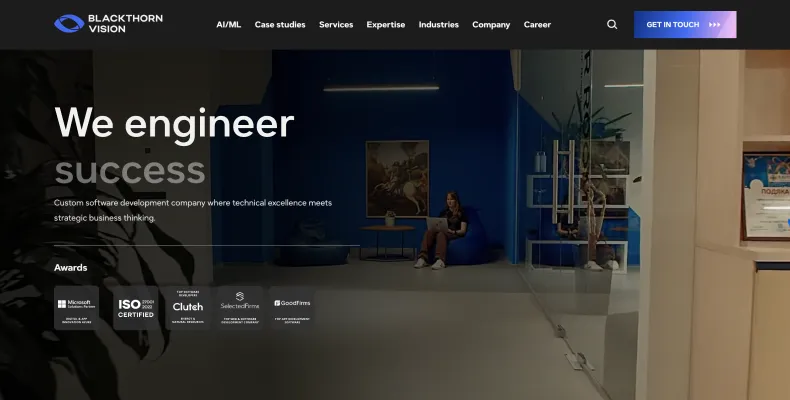
Blackthorn Vision
Blackthorn Vision is best known as a software engineering partner, but it also supports clients in a managed services capacity, especially when the IT environment includes custom applications, integrations, or ongoing modernization work that can’t be cleanly handed off to a generic support desk.
In practical terms, they’re a great fit when your business needs an IT managed service provider who can both build and operate: deliver a system, then stay accountable for keeping it stable, secure, and maintained as requirements change.
The company’s managed services make the most sense in contexts like:
- Organizations running custom software that needs ongoing operational ownership
- Businesses modernizing legacy systems where post-launch stability is as important as delivery
- Teams that need support spanning applications + infrastructure, not just one layer
If your IT stack is more than standard laptops + Microsoft 365, and especially if your core systems are connected through integrations, this build-and-run partner can reduce handover gaps and recurring ownership issues.
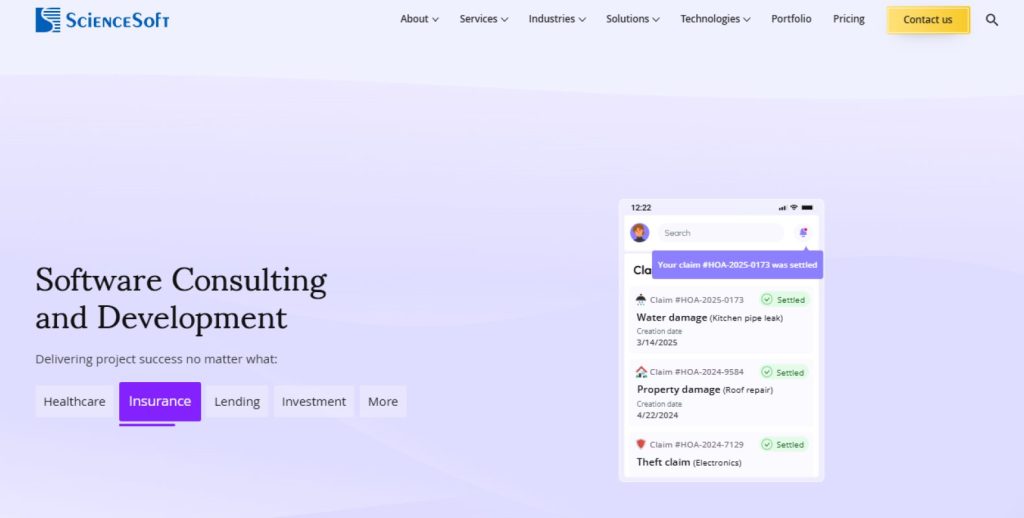
ScienceSoft
ScienceSoft is a long-established IT services company with a broad managed services portfolio. They’re typically considered when a business wants structured, process-led operations across a mixed environment: cloud, on-prem systems, business applications, and security requirements all at once.
ScienceSoft is often evaluated by mid-market and enterprise organizations that want managed services delivered with operational discipline. This IT managed service provider is a fit for companies that don’t want a patchwork of vendors and prefer one operational partner that can cover:
- Infrastructure and cloud operations
- Application support and maintenance
- Security and continuity planning
- Formal service management practices (reporting, governance cadence)
Softchoice
Softchoice is a large IT solutions and services firm with a strong presence around the major enterprise ecosystems, including Microsoft and other mainstream vendors. Their managed services are usually positioned alongside workplace modernization, cloud programs, and standardization efforts.
They’re commonly relevant when a business wants managed services tied to a broader goal: not only keeping systems stable, but also making IT easier to operate and scale through better tooling, standard platforms, and clearer governance.
Softchoice tends to fit when you need:
- Managed services plus workplace and cloud standardization
- Strong familiarity with large vendor ecosystems
- A partner that can support operational delivery while also helping shape modernization direction
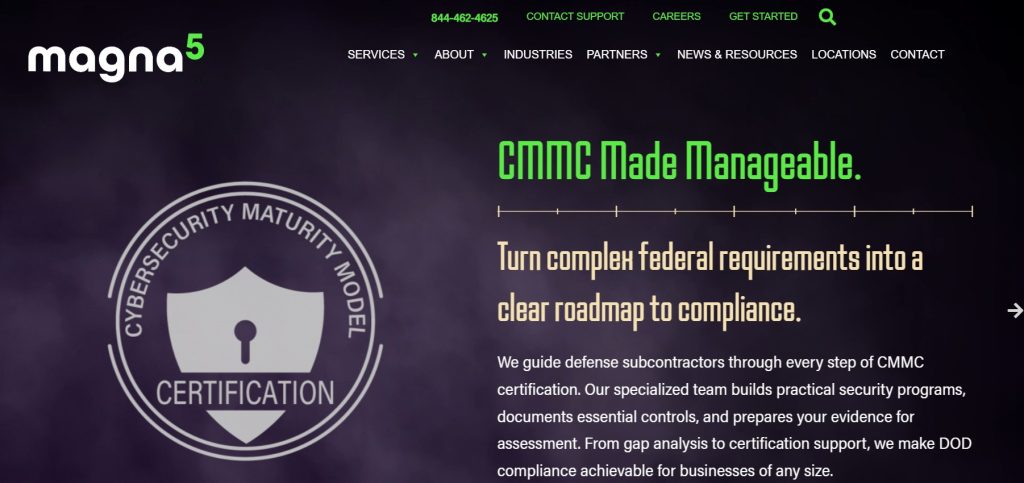
Magna5
Magna5 is a focused managed IT provider, meaning managed services are the core of their business. That usually translates into more standardized service delivery: clear ticketing structures, predictable escalation paths, and packaged operational coverage.
Magna5 typically fits when you want a provider that runs managed IT like an operating function with repeatable processes, predictable delivery, and fewer surprises. They tend to be relevant for organizations that want:
- Clear ownership of day-to-day IT operations
- A consistent service desk model for end users
- Ongoing monitoring and maintenance across endpoints and infrastructure
- A managed services structure that feels operationally mature rather than ad-hoc
Synoptek
Synoptek sits in the category of managed IT companies that are built for organizations that want IT operations to feel less reactive and more managed like a function. They tend to be strongest when the environment is already moderately complex (hybrid infrastructure, multiple business systems, recurring operational friction) and the goal is to standardize and stabilize.
Synoptek is usually considered by mid-market companies that want an MSP that behaves like a long-term operating partner. Their managed services typically span:
- IT operations and service desk coverage
- Infrastructure management across on-prem and cloud
- Security and risk-focused operational support
- Ongoing improvements tied to performance and uptime targets
Dataprise
Dataprise is a classic IT managed service provider: managed services are not an add-on to consulting, they are the product. That tends to translate into predictable service delivery, established playbooks, and a clearer operational model. They’re commonly brought in by organizations that want:
- A single partner accountable for day-to-day IT operations
- Stable service desk coverage for end users
- Ongoing monitoring and maintenance of infrastructure
- Security included as part of the operating baseline, not treated as optional
Logicalis
Logicalis is on the larger, global side of the MSP market. In practice, that means they often work with more mature environments such as multi-location organizations, hybrid cloud setups, and more formal governance requirements. If your business has outgrown local MSP dynamics and needs a provider that can operate across more complexity and scale, Logicalis is typically in that shortlist.
They tend to show up when managed services are part of broader programs such as:
- Network and infrastructure modernization
- Hybrid cloud operations
- Security-aligned infrastructure management
- Standardization across regions or business units
AHEAD
AHEAD is less of a traditional managed IT services company and more of a managed services partner tied to modernization: cloud, data platforms, and enterprise-grade transformation work. Their IT management services make the most sense when the business is already investing in modern infrastructure and needs a partner that can run it reliably.
AHEAD is often relevant when the environment includes:
- Cloud-forward infrastructure (or active cloud migration programs)
- Data platforms that require operational oversight, not just build work
- A need for managed operations aligned with transformation goals
Axians
Axians is part of the larger VINCI Energies group, and it shows in how they operate: they’re built for enterprise-scale service delivery, often across multiple locations and countries, with a strong emphasis on structured operations.
They’re commonly relevant for organizations that need managed services combined with broader infrastructure capability, such as:
- Multi-site or multi-country IT operations
- Hybrid infrastructure management (on-prem + cloud)
- Network-focused service delivery with formal governance
- Standardized IT operations across business units
Axians is usually shortlisted when the business wants a provider with the capacity and operational maturity to run IT consistently at scale.
ManagedSolution
ManagedSolution is a managed services provider that tends to appeal to organizations that want a focused MSP partner rather than a broad, global IT services conglomerate. Their positioning is typically around stable managed IT operations with the kind of structure that supports day-to-day continuity.
They’re often considered by organizations that want:
- A dependable managed IT services model for ongoing operations
- End-user support that feels organized and repeatable
- Infrastructure monitoring and management without building a large in-house team
- A partner that can take ownership of operational continuity while leadership stays focused on the business
Why your company needs managed IT services
Up to this point, we’ve talked about what managed IT service provider is and who the major players are. Now let’s step back and clarify why does a business like yours actually need managed IT services in the first place.
The answer hides in the ability of your current IT structure to realistically keep pace with risk, regulation, growth, and operational expectations. Here are the areas MSP helps you cover.
Keeping up with the progress
Compliance standards tighten every year, Cloud platforms update monthly, security threats evolve every single day. For a lean internal IT team, just maintaining operational stability usually consumes most available bandwidth. That leaves very little room for infrastructure improvements, security hardening, process automation, and strategic modernization.
Over time, this creates technical debt. Systems still function, but they’re not optimized, not standardized, and not ready for scale.
A managed services structure introduces patch management schedules, lifecycle planning, version upgrades, structured monitoring, and proactive performance checks. Instead of reacting to what breaks, you’re working from a roadmap.
If your IT team constantly feels busy but the environment doesn’t feel better year over year, that’s a signal to hire a managed IT services firm.
Meeting sustainability standards
Energy consumption, infrastructure efficiency, and hardware lifecycle management increasingly show up in board discussions and procurement standards. Even if sustainability is not your primary driver, efficiency usually is.
Older infrastructure often consumes more power, requires more cooling, and fails more frequently. That translates into cost, downtime risk, and operational waste. A structured managed services model naturally improves sustainability metrics along the way by introducing inventory management, lifecycle tracking, and modernization planning.
Ensuring employee retention
Strong IT professionals don’t leave because they dislike technology. They leave because they’re stuck doing repetitive mundane tasks with no room for growth. If your internal team spends most of its time fixing recurring workstation issues, you risk losing your best people.
High-performing engineers want to work on architecture, automation, optimization, and forward-looking initiatives. When they’re trapped in reactive maintenance cycles, morale drops and turnover increases.
Managed IT services can rebalance this by shifting routine monitoring, ticket triage, patching, and endpoint management to an MSP.
Avoiding cyberattacks
Cyberattacks are no longer targenting strictly large enterprises. Mid-sized businesses are frequently targeted precisely because their defenses are weaker and their internal resources are limited. The threat surface today includes ransomware, phishing and credential theft, supply chain compromises, insider threats, cloud misconfigurations, and identity-based attacks.
Now think, who is monitoring your logs if an attack begins at 2:00 AM? How quickly can you disable a compromise attack? Are backups verified and recoverable?
Managed services companies, particularly those with integrated security capabilities, ensure continuous monitoring, structured incident response workflows, patch management discipline, access control oversight, and backup testing and recovery planning.
The cost of one serious incident consists of downtime, reputational damage, and regulatory penalties, and can exceed years of managed service investment.
Accessing enterprise-grade tools
The tools required to run a modern, secure IT environment properly are not basic. Here, we are talking about:
- Endpoint detection and response (EDR/XDR) platforms
- Security information and event management (SIEM) systems
- Advanced backup and disaster recovery solutions
- Identity and access management frameworks
- Centralized monitoring and logging tools
- Patch automation platforms
Individually, they can be expensive. More importantly, they require expertise to configure and operate correctly. Buying enterprise-grade software without operational discipline behind it doesn’t reduce risk, it just increases cost.
Managed service providers typically standardize on mature toolsets across their client base. That scale allows MSP companies to deploy proven security platforms, negotiate better vendor pricing, maintain centralized monitoring systems, and ensure tools are actually configured and maintained properly.
For a single organization, assembling and maintaining that stack internally can be disproportionate to size and budget. Through an managed IT service solutions, you gain access to the same class of tooling, but distributed across a broader operating model.
Conclusion
Managed IT services comes down to one question: Can your current IT structure reliably support where your business is going, not just where it is today?
Managed IT services offer you predictability: predictable monitoring, predictable escalation, predictable budgeting, predictable governance. And if your business depends on uptime, data integrity, and risk mitigation, that transition eventually becomes less optional and more strategic with a reliable Managed Services Partner.
FAQ
What is the ideal employee size for the MSPs listed in this Top 10 ranking?
What is the most crucial question I should ask a prospective MSP before signing a long-term contract?
Ask them to walk you through exactly what happens during a serious security incident outside business hours. Who detects the issue, how quickly it is escalated, who contacts you, and how containment is handled. The clarity and specificity of that explanation from an IT service provider reveal far more about operational maturity than marketing materials or sales presentations ever will.
Are these MSPs primarily focused on a specific geographic region, or do they operate globally?
Some providers operate nationally with centralized support models, while others have international footprints capable of supporting multi-country operations. Larger firms often deliver across regions and time zones, whereas MSP-first organizations may concentrate on specific markets while supporting distributed teams remotely.
What is the process for switching from an existing internal IT team or a current MSP to one of these providers?
A structured transition typically begins with a detailed assessment and documentation phase, followed by deployment of monitoring tools, credential transfers, and staged onboarding. Many IT service providers operate a temporary overlap period. Depending on environment complexity, transitions generally take 30 to 90 days.
Do these MSPs offer specialized compliance knowledge required by certain industries?
Many mid-market and enterprise-focused MSPs support compliance frameworks such as HIPAA, SOC 2, ISO 27001, CMMC, or PCI-DSS. However, depth of expertise varies. If compliance is central to your business, you should confirm prior experience in your industry, documentation practices, audit support capability, and familiarity with control mapping.
How can I verify the Service Level Agreements (SLAs) and guaranteed response times of the MSPs on this list?
Review the contract language carefully and distinguish between response time and resolution time. Ask IT managed services companies for sample performance reports that demonstrate historical SLA adherence. Most importantly, speak directly with current clients and ask whether commitments were consistently honored during real incidents.
What services should be non-negotiable when evaluating an MSP for the mid-market?
At minimum, you should expect 24/7 monitoring, structured patch management, endpoint detection and response, reliable backup and disaster recovery with testing, multi-factor authentication support, and clearly documented SLAs.
What is the difference between Managed IT Services and Co-Managed IT Services (Co-MITS)?
Fully managed IT services mean the provider assumes primary responsibility for daily IT operations, often replacing or significantly reducing internal operational workload. Co-managed IT services, on the other hand, are structured to supplement an existing internal IT team. In a co-managed model, the MSP might handle 24/7 monitoring, security oversight, or specialized infrastructure tasks while internal leadership retains strategic direction and institutional knowledge.
How often are these MSP rankings updated, and what criteria were used to select the Top 10?
Rankings like this are typically reassessed periodically based on service breadth, operational maturity, market presence, and ability to support mid-market to enterprise clients. Selection criteria for an IT service provider emphasize structured service delivery, cybersecurity capabilities, governance frameworks, and scalability.
You may also like
-
 April 1, 2026Read in 17 min.
The strategic hub: Why global leaders choose software development outsourcing in Ukraine
Why global leaders choose software development outsourcing in Ukraine. Explore the top 10 IT companies, specialized tech stacks, and how to scale your business with a dedicated Ukrainian development team. -
 March 31, 2026Read in 19 min.
Selecting the best Java development companies
Leading Java development companies. Analyzes top-tier Java software development services, evaluation criteria, and delivery models to help you find the perfect strategic partner for scalable enterprise solutions -
 March 31, 2026Read in 14 min.
Top progressive web app development companies
Partner with a leading progressive web application development company. Explore our list of top PWA developers in the USA and globally, offering high-speed, offline-ready, and SEO-friendly web app solutions -
 March 23, 2026Read in 23 min.
Why data warehouses fail and how to design one that doesn’t
top building data swamps. Explore the evolution of DWH design, including ELT workflows, Data Vault 2.0, and high-performance cloud modeling strategies -
 March 18, 2026Read in 13 min.
Choosing React Native app development company
Partner with a premier react native development company. Compare the top 10 firms offering elite react native app development services for high-performance apps. -
 March 17, 2026Read in 15 min.
Choosing the Right Computer Vision Development Company for Your Project
From computer vision consulting to full-scale software development, learn how modern vision systems automate defect detection and optimize operations across healthcare, retail, and manufacturing. -
 March 16, 2026Read in 12 min.
AI in data governance: Everything technology leaders need to know
Master Data Governance for AI. Learn how to manage data drift, bias mitigation, and active metadata using NIST standards. Expert guide on MLOps, RAG security, and EU AI Act compliance for 2026. -
 March 16, 2026Read in 16 min.
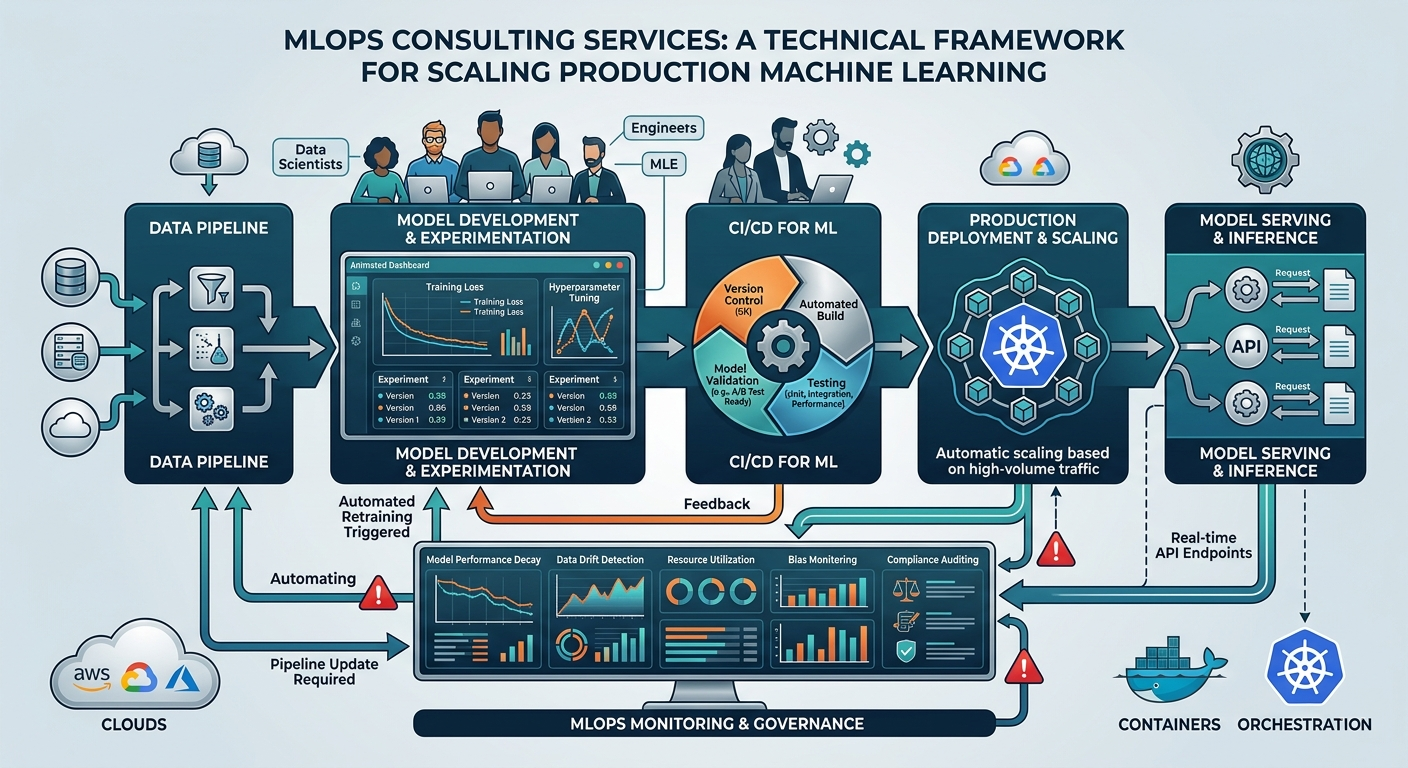
MLOps consulting services: A technical framework for scaling production machine learning
Operationalize ML with expert MLOps consulting. We bridge the gap between Data Science and DevOps using CI/CD/CT pipelines, automated drift detection, and feature stores to reduce Time-to-Value and technical debt. -
 March 12, 2026Read in 12 min.
Choosing your generative AI development company
Compare the best generative AI companies for your enterprise. From custom LLMs to agentic workflows, discover the top partners driving innovation and ROI in the AI-first era. -
 March 6, 2026Read in 15 min.
PyTorch vs TensorFlow: What’s the difference and which one wins
Stop choosing between research and production. Learn how Keras 3 and multi-backend architectures are unifying the AI ecosystem. A professional developer’s deep dive into performance, cost, and scalability. -
 March 5, 2026Read in 15 min.
Choosing the best MVP development companies
Top-rated agencies providing bespoke MVP software development services to help startups validate ideas and scale fast -
 March 4, 2026Read in 19 min.
Top software testing companies: Leading QA partners
Leading software testing companies. Compare top QA service providers, evaluation criteria, and industry trends to find your ideal partner. -
 February 28, 2026Read in 22 min.
Top 10 software development companies in the USA
Find the best US-based software developers. From AI to enterprise web apps, here are the top 10 software development companies in the USA you should hire in 2026. -
 February 25, 2026Read in 12 min.
Top 10 Node.js Development Companies
Industry's leading Node.js development companies. Our deep-dive review covers technical maturity, cloud-native expertise, and architectural standards to help you find the perfect software partner. -
 February 23, 2026Read in 16 min.
Top 10 mobile application development companies: Selection & industry leaders
Top 10 mobile application development companies for your next project. Compare top-rated mobile app developers, explore custom app development company profiles, and learn the secrets to a successful technical partnership. -
 February 23, 2026Read in 12 min.
How to choose the best Android app development agency: Rankings & selection criteria
Compare the leading Android development companies. Our guide highlights the top 10 firms for enterprise architecture, security, and custom app engineering. -
 February 19, 2026Read in 45 min.
Top 30 software development companies: Categories, red flags, and the selection strategy
We’ve analyzed the top 30 software development companies based on expertise, client results, and innovation. Find your ideal match here! -
 February 11, 2026Read in 18 min.
Top 10 Cloud migration companies: Strategic architecture of cloud migration
Compare the top 10 cloud migration companies based on architectural depth, FinOps integration, and modernization capabilities. Expert insights into AWS, Azure, and GCP transformation strategies for enterprise leaders. -
 February 10, 2026Read in 12 min.
Top 10 Flutter development companies: Entities, ecosystems, and strategic selection
Compare the world’s leading Flutter agencies. Our expert analysis covers the top 10 firms, evaluating their mastery of Dart, Skia performance, and Clean Architecture. -
 February 6, 2026Read in 19 min.
Top 10 React development companies: Architecting high-performance digital products
Top-rated React development companies for your next project. Our expert guide analyzes the best React JS web development agencies on performance, scalability, and tech standards -
 February 3, 2026Read in 24 min.
Web application development companies: How to choose the right partner
Find the right web app development company. Explore services, technologies, engagement models, and 10 expert tips for choosing your strategic development partner. -
 February 3, 2026Read in 11 min.
Top 10 Python Development Companies
Looking for a top Python development company? Compare the industry's leading Python software development agencies. Get insights on pricing, expertise, and how to hire a Python development firm that scales your business. -
 January 27, 2026Read in 15 min.
Top cloud application development companies you should follow
Best Cloud Application Development companies for your project. Compare expertise in AWS, Azure, & GCP. See client reviews, specialization, and costs for top Cloud-Native firms -
 January 23, 2026Read in 21 min.
Dedicated development team model: Definition, benefits, and nuances
Scale your product fast with a Dedicated Development Team. Compare DDT vs. outsourcing, analyze costs, and get a management blueprint for success. -
 January 21, 2026Read in 15 min.
Best energy software development companies to partnership
Top 10 energy sector software development leaders. Learn how to choose the right partner for your renewable energy software project. -
 January 19, 2026Read in 8 min.
The Low-Code Revolution in Oil & Gas: Accelerating Digital Transformation
From real-time well monitoring to automated safety permits - see how low-code applications drive operational efficiency and ESG compliance in the energy sector’s volatile market. -
 January 19, 2026Read in 18 min.
Top 10 desktop application development companies to watch
Compare the world’s best desktop development firms. From legacy modernization to high-performance C++ and cross-platform Electron apps, find your perfect vendor here. -
 December 24, 2025Read in 10 min.
Software development company in Florida: What we do, how we work, and where we add value
Florida's premier custom software partner for enterprise-grade applications. We specialize in fintech, healthcare, and scalable cloud systems. Innovate with Florida experts. -
 December 9, 2025Read in 10 min.
Custom software development for San Diego businesses
Find out about the demands of software development in San Diego and how local companies are adapting to technology needs. -
 December 9, 2025Read in 9 min.
Specifics and perspectives of custom software development in Los Angeles
Find out why choosing a custom software development company in Los Angeles is essential for evolving industries like fintech and healthcare. -
 December 6, 2025Read in 8 min.
Software development in San Francisco: Custom solutions for Area
Find out how software development in San Francisco sets standards in technology and customer satisfaction. -
 November 28, 2025Read in 14 min.
Custom software development in Houston: State and perspectives
Partner with a leading custom software development company in Houston to harness the power of technology for your growth. -
 November 28, 2025Read in 12 min.
Custom software development Dallas businesses need
Find out how a custom software development company in Dallas can elevate your business in a booming tech landscape filled with opportunities. -
 November 27, 2025Read in 11 min.
Software development services in Austin
Find out how a custom software development company in Austin can elevate your business in a booming tech landscape filled with opportunities. -
 November 12, 2025Read in 34 min.
Top FinTech software development companies: The core of modern finance
Compare the top-rated FinTech software developers based on expertise in AI, Blockchain, and compliance. Choose your perfect partner now! -
 November 4, 2025Read in 12 min.
AI in biotech: Application, specifics, and challenges
How AI and Machine Learning are transforming biotechnology, accelerating drug discovery, genome sequencing, and personalized medicine. Learn the applications, challenges, and future. -
 October 28, 2025Read in 20 min.
The best AI development companies in the US
The definitive guide to hiring the best AI development company. See our ranking by MLOps maturity, GenAI expertise, and verified client ROI. Get transparent costs and a partnership blueprint -
 October 20, 2025Read in 16 min.
How to hire the best ReactJS developers in a constantly growing market
Hire the top ReactJS developers. Get pre-vetted, senior React & Next.js engineers matched to your project in 48 hours. Start risk-free -
 October 16, 2025Read in 25 min.
Top 10 chatbot development companies
Leading chatbot development companies. Our expert guide helps you choose the best firm for AI chatbot solutions, custom development, and seamless integration -
 October 9, 2025Read in 17 min.
Top biotech software companies: Choosing the right tech partner for life-changing innovations
Leading biotech software companies impacting drug discovery, R&D, and lab operations. See how their innovative platforms are speeding up scientific breakthroughs. -
 September 30, 2025Read in 16 min.
All you need to know about custom software development for small business
Stop wasting time on workarounds! Discover how custom software development empowers your small business with tailored workflows, maximum efficiency, and predictable ROI. -
 September 4, 2025Read in 14 min.
Top 10 leading application modernization companies
Top 10 application modernization companies that can transform your business with cloud, AI, and microservices for agility and growth -
 August 28, 2025Read in 14 min.
Develop once, run everywhere: .NET Core cross-platform development
Struggling with multi-OS development? Discover how .NET empowers you to build versatile, high-performance applications that run seamlessly across Windows, macOS, and Linux with ease. -
 August 21, 2025Read in 14 min.
Why offshore .NET development is the best choice for your business
Struggling with talent shortages or escalating development costs? Explores how embracing offshore .NET development can be the strategic advantage your business needs to build innovative solutions faster and more cost-effectively. -
 August 18, 2025Read in 14 min.
.NET vs Java: Comparison, use cases, pros and cons
Unsure whether to use .NET or Java? This guide breaks down their strengths, weaknesses, and ideal applications to help you pick the best technology. -
 August 11, 2025Read in 24 min.
Top 10 Angular development companies to keep an eye on
Leading Angular development companies. Expert Angular developers offering top-tier web application development, consulting, and solutions for your next project. -
 August 7, 2025Read in 15 min.
Hire Angular developers: What you need to know
Need hire Angular developers? Get access to skilled, dedicated Angular teams for your web projects. We provide expert Angular solutions with flexible engagement models. Contact us today! -
 August 1, 2025Read in 9 min.
Why choose Angular for web development
Why Angular is a leading choice for web development. Learn about its powerful features, scalability, and benefits for building robust, high-performance applications. -
 August 1, 2025Read in 12 min.
Hiring .NET developers: Step-by-step guide
Frustrated with the challenges of hiring skilled .NET developers? This article provides a proven framework to help you find, vet, and hire the right talent for your team, avoiding common recruiting mistakes. -
 February 13, 2025Read in 15 min.
What is HMI development, and why is it trending now?
Human-Machine Interface (HMI) development is revolutionizing the way humans interact with machines, driving innovation across industries. -
 December 11, 2024Read in 10 min.
Python vs Java: Key differences, pros, and cons for developers
Key differences between Python and Java, including syntax, performance, and use cases. Find out which language suits your project best -
 October 10, 2024Read in 11 min.
The future of web development: WordPress vs React.js?
Confused between WordPress or React.js? Explore our detailed comparison to find out which platform suits your needs best -
 August 8, 2024Read in 14 min.
AD and Azure AD: What is the difference, and which is better for you?
Differences between Azure Active Directory (AAD) and traditional Active Directory (AD) in this comprehensive comparison. -
 August 5, 2024Read in 15 min.
ESG software development services: Effective ESG software solutions
Innovative ESG software solutions can help your business achieve its sustainability goals. Develop customized software that enhances environmental, social, and governance (ESG) performance, ensuring compliance and driving positive impact -
 July 31, 2024Read in 7 min.
Benefits of Azure Active Directory
Key benefits of Azure Active Directory(AD), including enhanced security, simplified management, and cost savings for your business -
 April 22, 2024Read in 12 min.
Software modernization: What is it & why it matters
Discover the essence of software modernization and its pivotal role in contemporary software development. Uncover why it's crucial. -
 April 22, 2024Read in 20 min.
Legacy app modernization: A comprehensive guide
Revitalize your business with our guide on legacy application modernization. Transform your legacy systems to make them more efficient and innovative. -
 April 22, 2024Read in 16 min.
Digital product design: What is it and why you need it
Unlock innovation with expert digital product design insights. Explore the latest trends and strategies for creating exceptional user experiences. -
 April 21, 2024Read in 11 min.
Healthcare product design: Tips for app development success
Explore the art of healthcare product design in our latest blog post. Discover how innovative design principles are shaping the future of medical solutions -
 April 18, 2024Read in 9 min.
Azure app modernization: Benefits of migrating to Microsoft
Key benefits of Azure app modernization and how migrating to Microsoft can enhance performance, scalability, and compliance -
 March 11, 2024Read in 12 min.
How to choose asset management software for oil and gas in 2026
Explore more ways to optimize operations and streamline processes in oil and gas. Follow our tips to choose the best-fit assent management software in 2026 -
 March 11, 2024Read in 13 min.
AI software development for oil and gas: A comprehensive guide
Explore the transformative power of artificial intelligence software development for oil and gas and the practices of global industry leaders in our blog. -
 March 11, 2024Read in 19 min.
Cloud application modernization: How to improve your app
Cloud application modernization makes app more competitive and business more profitable. The key strategies, tips, and its benefits — in this article! -
 March 11, 2024Read in 12 min.
Enterprise application modernization: Revolutionize your business
Future-proof your business with our guide to enterprise app modernization. Learn strategic approaches, key technologies, and best practices for legacy system transformation and enhanced agility -
 March 11, 2024Read in 12 min.
LIMS integration: Benefits & how it works
Can LIMS integration be called a CRM for laboratories? What to keep in mind during LIMS software development and integration? Find out more in our article. -
 March 11, 2024Read in 11 min.
Active directory integration: What is it & how to do it effectively
Discover seamless Active Directory integration strategies in our latest blog post. Optimize user management with the Blackthorn Vision team! -
 March 5, 2024Read in 15 min.
Mobile app UX design: Basics that will improve user experience
Mobile app UX design differs from the web. Explore these differences, the process, and the main pitfalls with our experts in this article. -
 March 5, 2024Read in 11 min.
HIPAA compliance checklist for healthcare software development 2026
Check the updated HIPAA security guidelines to ensure the safety and privacy of patients' data, it is important to adhere it when creating applications -
 March 5, 2024Read in 9 min.
How to use business process automation to improve oil and gas production
Discover how business process automation can help optimize oil and gas production and improve your bottom line. -
 March 3, 2024Read in 14 min.
Desktop to web migration: everything you need to know
Planning a desktop to web migration? Get essential insights on strategy, technical challenges, approaches, and how to successfully modernize your legacy application. -
 March 3, 2024Read in 11 min.
The process of application migration to the cloud: stages, approaches, and tools
Find out how to effectively migrate your legacy system and data to the cloud without disrupting your business processes. -
 March 3, 2024Read in 16 min.
Benefits of outsourcing software development
Key advantages of outsourcing software development for businesses. Learn how outsourcing can reduce costs, increase efficiency, and provide access to specialized expertise -
 March 3, 2024Read in 13 min.
Boosting cloud security in healthcare with Azure Cloud Services
Explore the most common challenges in the cloud security of healthcare organizations and discover our tips on eliminating them efficiently. -
 March 3, 2024Read in 19 min.
Healthcare app design: how to create a great user experience
Struggling with medical app UX? Get insights into user-centered design, crucial security measures, and future trends to create impactful healthcare applications. -
 March 3, 2024Read in 16 min.
MVP vs. prototype in startup software development: what’s the difference?
Crucial differences between MVP and Prototype in startup software development. Learn how Blackthorn Vision leverages both to build successful products, reduce risk, and accelerate your time-to-market -
 March 3, 2024Read in 12 min.
How to build a custom EHR solution: tips for decision makers
We can augment your talent pool with dedicated developers proficient in healthcare business automation. Check the success stories from our clients. -
 March 3, 2024Read in 7 min.
What is software as a medical device and why it matters for the healthcare industry
From developing SaMD and SiMD to building efficient EHR systems, we unleash the value of business process automation for healthcare providers. -
 March 3, 2024Read in 6 min.
An overview of medical biotechnology in 2026 and beyond
We offer a full cycle of software development for leading biotech companies - from idea visualization to building an MVP and fully-fledged product. -
 March 3, 2024Read in 9 min.
Smart farming: agricultural technology of the future
We have expertise in data analytics, AI, and Machine Learning to build game-changing software tailored for your agricultural business. -
 March 3, 2024Read in 7 min.
BV people: a talk with Head of HR and recruitment in Blackthorn Vision
BV people: a talk with the Head of HR and Recruitment on candidate selection, the company's ideals, and the current state of the Ukrainian IT industry. -
 March 3, 2024Read in 9 min.
What is robotic process automation and how it changes the travel and hospitality industry
How does RPA work and, most importantly, how to utilize it in your travel and hospitality business? Find out in our new article now. -
 March 3, 2024Read in 12 min.
An overview of agricultural biotechnology in 2026
We cooperated with agricultural biotechnology industry leaders to design software that helps scientists and farmers automate and optimize all processes. -
 March 3, 2024Read in 10 min.
Everything you need to know about Microsoft Azure: benefits, use cases, applications
Microsoft Azure is a leading cloud service provider that offers numerous opportunities for businesses to optimize and secure their operations and services. -
 March 3, 2024Read in 10 min.
Smart manufacturing technology and trends for 2026 and beyond
Stay updated on the latest manufacturing technology trends, that drives innovation, efficiency, and growth in the industry to boost your project. -
 March 3, 2024Read in 8 min.
How to choose and manage your dedicated development team
While there are many benefits of working with dedicated software development teams, it’s not a universal solution. Discover why it is so. -
 March 3, 2024Read in 8 min.
What is the best cloud deployment model? Types of cloud computing that will benefit your business
With the guidance of our post, you can better understand various cloud computing deployment strategies. Examine cloud solutions for your company's needs. -
 March 3, 2024Read in 10 min.
Offshore vs. Nearshore outsourcing: what’s best for your business?
What is the difference between the three outsourcing types, and which one is better for your business? Please read our article to find out! -
 March 3, 2024Read in 14 min.
How to develop a medical app for doctors: everything you need to know
The mobile health industry is one of the most rapidly growing segments worldwide. Learn more about the mHealth industry in our new article. -
 March 3, 2024Read in 14 min.
Business analyst: a leading player in your software development team
Your guide to the Business Analyst's vital role in software development teams, including Agile practices, key responsibilities, techniques, and delivering real business value. -
 March 3, 2024Read in 9 min.
Hyperautomation – the future of business processes
Now business processes - Hyperautomation are increasingly not following stable and predictable scenarios. It creates a need for a new type of automation. -
 March 3, 2024Read in 6 min.
The future of Oil and Gas: industry trends and software solutions
Keep up to date on the most recent oil and gas the industry trends, which are driving modifications in technology, sustainability, and energy exploration. -
 March 3, 2024Read in 6 min.
What is an MVP, and why is it necessary? Minimum viable product examples
Even if you have just a basic vision of what your app should do, we will develop a presentable product that you can pitch to investors. -
 March 3, 2024Read in 14 min.
Top 5 soft skills to work in it successfully and resources to develop them
Are soft skills the new hard skills? Can you make a successful career in IT if you are not an effective communicator or lack creativity? -
 March 3, 2024Read in 5 min.
Mobile app development: Xamarin.Forms — a cross-platform solution that responds to modern challenges
When it comes to mobile development, there is a wide variety of solutions. Xamarin.Forms is a cross-platform solution that responds to modern challenges. -
 February 27, 2024Read in 8 min.
Top 10 programming languages of the future for web and mobile app development
Let’s have a look at the most popular programming languages that may become your business workhorse. -
 February 6, 2024Read in 16 min.
Pharmaceutical software development: Unleashing pharma innovation
Explore the future of pharmaceutical software development: innovative solutions revolutionizing healthcare efficiency & precision.