



Rehosting (Lift-and-Shift) involves moving applications to the cloud with minimal to no changes to the underlying code. It is the fastest route to decommissioning a physical data center but often results in higher operational costs as it does not utilize cloud-native efficiencies. Refactoring, conversely, involves re-architecting applications into microservices or serverless functions. While the initial investment is higher, it maximizes Elasticity and long-term ROI by aligning the software with cloud-native scaling mechanisms.
Top 10 Cloud migration companies: Strategic architecture of cloud migration

 18 minutes read
Content
In the professional domain of cloud infrastructure, identifying the Best service providers requires looking past marketing veneers to the underlying technical capabilities. A high-maturity Cloud Migration Service Provider is defined not by its name, but by its mastery of orchestrating heterogeneous environments. The process of transitioning from On-Premises Data Centers to Hyperscale Environments involves a complex interplay of systemic entities, specialized methodologies, and governance frameworks. As an expert with a decade of experience in large-scale transformations, I define the landscape through the lens of architectural integrity, where the primary goal is reducing Technical Debt while maximizing Elasticity.
Primary entities: The architects and the substrates
The most critical entity in this ecosystem is the System Integrator (SI), acting as the primary agent of change. The SI does not function in isolation; it operates as a bridge between the Legacy Infrastructure (source) and the Target Cloud Landing Zone. The Shared Responsibility Model governs the interaction between these two entities. In this context, the SI is responsible for the secure movement of data and for configuring services. At the same time, the Cloud Service Provider (CSP) ensures the physical security and availability of the underlying compute, storage, and networking abstractions. This relationship is codified through Service Level Agreements (SLAs) that must account for both “uptime” and “data integrity” during the transition phase.
The “How” of this interaction is managed through a Discovery and Assessment Phase. This is not merely a survey but a deep-packet inspection and dependency mapping exercise. The SI utilizes Automated Discovery Tools to identify “zombie servers” and map Application Dependencies. This reveals the “Why” behind specific architectural choices: if a legacy SQL database has high-frequency synchronous calls to an on-site mainframe, a simple migration might introduce crippling Latency. Therefore, the SI must decide whether to decouple these entities or use Hybrid Connectivity (e.g., dedicated low-latency fiber links) to maintain performance during a phased migration.
- System Integrator (SI): The expert entity managing the end-to-end migration lifecycle.
- Target Landing Zone: A pre-configured, governed environment in the cloud that serves as the destination.
- Legacy Environment: The source infrastructure, often characterized by monolithic architectures and physical hardware constraints.
- Shared Responsibility Model: The regulatory and operational framework defining the duties of the client, the SI, and the CSP.


Ready to start your journey?
Our team is ready to provide the cloud migration consulting you need to modernize your business. Let’s discuss how our cloud migration solutions can reduce your overhead and increase your agility.
Technical methodologies: The “6 Rs” and execution logic
The interaction between the migration company and the client’s portfolio is dictated by the Migration Strategy Framework, colloquially known as the “6 Rs”. This framework serves as the decision-making logic for every virtual machine and database. Rehosting (Lift-and-Shift) is the most common transactional intent, where the goal is speed. However, an expert provider adds value by identifying candidates for Refactoring (Cloud-Native Transformation). This involves re-architecting applications into Microservices and using Container Orchestration (such as Kubernetes). The “Why” here is simple: rehosted applications often incur higher costs because they are not optimized for the cloud’s consumption-based pricing model.
A sophisticated migration company treats Infrastructure as Code (IaC) as its primary toolset. By defining the target environment in declarative scripts, the provider ensures Idempotency – the ability to replicate the environment exactly across development, staging, and production tiers. This minimizes “Configuration Drift,” which can lead to security vulnerabilities. Furthermore, integrating Continuous Integration/Continuous Deployment (CI/CD) pipelines directly into the migration process enables “Day 2 Operations” to begin immediately. This means that the moment a workload is migrated, it is already under automated monitoring, patching, and scaling protocols, satisfying the user’s intent for long-term operational stability.
- Rehost (Lift-and-Shift): Moving applications to the cloud without changes to the code for fast data center exit.
- Replatform: Making minor optimizations (e.g., upgrading the OS or moving to a managed DB) to improve performance.
- Refactor (Rearchitect): Completely rewriting components to be cloud-native (built to fully use cloud features), utilizing microservices (small, independently deployable services) and serverless (executes code as-needed without infrastructure management).
- Repurchase: Moving from a perpetual license to a SaaS model (e.g., migrating on-premise CRM to Salesforce).
- Retain: Keeping specific applications on-premise due to strict latency or regulatory requirements.
- Retire: Decommissioning applications that no longer provide business value, saving on licensing and support.
For businesses looking for true digital transformation, Refactoring (or Rearchitecting) is the “Gold Standard.” This involves reimagining your application’s architecture to be fully cloud-native, utilizing microservices and serverless computing. While this requires a higher initial investment, it delivers the highest ROI by drastically reducing long-term operating expenses and enabling infinite scalability. As a top cloud migration service provider, we guide you through these technical decisions, helping you decide when to Repurchase (switch to a SaaS model), Retire redundant systems to save money, or Retain specific workloads on-premise due to strict compliance or latency needs.
This tactical consulting distinguishes a basic vendor from a true cloud migration company. We don’t just execute the move; we develop a roadmap that aligns your technical infrastructure with your business goals. Our advanced consulting helps you avoid “bill shock” from poorly planned migrations. For example, we recently worked with a client that had previously migrated without a tailored strategy; within three months, they faced unexpected monthly cloud costs exceeding $80,000, nearly double their anticipated spend. In contrast, a direct competitor delayed their optimization process and racked up close to $500,000 in unnecessary annual expenses due to over-provisioned resources and a lack of monitoring. These cautionary outcomes highlight that inaction or rushed transitions can have severe financial consequences. We ensure every application is placed in the optimal environment – public, private, or hybrid – maximizing efficiency and cost-effectiveness.
Data dynamics: Gravity, sovereignty, and security
Data migration is the most high-risk interaction in the entire process. Data Gravity is a fundamental concept here: as data sets grow in size, they become harder to move, attracting applications toward them. To address this, top-tier migration firms employ Offline Data Transfer for petabyte-scale movements or Asynchronous Replication for real-time synchronization. The “How” involves establishing a Data Migration Pipeline that includes encryption at rest and in transit. This ensures that the entity known as “Sensitive Information” remains protected against interception threats and adheres to global standards such as ISO/IEC 27001 and SOC 2.
Beyond the technical move, Data Sovereignty acts as a legal constraint on the migration. Many organizations are bound by regulations that dictate where data can physically reside (e.g., within specific geographic borders). A competent migration company must map the Logical Data Flow against these physical constraints. This is why the Top 10 providers emphasize Sovereign Cloud solutions. If the migration firm ignores the “Where” of the data, the client faces massive legal liabilities. Thus, the entity “Compliance” is not a checkbox but a continuous state of the cloud environment, maintained through Automated Governance and Policy-as-Code.
- Data Gravity: The concept that data and applications are drawn together, complicating the separation of workloads during migration.
- Data Sovereignty: The principle that data is subject to the laws and governance structures within the nation in which it is collected.
- Block-Level Replication: A method of data copying that operates at the storage level, ensuring exact replicas of disks.
- Policy-as-Code: Automating the enforcement of compliance rules through programmable scripts.
The financial entity: FinOps and TCO realization
The ultimate justification for cloud migration is often the shift from Capital Expenditure (CapEx) to Operational Expenditure (OpEx). However, without a dedicated FinOps (Cloud Financial Management) strategy, organizations often experience “Cloud Shock” – unexpectedly high monthly bills. A top-tier migration company integrates FinOps into the migration lifecycle by implementing Tagging Schemas and Cost Allocation Models. Every migrated entity (a server, a database, a load balancer) must be “tagged” with metadata (e.g., Project, Owner, Environment) to provide 100% visibility into spending.
The “What Further” aspect of migration involves Right-sizing and Elasticity. On-premises hardware is provisioned for peak load, resulting in massive waste. In the cloud, a migration company uses Predictive Analytics to provision exactly what is needed at any given moment. The interaction between “Resource Consumption” and “Cost” becomes dynamic. By utilizing Reserved Instances (RIs) or Spot Instances, the provider can optimize the Total Cost of Ownership (TCO) – this commercial intent – saving money while increasing performance, which is the hallmark of a successful migration. The transition concludes not when the data is moved, but when the organization’s financial model has successfully adapted to the cloud’s variable-cost nature.
- FinOps: A cultural and technical practice for managing cloud spending through collaboration between finance, engineering, and business.
- Right-sizing: The process of matching instance types and sizes to your workload performance and capacity requirements at the lowest possible cost.
- Total Cost of Ownership (TCO): A comprehensive assessment of all costs associated with an investment over its entire life cycle.
- Elasticity: The ability of a system to grow or shrink its resource footprint dynamically based on real-time demand.
The value of professional cloud migration consulting services
Enterprises should invest in cloud migration consulting primarily to mitigate risk. Migrating mission-critical data involves complex security challenges, including Identity and Access Management (IAM), data encryption in transit and at rest, and compliance with standards such as GDPR, HIPAA, and SOC2. A professional cloud migration company provides a proven security framework that prevents data leaks and ensures your new cloud environment is more secure than your legacy data center.
Furthermore, professional cloud migration and management services focus heavily on “Day 2” operations – the ongoing life of your applications after the move. Lacking expert cloud migration consulting, many organizations end up overprovisioning resources, resulting in massive wasted spend. Our specialists implement “FinOps” practices, using automated tools to scale resources down during low-traffic periods and up during peak periods. Clients have achieved average cloud resource savings of up to 30% in the first year of automated optimization. This level of granular control over your infrastructure is only possible when you partner with a cloud migration services company that understands the nuances of cloud-native orchestration and cost governance.
The human element is crucial. Our specialists integrate with your team, providing training and knowledge transfer to manage modern cloud environments. Using Infrastructure as Code (IaC) tools like Terraform and Ansible, we create repeatable, documented environments. Imagine an IT team member who once spent hours manually configuring servers, now confidently deploying entire production stacks with a single line of code. In that moment, the team member is empowered – not just to follow instructions, but to architect solutions with creativity and speed. This shift moves IT staff from hardware oversight to code management, turning what was once a cost center into a hub of innovation. Developers feel ownership and pride as automated processes open the door to rapid experimentation and faster release cycles, helping your business respond to market demands with agility and vision.
Technical analysis of leading cloud migration entities
In the realm of enterprise-grade cloud evolution, choosing a strategic collaborator demands a rigorous deconstruction of their technical competencies and their functional integration within the broader cloud topography. The following analysis provides a high-fidelity evaluation of ten industry leaders, scrutinizing their architectural frameworks, proprietary execution methodologies, and their specific impact across the end-to-end cloud maturation cycle.
The modernization and data architects
This cluster focuses on organizations that treat migration as a means to achieve software engineering excellence and data-driven intelligence.
Blackthorn Vision
Blackthorn Vision: This entity functions primarily as a Cloud-Native Modernization Agent. Unlike generalist integrators, their technical interaction focuses on the Application Layer. They specialize in the Refactoring “R” of migration, specifically targeting legacy .NET frameworks and transitioning them to microservice architectures in Azure. Their role is to eliminate Technical Debt before it is replicated in the cloud, ensuring that the target environment benefits from containerization (Docker/Kubernetes) and serverless logic.
N-iX
N-iX is a dominant entity in the realm of Data-Centric Migration. N-iX operates at the intersection of infrastructure and big data. Their expertise lies in migrating complex data ecosystems – moving legacy Hadoop clusters or on-premises SQL warehouses to modern platforms like Snowflake, Databricks, or AWS Redshift. They address the “Data Gravity” challenge by re-engineering ETL (Extract, Transform, Load) pipelines into cloud-native ELT (Extract, Load, Transform) processes, ensuring high throughput and data integrity for enterprise-scale analytics.
ScaleFocus
ScaleFocus: This provider acts as an Automated Infrastructure Orchestrator. Their methodology is rooted deeply in DevOps-as-a-Service. By utilizing a sophisticated Infrastructure as Code (IaC) toolset (Terraform, Ansible), they bridge the gap between development and operations. Their primary interaction is the creation of Idempotent Environments across multi-cloud substrates, ensuring that the migration process is repeatable, version-controlled, and transparent.
Industry-Specific and governance specialists
These companies are defined by their ability to navigate high-stakes regulatory environments and complex operational governance.
Cloudticity
Cloudticity is a hyper-specialized entity operating exclusively within the Healthcare sector. For Cloudticity, the primary entity of the migration is not the server, but the Protected Health Information (PHI). They have built a proprietary automation engine that maps every cloud resource to HIPAA and HITRUST compliance requirements. Their interaction with the cloud is defensive and governed, ensuring that the “Security-in-the-Cloud” responsibility is fully automated from Day 1.
Logicworks
Logicworks defines itself through the entity of Managed Governance. They are the preferred partner for organizations where migration is a prelude to long-term Compliance Operations. Their technical hallmark is Policy-as-Code, where they bake security guardrails directly into the landing zone. By automating the interaction between resource provisioning and security auditing, they solve the “Configuration Drift” problem for financial and healthcare institutions.
Mission Cloud
Mission Cloud, as a premier AWS partner, focuses on the Optimization phase of the migration lifecycle. Their role is to act as a FinOps Catalyst. Through their “Mission Control” platform, they manage the interaction between resource consumption and cost efficiency. They specialize in moving clients from expensive “Always-On” legacy instances to Elastic Architectures using AWS Lambda and Spot Instances, significantly reducing the Total Cost of Ownership (TCO).
Global transformation and product engineering entities
These firms manage migrations as part of large-scale business shifts or digital product evolutions.
Slalom
Slalom acts as a Strategic Bridge between business intent and cloud architecture. Their focus is on Organizational Change Management coupled with high-level technical consulting. They don’t just move workloads; they realign the entity of the “IT Department” to operate within a cloud model. Their technical interaction often involves integrating the migrated cloud stack with sophisticated CRM and data visualization ecosystems (Salesforce/Tableau).
Simform
Simform is a specialist in Digital Product Engineering. Simform treats migration as an evolution of the SaaS Product entity. They are particularly adept at helping Independent Software Vendors (ISVs) transition from single-tenant legacy architectures to multi-tenant, cloud-native platforms. Their interaction with the cloud involves implementing high-availability (HA) patterns and global content delivery networks (CDNs) to enhance the end-user experience of the product being migrated.
Nordcloud
Nordcloud (an IBM Company). This entity represents the “Public Cloud First” philosophy within the European market. Now backed by IBM’s global reach, Nordcloud specializes in Industrialized Migration. They utilize proprietary tools to automate the mass discovery and migration of thousands of VMs with minimal downtime. Their role is to scale the Enterprise IT entity into a hybrid cloud model, balancing the agility of public cloud with the sovereignty requirements of European data laws.
Bespin Global
Bespin Global is a powerhouse in Multi-Cloud Management, particularly in the Asian market. Their core entity is the OpsNow platform, which provides a “Single Pane of Glass” for managing AWS, Azure, GCP, and Alibaba Cloud simultaneously. Their migration interaction is focused on Interoperability, ensuring that data and applications can move or fail over between different cloud providers, thereby avoiding “Vendor Lock-in” at the architectural level.
Summary of strategic interaction
| Blackthorn Vision | Application Refactoring | .NET Cloud-Native |
| N-iX | Big Data & Analytics | ETL/ELT Modernization |
| ScaleFocus | DevOps Automation | IaC / Idempotency |
| Cloudticity | Healthcare Compliance | HIPAA Automation |
| Logicworks | Managed Governance | Policy-as-Code |
| Mission Cloud | Cost Optimization | FinOps / AWS Lambda |
| Slalom | Strategy & Integration | Business-IT Alignment |
| Simform | SaaS Product Engineering | Multi-tenancy |
| Nordcloud | Industrialized Migration | Near-Zero Downtime |
| Bespin Global | Multi-Cloud Operations | OpsNow Platform |
The Roadmap: Executing an Effortless Migration Process
A successful transition to the cloud is never a “big bang” event; it is a phased, orchestrated approach that requires a disciplined cloud migration service provider. The process starts with Discovery and Planning, where we utilize automated tools to map your application dependencies. This makes sure that when we move a database, the associated web services don’t break. Many companies skip this in-depth analysis, but as experienced cloud migration specialists, we know that understanding the “interconnectivity” of your legacy environment is the only way to guarantee a migration without service interruption. The next critical phase is Execution and Data Migration. Depending on your data volume and recovery goals, we use a range of solutions – from offline appliances for large-scale moves to real-time database replication. Here, our migration services stand out, as we apply Cutover strategies that minimize or prevent downtime. By running the cloud environment in parallel with on-premises systems, we verify data before the final switch.
The final, and often most overlooked, phase is Validation and Optimization. Once the workloads are live, our cloud migration and management services focus on performance tuning. We monitor CPU utilization, memory pressure, and network latency to ensure the cloud instances are correctly “right-sized.” Many organizations realize they don’t need the massive on-premises overhead, and our cloud migration consulting helps scale down resources to match actual demand. For example, one client saved over $8,000 in their first month after cutover by decommissioning oversized compute instances and applying storage tiering immediately following our optimization review. This kind of quick, measurable win demonstrates that optimization delivers immediate impact, not just long-term savings. This repeated optimization guarantees that your business achieves the cost savings promised at the start of the project.
Selecting the right partner: What to look for in a provider
With so many firms claiming to offer cloud migration services and solutions, distinguishing a “vendor” from a “strategic partner” is vital for your long-term success. The first criterion should always be Technical Certifications and Competencies. A top-tier cloud migration services company will hold advanced designations, such as the AWS Migration Competency or Microsoft Azure Expert MSP status. These credentials deliver direct client benefits, including priority support escalation, architecture reviews by certified experts, and access to specialist engineering teams at the cloud providers. This means that during mission-critical migrations, clients receive faster issue resolution, early visibility into new features, and tailored guidance to overcome architectural roadblocks. Certifications are more than proof of expertise; they unlock a level of partnership with cloud providers that translates into smoother, safer, and more cost-efficient cloud journeys for your business.
Beyond certifications, you must evaluate a provider’s expertise in automation and DevOps. A modern cloud migration company should never perform manual configurations in a web console. Instead, they should use Infrastructure as Code (IaC) tools such as Terraform, CloudFormation, or Pulumi. This approach makes sure that your infrastructure is documented, version-controlled, and easily replicable. When you interview cloud migration specialists, ask about their CI/CD integration skills. If they can’t explain how your migration will improve your software deployment lifecycle, they are likely just moving your problems from one data center to another.
Finally, consider the depth of their cloud migration consulting services regarding industry-specific compliance. If you are in Healthcare, Fintech, or E-commerce, your migration partner must understand the details of HIPAA, PCI-DSS, or GDPR within a cloud context. The right cloud migration and management services partner will embed “Compliance-as-Code” into your landing zone, ensuring that every new resource deployed automatically adheres to your industry’s security standards. This level of foresight helps avoid costly legal reviews and protects your brand’s reputation in the modern era.
Ready to see how your organization can benefit from a seamless cloud migration? Book a complimentary Cloud Readiness Workshop with our team today. We will assess your current environment, map a clear migration strategy, and provide actionable recommendations with no obligation. Take the first step toward a secure, cost-effective, and future-ready cloud foundation – contact us to schedule your personalized session.
Ready to start your journey?
Our team is ready to provide the cloud migration consulting you need to modernize your business. Let’s discuss how our cloud migration solutions can reduce your overhead and increase your agility.
Bottom Line
The transition is no longer a binary choice of “on-premises vs. cloud,” but a strategic imperative of architectural velocity. The distinction between a standard service provider and a top-tier migration partner lies in their capacity to treat Infrastructure as Code (IaC) and Data as a Strategic Asset. As evidenced by the technical frameworks of industry leaders, a successful migration is not a terminal event but a continuous process of maturation.
For the enterprise stakeholder, the ultimate conclusion rests on three pillars:
- Governance Over Velocity: A rapid migration that lacks automated compliance and a robust Landing Zone will inevitably result in technical debt and security vulnerabilities. Speed should never bypass the structural integrity of the environment.
- Refactoring as the ROI Catalyst: While “Rehosting” offers the fastest path out of a legacy data center, only Application Modernization (Refactoring) allows an organization to harness the true elasticity and cost-efficiency of a cloud-native model.
- Mandatory FinOps Integration: Without embedding financial accountability directly into the technical migration pipeline, the transition from CapEx to OpEx can lead to uncontrolled spending. Operational excellence is now inseparable from financial transparency.
Ultimately, the selection of a partner – whether a hyper-specialized niche expert or a global systems integrator – must be dictated by the alignment between their Technical DNA and your specific Regulatory and Sovereignty requirements. In a distributed computing era, the most resilient organizations are those that do not simply “occupy” the cloud, but fundamentally re-engineer their logic to thrive within its ecosystem.
FAQ
What is the difference between Lift-and-Shift and Refactoring?
What is Data Gravity and how does it affect migration planning?
Data Gravity refers to the phenomenon where large datasets attract applications and services due to the latency and cost associated with moving that data. In migration planning, this dictates the “What” and “When”: applications with high dependency on a massive central database must be migrated simultaneously with that data to avoid performance degradation. Top-tier providers conduct Dependency Mapping specifically to solve for the gravitational pull of legacy data silos.
How does FinOps impact the success of a cloud migration?
FinOps is the practice of bringing financial accountability to the variable spend model of the cloud. A migration is only successful if it remains economically viable. By integrating FinOps during the migration phase—through Resource Tagging and Right-sizing—companies can prevent the “double-bubble” cost from becoming permanent. It ensures that every virtual resource is mapped to a specific business value, allowing for granular cost optimization.
How do migration companies ensure zero-downtime for mission-critical databases?
To achieve near-zero downtime, experts utilize Continuous Data Replication and Block-Level Synchronization. By establishing a high-speed link between the source and target, data is synchronized in real-time. During the “cutover” phase, only a brief pause is required to point the application to the new cloud endpoint. Tools like Database Migration Services (DMS) ensure that the schema and data remain consistent throughout the transition.
Why is a Landing Zone essential before starting a migration?
A Landing Zone is a well-architected, multi-account environment that serves as the secure foundation for all migrated workloads. It establishes standardized configurations for Identity and Access Management (IAM), logging, networking, and security guardrails. Without a Landing Zone, organizations risk “Cloud Sprawl,” where fragmented environments lead to security vulnerabilities and unmanaged costs. Top migration firms prioritize building this substrate to ensure day-one compliance.
How do cloud migration consulting services help reduce long-term costs?
Many companies suffer from “Cloud Sprawl,” where unused resources continue to generate bills. Our cloud migration consulting focuses on implementing auto-scaling, identifying “zombie” instances, and using Reserved Instances or Savings Plans. This active management ensures your cloud spend remains aligned with your actual business value.
What are the risks of using a generic cloud migration service provider?
A generic provider frequently depends on basic “Lift-and-Shift” methods. Without specialized cloud application migration services, you may end up with a system that is slower and more expensive than your on-premise original. Expert cloud migration specialists understand how to tune the cloud environment specifically for your application’s architecture.
Can infrastructure migration services be performed without business downtime?
Yes. By using advanced cloud migration solutions such as continuous data replication and blue-green deployment strategies, we can migrate your data in the background and have users switch to the new system in seconds. Our goal as a cloud migration services company is to make the transition invisible to your end customers.
You may also like
-
 April 9, 2026Read in 23 min.
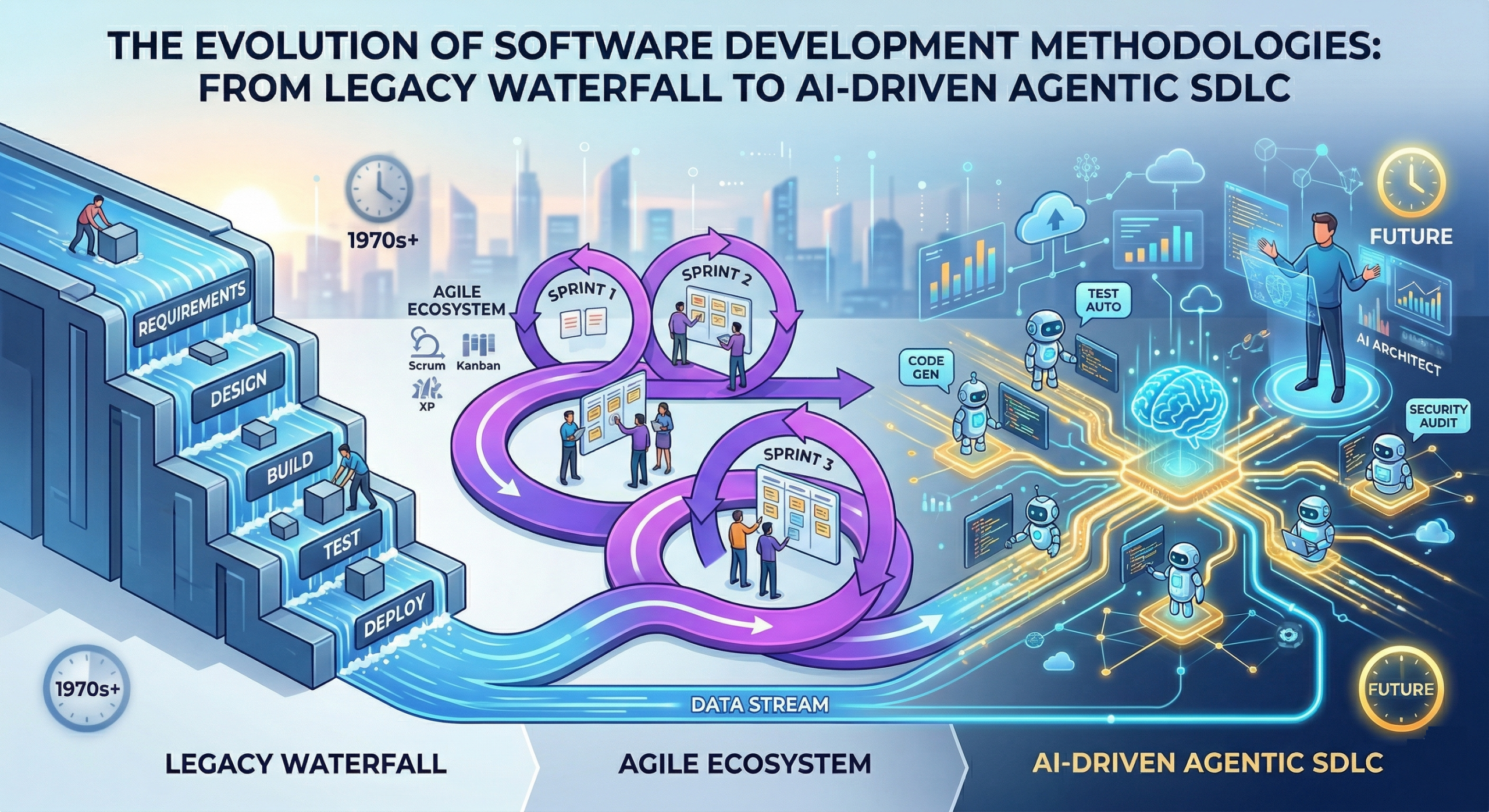
Software development methodologies: A complete guide from waterfall to AI-driven SDLC
Which methodology fits your project? Read our deep dive into Scrum, Kanban, Lean, and AI-powered development with a full comparison matrix -
 April 9, 2026Read in 10 min.
Microsoft PowerApps development services
Accelerate your digital transformation with expert PowerApps development services. We build custom, low-code mobile and web apps that integrate seamlessly with Microsoft 365, SQL, and your existing APIs. Get a free consultation today. -
 April 8, 2026Read in 12 min.
Top 10 Offshore software development companies: Expert review
Don't settle for legacy code. Discover the top offshore software development services company list, featuring vendors with advanced AI-tooling and DevOps maturity -
 April 3, 2026Read in 31 min.
AI software development services: A complete guide for business leaders and decision-makers
Transform your business with expert AI software development services. We build custom GenAI, machine learning, and autonomous agent solutions tailored for enterprise ROI. Get a free consultation today! -
 April 1, 2026Read in 17 min.
The strategic hub: Why global leaders choose software development outsourcing in Ukraine
Why global leaders choose software development outsourcing in Ukraine. Explore the top 10 IT companies, specialized tech stacks, and how to scale your business with a dedicated Ukrainian development team. -
 March 31, 2026Read in 19 min.
Selecting the best Java development companies
Leading Java development companies. Analyzes top-tier Java software development services, evaluation criteria, and delivery models to help you find the perfect strategic partner for scalable enterprise solutions -
 March 31, 2026Read in 14 min.
Top progressive web app development companies
Partner with a leading progressive web application development company. Explore our list of top PWA developers in the USA and globally, offering high-speed, offline-ready, and SEO-friendly web app solutions -
 March 23, 2026Read in 23 min.
Why data warehouses fail and how to design one that doesn’t
top building data swamps. Explore the evolution of DWH design, including ELT workflows, Data Vault 2.0, and high-performance cloud modeling strategies -
 March 18, 2026Read in 13 min.
Choosing React Native app development company
Partner with a premier react native development company. Compare the top 10 firms offering elite react native app development services for high-performance apps. -
 March 17, 2026Read in 15 min.
Choosing the Right Computer Vision Development Company for Your Project
From computer vision consulting to full-scale software development, learn how modern vision systems automate defect detection and optimize operations across healthcare, retail, and manufacturing. -
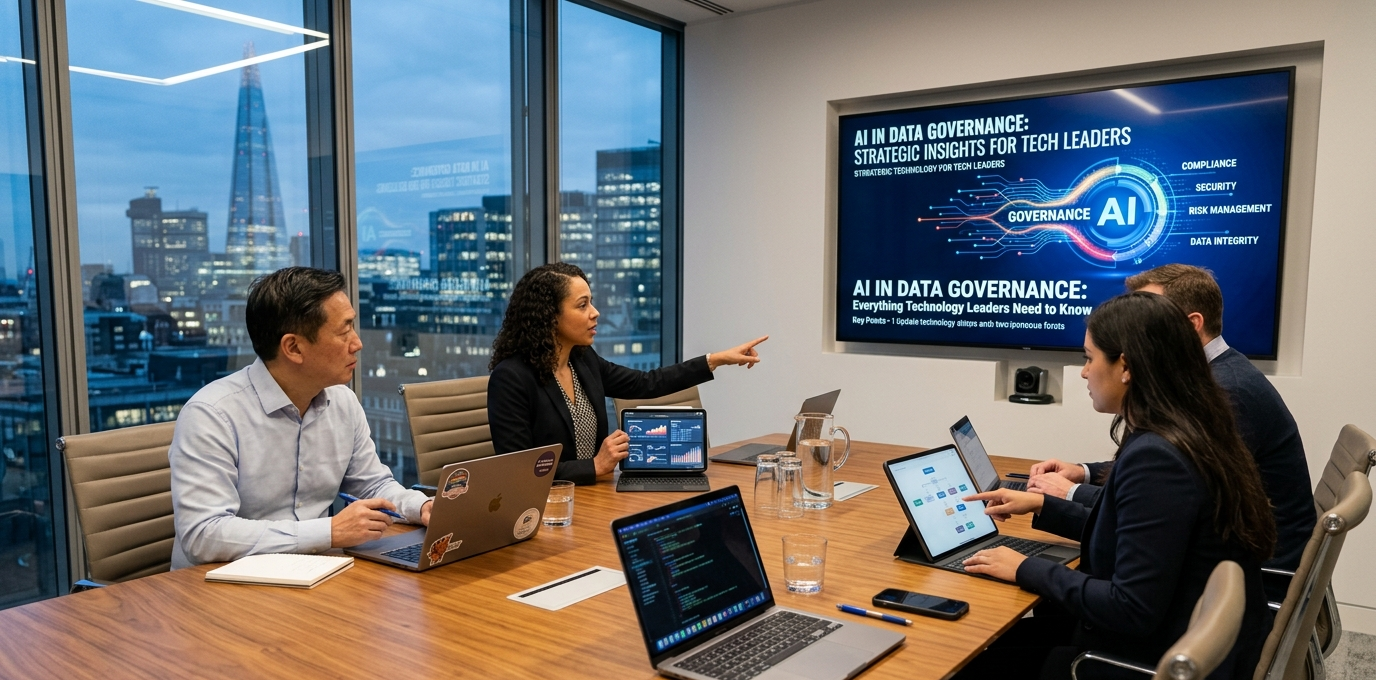 March 16, 2026Read in 12 min.
AI in data governance: Everything technology leaders need to know
Master Data Governance for AI. Learn how to manage data drift, bias mitigation, and active metadata using NIST standards. Expert guide on MLOps, RAG security, and EU AI Act compliance for 2026. -
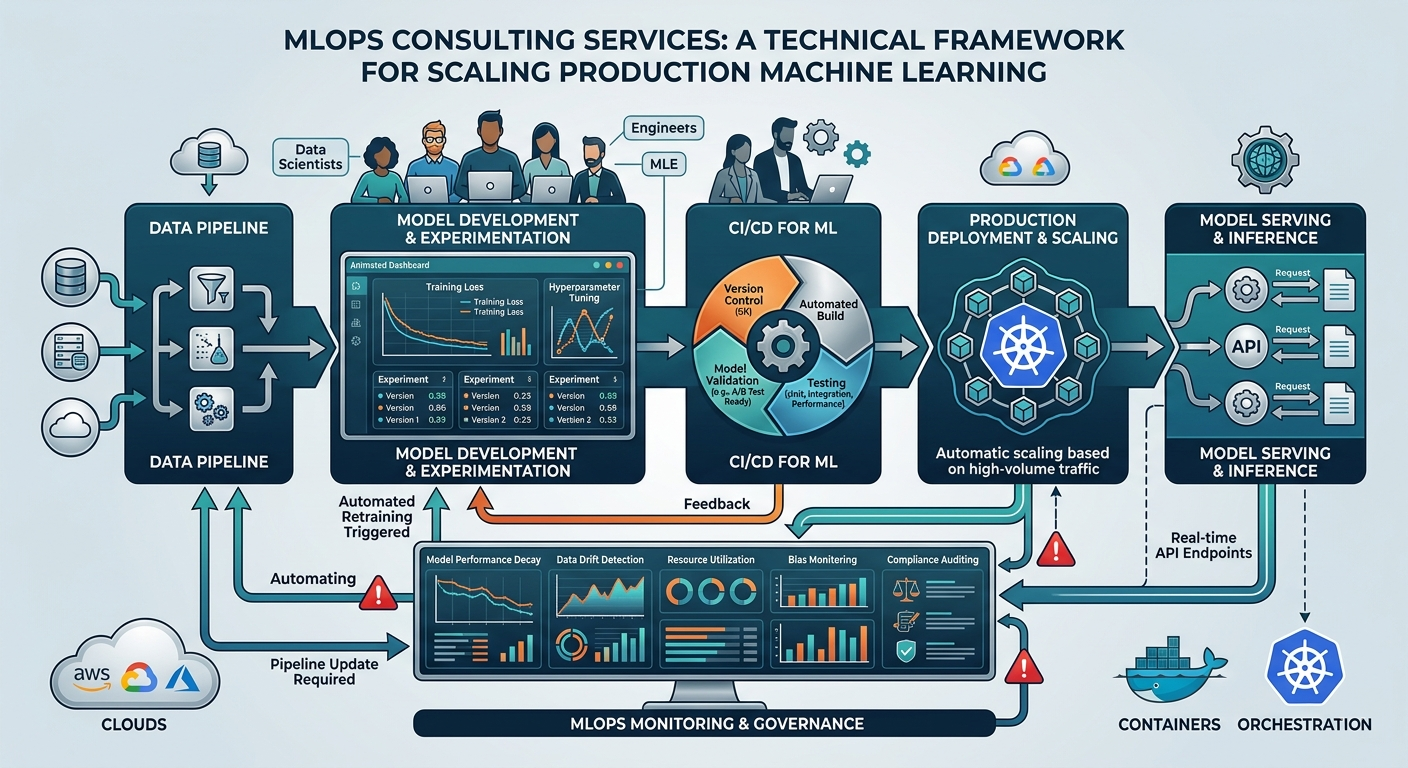 March 16, 2026Read in 16 min.
MLOps consulting services: A technical framework for scaling production machine learning
Operationalize ML with expert MLOps consulting. We bridge the gap between Data Science and DevOps using CI/CD/CT pipelines, automated drift detection, and feature stores to reduce Time-to-Value and technical debt. -
 March 12, 2026Read in 12 min.
Choosing your generative AI development company
Compare the best generative AI companies for your enterprise. From custom LLMs to agentic workflows, discover the top partners driving innovation and ROI in the AI-first era. -
 March 6, 2026Read in 15 min.
PyTorch vs TensorFlow: What’s the difference and which one wins
Stop choosing between research and production. Learn how Keras 3 and multi-backend architectures are unifying the AI ecosystem. A professional developer’s deep dive into performance, cost, and scalability. -
 March 5, 2026Read in 15 min.
Choosing the best MVP development companies
Top-rated agencies providing bespoke MVP software development services to help startups validate ideas and scale fast -
 March 4, 2026Read in 19 min.
Top software testing companies: Leading QA partners
Leading software testing companies. Compare top QA service providers, evaluation criteria, and industry trends to find your ideal partner. -
 February 28, 2026Read in 22 min.
Top 10 software development companies in the USA
Find the best US-based software developers. From AI to enterprise web apps, here are the top 10 software development companies in the USA you should hire in 2026. -
 February 25, 2026Read in 12 min.
Top 10 Node.js Development Companies
Industry's leading Node.js development companies. Our deep-dive review covers technical maturity, cloud-native expertise, and architectural standards to help you find the perfect software partner. -
 February 23, 2026Read in 16 min.
Top 10 mobile application development companies: Selection & industry leaders
Top 10 mobile application development companies for your next project. Compare top-rated mobile app developers, explore custom app development company profiles, and learn the secrets to a successful technical partnership. -
 February 23, 2026Read in 12 min.
How to choose the best Android app development agency: Rankings & selection criteria
Compare the leading Android development companies. Our guide highlights the top 10 firms for enterprise architecture, security, and custom app engineering. -
 February 19, 2026Read in 18 min.
IT Managed Service Providers (MSPs): Why does your business need one?
Stop guessing. Compare the 10 leading IT Managed Service Providers (MSPs) for any-sized companies. Find proven security, cloud, and 24/7 support. View the comparison! -
 February 19, 2026Read in 45 min.
Top 30 software development companies: Categories, red flags, and the selection strategy
We’ve analyzed the top 30 software development companies based on expertise, client results, and innovation. Find your ideal match here! -
 February 10, 2026Read in 12 min.
Top 10 Flutter development companies: Entities, ecosystems, and strategic selection
Compare the world’s leading Flutter agencies. Our expert analysis covers the top 10 firms, evaluating their mastery of Dart, Skia performance, and Clean Architecture. -
 February 6, 2026Read in 19 min.
Top 10 React development companies: Architecting high-performance digital products
Top-rated React development companies for your next project. Our expert guide analyzes the best React JS web development agencies on performance, scalability, and tech standards -
 February 3, 2026Read in 24 min.
Web application development companies: How to choose the right partner
Find the right web app development company. Explore services, technologies, engagement models, and 10 expert tips for choosing your strategic development partner. -
 February 3, 2026Read in 11 min.
Top 10 Python Development Companies
Looking for a top Python development company? Compare the industry's leading Python software development agencies. Get insights on pricing, expertise, and how to hire a Python development firm that scales your business. -
 January 27, 2026Read in 15 min.
Top cloud application development companies you should follow
Best Cloud Application Development companies for your project. Compare expertise in AWS, Azure, & GCP. See client reviews, specialization, and costs for top Cloud-Native firms -
 January 23, 2026Read in 21 min.
Dedicated development team model: Definition, benefits, and nuances
Scale your product fast with a Dedicated Development Team. Compare DDT vs. outsourcing, analyze costs, and get a management blueprint for success. -
 January 21, 2026Read in 15 min.
Best energy software development companies to partnership
Top 10 energy sector software development leaders. Learn how to choose the right partner for your renewable energy software project. -
 January 19, 2026Read in 8 min.
The Low-Code Revolution in Oil & Gas: Accelerating Digital Transformation
From real-time well monitoring to automated safety permits - see how low-code applications drive operational efficiency and ESG compliance in the energy sector’s volatile market. -
 January 19, 2026Read in 18 min.
Top 10 desktop application development companies to watch
Compare the world’s best desktop development firms. From legacy modernization to high-performance C++ and cross-platform Electron apps, find your perfect vendor here. -
 December 24, 2025Read in 10 min.
Software development company in Florida: What we do, how we work, and where we add value
Florida's premier custom software partner for enterprise-grade applications. We specialize in fintech, healthcare, and scalable cloud systems. Innovate with Florida experts. -
 December 9, 2025Read in 10 min.
Custom software development for San Diego businesses
Find out about the demands of software development in San Diego and how local companies are adapting to technology needs. -
 December 9, 2025Read in 9 min.
Specifics and perspectives of custom software development in Los Angeles
Find out why choosing a custom software development company in Los Angeles is essential for evolving industries like fintech and healthcare. -
 December 6, 2025Read in 8 min.
Software development in San Francisco: Custom solutions for Area
Find out how software development in San Francisco sets standards in technology and customer satisfaction. -
 November 28, 2025Read in 14 min.
Custom software development in Houston: State and perspectives
Partner with a leading custom software development company in Houston to harness the power of technology for your growth. -
 November 28, 2025Read in 12 min.
Custom software development Dallas businesses need
Find out how a custom software development company in Dallas can elevate your business in a booming tech landscape filled with opportunities. -
 November 27, 2025Read in 11 min.
Software development services in Austin
Find out how a custom software development company in Austin can elevate your business in a booming tech landscape filled with opportunities. -
 November 12, 2025Read in 34 min.
Top FinTech software development companies: The core of modern finance
Compare the top-rated FinTech software developers based on expertise in AI, Blockchain, and compliance. Choose your perfect partner now! -
 November 4, 2025Read in 12 min.
AI in biotech: Application, specifics, and challenges
How AI and Machine Learning are transforming biotechnology, accelerating drug discovery, genome sequencing, and personalized medicine. Learn the applications, challenges, and future. -
 October 28, 2025Read in 20 min.
The best AI development companies in the US
The definitive guide to hiring the best AI development company. See our ranking by MLOps maturity, GenAI expertise, and verified client ROI. Get transparent costs and a partnership blueprint -
 October 20, 2025Read in 16 min.
How to hire the best ReactJS developers in a constantly growing market
Hire the top ReactJS developers. Get pre-vetted, senior React & Next.js engineers matched to your project in 48 hours. Start risk-free -
 October 16, 2025Read in 25 min.
Top 10 AI chatbot development companies
Leading chatbot development companies. Our expert guide helps you choose the best firm for AI chatbot solutions, custom development, and seamless integration -
 October 9, 2025Read in 17 min.
Top biotech software companies: Choosing the right tech partner for life-changing innovations
Leading biotech software companies impacting drug discovery, R&D, and lab operations. See how their innovative platforms are speeding up scientific breakthroughs. -
 September 30, 2025Read in 16 min.
All you need to know about custom software development for small business
Stop wasting time on workarounds! Discover how custom software development empowers your small business with tailored workflows, maximum efficiency, and predictable ROI. -
 September 4, 2025Read in 14 min.
Top 10 leading application modernization companies
Top 10 application modernization companies that can transform your business with cloud, AI, and microservices for agility and growth -
 August 28, 2025Read in 14 min.
Develop once, run everywhere: .NET Core cross-platform development
Struggling with multi-OS development? Discover how .NET empowers you to build versatile, high-performance applications that run seamlessly across Windows, macOS, and Linux with ease. -
 August 21, 2025Read in 14 min.
Why offshore .NET development is the best choice for your business
Struggling with talent shortages or escalating development costs? Explores how embracing offshore .NET development can be the strategic advantage your business needs to build innovative solutions faster and more cost-effectively. -
 August 18, 2025Read in 14 min.
.NET vs Java: Comparison, use cases, pros and cons
Unsure whether to use .NET or Java? This guide breaks down their strengths, weaknesses, and ideal applications to help you pick the best technology. -
 August 11, 2025Read in 24 min.
Top 10 Angular development companies to keep an eye on
Leading Angular development companies. Expert Angular developers offering top-tier web application development, consulting, and solutions for your next project. -
 August 7, 2025Read in 15 min.
Hire Angular developers: What you need to know
Need hire Angular developers? Get access to skilled, dedicated Angular teams for your web projects. We provide expert Angular solutions with flexible engagement models. Contact us today! -
 August 1, 2025Read in 9 min.
Why choose Angular for web development
Why Angular is a leading choice for web development. Learn about its powerful features, scalability, and benefits for building robust, high-performance applications. -
 August 1, 2025Read in 12 min.
Hiring .NET developers: Step-by-step guide
Frustrated with the challenges of hiring skilled .NET developers? This article provides a proven framework to help you find, vet, and hire the right talent for your team, avoiding common recruiting mistakes. -
 February 13, 2025Read in 15 min.
What is HMI development, and why is it trending now?
Human-Machine Interface (HMI) development is revolutionizing the way humans interact with machines, driving innovation across industries. -
 December 11, 2024Read in 10 min.
Python vs Java: Key differences, pros, and cons for developers
Key differences between Python and Java, including syntax, performance, and use cases. Find out which language suits your project best -
 October 10, 2024Read in 11 min.
The future of web development: WordPress vs React.js?
Confused between WordPress or React.js? Explore our detailed comparison to find out which platform suits your needs best -
 August 8, 2024Read in 14 min.
AD and Azure AD: What is the difference, and which is better for you?
Differences between Azure Active Directory (AAD) and traditional Active Directory (AD) in this comprehensive comparison. -
 August 5, 2024Read in 15 min.
ESG software development services: Effective ESG software solutions
Innovative ESG software solutions can help your business achieve its sustainability goals. Develop customized software that enhances environmental, social, and governance (ESG) performance, ensuring compliance and driving positive impact -
 July 31, 2024Read in 7 min.
Benefits of Azure Active Directory
Key benefits of Azure Active Directory(AD), including enhanced security, simplified management, and cost savings for your business -
 April 22, 2024Read in 12 min.
Software modernization: What is it & why it matters
Discover the essence of software modernization and its pivotal role in contemporary software development. Uncover why it's crucial. -
 April 22, 2024Read in 20 min.
Legacy app modernization: A comprehensive guide
Revitalize your business with our guide on legacy application modernization. Transform your legacy systems to make them more efficient and innovative. -
 April 22, 2024Read in 16 min.
Digital product design: What is it and why you need it
Unlock innovation with expert digital product design insights. Explore the latest trends and strategies for creating exceptional user experiences. -
 April 21, 2024Read in 11 min.
Healthcare product design: Tips for app development success
Explore the art of healthcare product design in our latest blog post. Discover how innovative design principles are shaping the future of medical solutions -
 April 18, 2024Read in 9 min.
Azure app modernization: Benefits of migrating to Microsoft
Key benefits of Azure app modernization and how migrating to Microsoft can enhance performance, scalability, and compliance -
 March 11, 2024Read in 12 min.
How to choose asset management software for oil and gas in 2026
Explore more ways to optimize operations and streamline processes in oil and gas. Follow our tips to choose the best-fit assent management software in 2026 -
 March 11, 2024Read in 13 min.
AI software development for oil and gas: A comprehensive guide
Explore the transformative power of artificial intelligence software development for oil and gas and the practices of global industry leaders in our blog. -
 March 11, 2024Read in 19 min.
Cloud application modernization: How to improve your app
Cloud application modernization makes app more competitive and business more profitable. The key strategies, tips, and its benefits — in this article! -
 March 11, 2024Read in 12 min.
Enterprise application modernization: Revolutionize your business
Future-proof your business with our guide to enterprise app modernization. Learn strategic approaches, key technologies, and best practices for legacy system transformation and enhanced agility -
 March 11, 2024Read in 12 min.
LIMS integration: Benefits & how it works
Can LIMS integration be called a CRM for laboratories? What to keep in mind during LIMS software development and integration? Find out more in our article. -
 March 11, 2024Read in 11 min.
Active directory integration: What is it & how to do it effectively
Discover seamless Active Directory integration strategies in our latest blog post. Optimize user management with the Blackthorn Vision team! -
 March 5, 2024Read in 15 min.
Mobile app UX design: Basics that will improve user experience
Mobile app UX design differs from the web. Explore these differences, the process, and the main pitfalls with our experts in this article. -
 March 5, 2024Read in 11 min.
HIPAA compliance checklist for healthcare software development 2026
Check the updated HIPAA security guidelines to ensure the safety and privacy of patients' data, it is important to adhere it when creating applications -
 March 5, 2024Read in 9 min.
How to use business process automation to improve oil and gas production
Discover how business process automation can help optimize oil and gas production and improve your bottom line. -
 March 3, 2024Read in 14 min.
Desktop to web migration: everything you need to know
Planning a desktop to web migration? Get essential insights on strategy, technical challenges, approaches, and how to successfully modernize your legacy application. -
 March 3, 2024Read in 11 min.
The process of application migration to the cloud: stages, approaches, and tools
Find out how to effectively migrate your legacy system and data to the cloud without disrupting your business processes. -
 March 3, 2024Read in 16 min.
Benefits of outsourcing software development
Key advantages of outsourcing software development for businesses. Learn how outsourcing can reduce costs, increase efficiency, and provide access to specialized expertise -
 March 3, 2024Read in 13 min.
Boosting cloud security in healthcare with Azure Cloud Services
Explore the most common challenges in the cloud security of healthcare organizations and discover our tips on eliminating them efficiently. -
 March 3, 2024Read in 19 min.
Healthcare app design: how to create a great user experience
Struggling with medical app UX? Get insights into user-centered design, crucial security measures, and future trends to create impactful healthcare applications. -
 March 3, 2024Read in 16 min.
MVP vs. prototype in startup software development: what’s the difference?
Crucial differences between MVP and Prototype in startup software development. Learn how Blackthorn Vision leverages both to build successful products, reduce risk, and accelerate your time-to-market -
 March 3, 2024Read in 12 min.
How to build a custom EHR solution: tips for decision makers
We can augment your talent pool with dedicated developers proficient in healthcare business automation. Check the success stories from our clients. -
 March 3, 2024Read in 7 min.
What is software as a medical device and why it matters for the healthcare industry
From developing SaMD and SiMD to building efficient EHR systems, we unleash the value of business process automation for healthcare providers. -
 March 3, 2024Read in 6 min.
An overview of medical biotechnology in 2026 and beyond
We offer a full cycle of software development for leading biotech companies - from idea visualization to building an MVP and fully-fledged product. -
 March 3, 2024Read in 9 min.
Smart farming: agricultural technology of the future
We have expertise in data analytics, AI, and Machine Learning to build game-changing software tailored for your agricultural business. -
 March 3, 2024Read in 7 min.
BV people: a talk with Head of HR and recruitment in Blackthorn Vision
BV people: a talk with the Head of HR and Recruitment on candidate selection, the company's ideals, and the current state of the Ukrainian IT industry. -
 March 3, 2024Read in 9 min.
What is robotic process automation and how it changes the travel and hospitality industry
How does RPA work and, most importantly, how to utilize it in your travel and hospitality business? Find out in our new article now. -
 March 3, 2024Read in 12 min.
An overview of agricultural biotechnology in 2026
We cooperated with agricultural biotechnology industry leaders to design software that helps scientists and farmers automate and optimize all processes. -
 March 3, 2024Read in 10 min.
Everything you need to know about Microsoft Azure: benefits, use cases, applications
Microsoft Azure is a leading cloud service provider that offers numerous opportunities for businesses to optimize and secure their operations and services. -
 March 3, 2024Read in 10 min.
Smart manufacturing technology and trends for 2026 and beyond
Stay updated on the latest manufacturing technology trends, that drives innovation, efficiency, and growth in the industry to boost your project. -
 March 3, 2024Read in 8 min.
How to choose and manage your dedicated development team
While there are many benefits of working with dedicated software development teams, it’s not a universal solution. Discover why it is so. -
 March 3, 2024Read in 8 min.
What is the best cloud deployment model? Types of cloud computing that will benefit your business
With the guidance of our post, you can better understand various cloud computing deployment strategies. Examine cloud solutions for your company's needs. -
 March 3, 2024Read in 10 min.
Offshore vs. Nearshore outsourcing: what’s best for your business?
What is the difference between the three outsourcing types, and which one is better for your business? Please read our article to find out! -
 March 3, 2024Read in 14 min.
How to develop a medical app for doctors: everything you need to know
The mobile health industry is one of the most rapidly growing segments worldwide. Learn more about the mHealth industry in our new article. -
 March 3, 2024Read in 14 min.
Business analyst: a leading player in your software development team
Your guide to the Business Analyst's vital role in software development teams, including Agile practices, key responsibilities, techniques, and delivering real business value. -
 March 3, 2024Read in 9 min.
Hyperautomation – the future of business processes
Now business processes - Hyperautomation are increasingly not following stable and predictable scenarios. It creates a need for a new type of automation. -
 March 3, 2024Read in 6 min.
The future of Oil and Gas: industry trends and software solutions
Keep up to date on the most recent oil and gas the industry trends, which are driving modifications in technology, sustainability, and energy exploration. -
 March 3, 2024Read in 6 min.
What is an MVP, and why is it necessary? Minimum viable product examples
Even if you have just a basic vision of what your app should do, we will develop a presentable product that you can pitch to investors. -
 March 3, 2024Read in 14 min.
Top 5 soft skills to work in it successfully and resources to develop them
Are soft skills the new hard skills? Can you make a successful career in IT if you are not an effective communicator or lack creativity? -
 March 3, 2024Read in 5 min.
Mobile app development: Xamarin.Forms — a cross-platform solution that responds to modern challenges
When it comes to mobile development, there is a wide variety of solutions. Xamarin.Forms is a cross-platform solution that responds to modern challenges. -
 February 27, 2024Read in 8 min.
Top 10 programming languages of the future for web and mobile app development
Let’s have a look at the most popular programming languages that may become your business workhorse. -
 February 6, 2024Read in 16 min.
Pharmaceutical software development: Unleashing pharma innovation
Explore the future of pharmaceutical software development: innovative solutions revolutionizing healthcare efficiency & precision.