



An energy software development company designs, builds, and maintains digital platforms that manage energy production, distribution, and consumption. This ranges from building Virtual Power Plants (VPPs) and AI-driven predictive maintenance tools to creating consumer-facing apps for smart home energy management. Their role is to turn raw electrical data into actionable insights and automated grid responses.
Best energy software development companies to partnership

 15 minutes read
Content
As we move from centralized reliance on fossil fuels to decentralized, volatile, and renewable sources, the challenge has shifted from hardware to code. Today, an energy software development company is no longer just a vendor; it is the architect of the modern grid.
Whether you are a utility provider looking to modernize legacy systems or a startup launching a renewable energy software solution, choosing the right technical partner is the most critical decision you will make this year. This guide analyzes market leaders and provides a blueprint for navigating energy-sector software development in 2026.


Ready to transform your energy data into a strategic asset?
Leverage our AI and Machine Learning expertise to build the next generation of smart grid solutions.
The 2026 energy tech landscape: Key trends
The energy transition is shifting from a hardware-centric model (turbines and panels) to a software-defined ecosystem. To stay relevant, an energy software development company must now build systems as dynamic as the weather patterns it relies on.
Grid modernization & Virtual power plants (VPPs)
The traditional “one-way” power grid is obsolete. Modern energy sector software development is focused on two-way orchestration. Virtual Power Plants (VPPs) have emerged as the primary solution, aggregating thousands of Distributed Energy Resources (DERs) – such as residential batteries, electric vehicles, and rooftop solar – into a single, reliable power source. By 2026, advanced renewable energy software solutions enable utilities to dispatch these “digital assets” in milliseconds, balancing local loads without firing up expensive gas-peaker plants.
AI & Predictive maintenance: The ROI of foresight
In the past, maintenance was reactive (fixing what broke) or preventative (fixing on a schedule). Today, custom energy software development leverages Machine Learning to make it predictive. By analyzing vibration data, thermal imaging, and acoustic sensors from wind or solar software companies, AI can identify a bearing failure weeks before it occurs.
The Impact: Industry data shows that AI-integrated maintenance can reduce operational downtime by 30–40% and extend the lifespan of multi-million dollar assets by up to a decade.
ESG & Regulatory compliance: Beyond the spreadsheet
Transparency is no longer optional. With the EU’s Corporate Sustainability Reporting Directive (CSRD) and similar SEC mandates in the US, manual carbon tracking is a liability. Energy software companies are now building automated “Carbon ERPs.” These renewable energy software platforms integrate directly with smart meters and supply chain data to provide a real-time, audit-ready dashboard of Scope 1, 2, and 3 emissions.
Cybersecurity: Protecting the “Nervous system”
As grids become smarter, they become more vulnerable. In 2026, energy industry software must meet rigorous standards like NERC CIP in North America or the NIS2 Directive in Europe. Modern energy software development services now include “Zero Trust” architectures and AI-driven threat detection that can isolate a compromised substation before a breach reaches the main control room.

Criteria for selection: How we vetted the leaders
Choosing an energy software company isn’t just about finding good coders; it’s about finding domain experts who understand the physics behind the data. We evaluated the top players based on four rigorous pillars of energy software development:
1. Domain expertise & Compliance (The E-E-A-T factor)
We prioritized companies that don’t just speak “Python” but also speak “Grid.” This includes:
- Certifications: Adherence to ISO 27001 (Security), ISO 9001 (Quality), and niche energy standards, such as IEC 61850 for substation automation.
- Regulatory Knowledge: Deep understanding of regional energy markets (PJM, ERCOT, ENTSO-E) to ensure your renewable energy software solution is market-compliant from day one.
2. Scalability via cloud-native architectures
An energy software development company must build for growth. We looked for partners who utilize:
- Microservices & Serverless: Ensuring the platform can handle 10 sensors or 10 million without a total rewrite.
- Edge Computing: The ability to process data at the solar farm or wind turbine site, reducing latency and cloud costs.
3. Proven client portfolios
The best renewable energy software companies have battle-tested code. We analyzed their track records for:
- Utility-Scale Success: Experience working with major utilities (like National Grid or NextEra).
- Startup Agility: The ability to help solar software companies launch MVPs (Minimum Viable Products) quickly to capture venture capital and market share.
4. Technical innovation: The “X-Factor.”
Finally, we looked for leaders pushing the boundaries of what energy sector software development can achieve:
- Digital Twins: Creating high-fidelity virtual replicas of physical assets to run “what-if” simulations.
- Blockchain for P2P Trading: Enabling neighbors to sell excess solar energy to each other securely without a middleman.
- IoT Interoperability: Ensuring the software can communicate with legacy hardware (SCADA systems) and modern smart devices alike.
Top 10 energy software companies: 2026 Analysis
We have categorized the top players into three segments: Global Industrial Titans, Strategic Engineering Partners, and Niche Innovators.
Strategic engineering partners (Custom development & scaling)
Blackthorn Vision
Blackthorn Vision has carved out a unique position as a high-precision energy software development company with a specialized focus on the “Digital Oilfield” and renewable integration. Their expertise lies in the difficult intersection of upstream/downstream optimization and modern cloud-native architectures. Unlike generalist firms, Blackthorn demonstrates a “proactive engineering” mindset, often taking legacy systems that are decades old and modernizing them into microservices-based environments without disrupting critical energy production flows.
Their technical portfolio highlights a deep proficiency in .NET and Azure ecosystems, which is essential for the security-heavy energy sector. They excel in building high-performance web and desktop applications that manage complex data-driven decision-making in real-time. For a business looking for custom energy software development, Blackthorn is a strategic choice because they prioritize “domain-specific” logic – meaning they understand the physics of energy flow just as well as the code that monitors it. Their ability to deliver “grid-grade” quality for both startups and established enterprises makes them a standout partner for precision-heavy projects.
EPAM Systems
EPAM is the “heavyweight champion” of enterprise-scale energy sector software development. In 2026, they have pivoted heavily toward Generative AI (GenAI) integration through their proprietary AI/Run™ framework. EPAM’s value proposition isn’t just about writing code; it’s about massive-scale digital transformation and workforce enablement. They recognize that many energy companies possess the technology but lack the skilled personnel to utilize it, so they provide the governance and educational frameworks needed to scale AI across 90+ development teams simultaneously.
Their work in the energy sector often involves building massive data pipelines and migrating complex legacy utility platforms to the cloud. EPAM is the ideal partner for global corporations that require absolute reliability and a “zero-trust” security posture. They are particularly adept at creating sophisticated energy trading platforms and carbon-tracking systems that meet global ESG standards. For any utility looking to undergo a total digital overhaul, EPAM provides the “industrial-strength” engineering and AI-driven productivity gains that smaller boutiques simply cannot match.
SoftServe
SoftServe is widely recognized as a leader in applying Data Science and Machine Learning to renewable energy software solutions. Their approach is highly consultative; they don’t just build what is asked – they use AI to discover “optimal settings” for energy consumption and generation. For example, their work in proactive paint booth control demonstrated how ML could link air flow characteristics directly to energy savings, a principle they have scaled across the manufacturing and energy sectors.
In 2026, SoftServe stands out for its “ESG Optimization” strategies. They build powerful visualization tools that allow energy providers to simulate various generation scenarios, helping them navigate the volatility of wind and solar. Their technical stack is built on a foundation of IoT, AI, and Big Data, making them the preferred choice for companies that need to turn “Big Data” into “Smart Data.” If your goal is to reduce operational costs through predictive modeling and gain a competitive edge in sustainability reporting, SoftServe’s R&D-heavy approach is world-class.
N-iX
N-iX is a global European power-house that has been a trusted energy software development company since 2015. Their technical core is deeply rooted in embedded systems and IoT, which is the “nervous system” of the modern grid. They have a particularly strong partnership with AWS, holding multiple competencies in data migration and analytics. This makes them exceptionally skilled at taking raw data from thousands of field sensors and turning it into a cohesive cloud-based energy management system.
What sets N-iX apart is their experience with both electric equipment manufacturers and utility providers. They understand the hardware-to-software handshake better than most. Their dedicated development teams are known for building robust platforms that give industrial enterprises full control over their energy usage. Whether it’s implementing OpenText ECM for energy documentation or developing custom Machine Learning models for grid efficiency, N-iX provides a balanced mix of “nearshore” agility and enterprise reliability. They are the “engineering-first” partner for businesses that need secure, scalable monitoring networks.
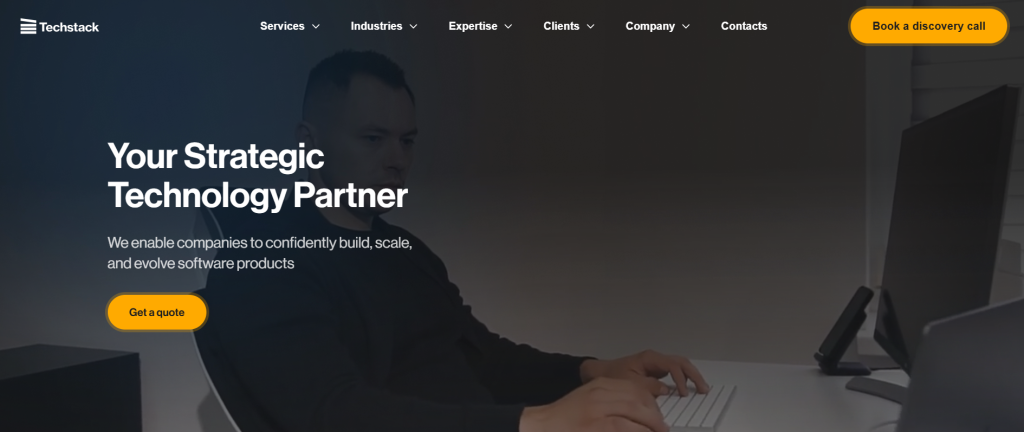
Techstack
Techstack is the agile “innovator” in this list, focusing on the rapid orchestration of distributed assets. Their expertise is highly specialized in high-growth areas like EV charging infrastructure, storage management, and solar manufacturing. A standout project in their portfolio is an AI-driven computer vision system for solar panel defect detection, which achieves sub-millimeter precision in complex production environments. This level of technical “grain” is what defines Techstack.
They are the go-to energy software company for startups and scale-ups that need to launch a renewable energy software solution quickly. They excel at building Unified Data Platforms that bring together data from solar, storage, and EVs into a single “source of truth.” Their ability to develop “dispatch algorithms” for battery storage allows asset owners to maximize revenue through automated bidding on national grids. For any organization looking for a nimble, AI-forward partner to solve specific, high-tech challenges in the renewable space, Techstack offers the highest velocity of innovation.
Global industrial titans (Integrated ecosystems)
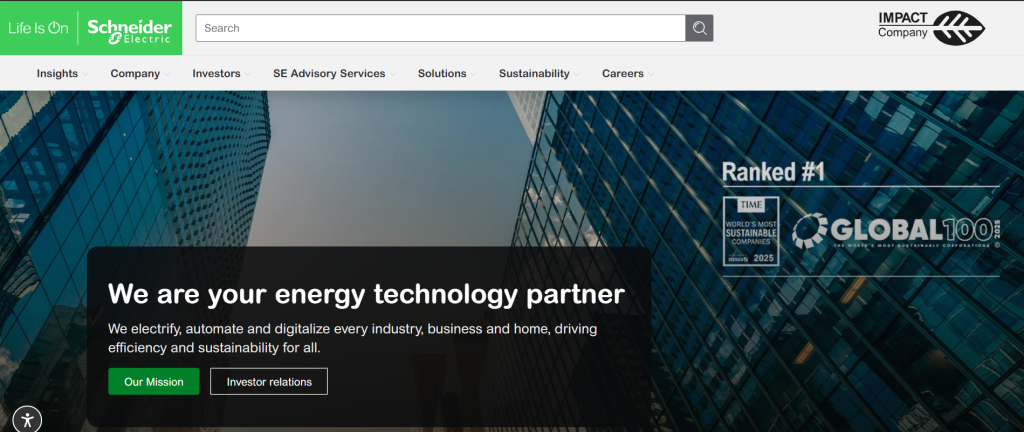
Schneider Electric
Schneider Electric is less of a service provider and more of an “ecosystem architect.” Through their EcoStruxure platform, they have set the global standard for industrial automation and building energy management. In 2026, they are the “safe bet” for any enterprise that needs a proven, end-to-end solution for sustainability and efficiency. Their software Hub allows site-level managers to visualize energy usage, peak demand, and load types across a global portfolio of buildings.
Schneider’s strength lies in its “Life is On” philosophy, which integrates hardware (breakers, sensors, and meters) with sophisticated software layers. They are pioneers in microgrid operation and EV charging expertise. While they offer custom integrations, their primary value is their massive, pre-built library of energy management tools that can reduce software-related OPEX by up to 50%. For organizations that want to participate in demand-response programs or manage a decentralized microgrid with “off-the-shelf” reliability, Schneider Electric is the undeniable market leader.

GE Vernova
GE Vernova, the energy-focused spin-off of General Electric, is the “backbone” of utility-scale infrastructure. Their GridOS platform is arguably the most advanced software-defined grid orchestration tool in existence. It is designed specifically to handle the “Net Zero” transition by providing a “Data Fabric” that allows utilities to discover and utilize grid data with minimal coding. GE Vernova’s software doesn’t just monitor the grid; it actively orchestrates it, using AI for tasks as diverse as vegetation management and transmission line capacity analysis.
Their Network Lifecycle software is essential for utilities designing and building the power networks of the future. By integrating GIS (Geographic Information Systems) with real-time grid analytics, GE Vernova allows operators to see exactly where a fault occurred and how to reroute power in milliseconds. They are the partner of choice for national grid operators and massive utility providers who need to manage the complexity of thousands of wind and solar inputs while maintaining 100% grid stability.
Niche innovators & Specialized platforms
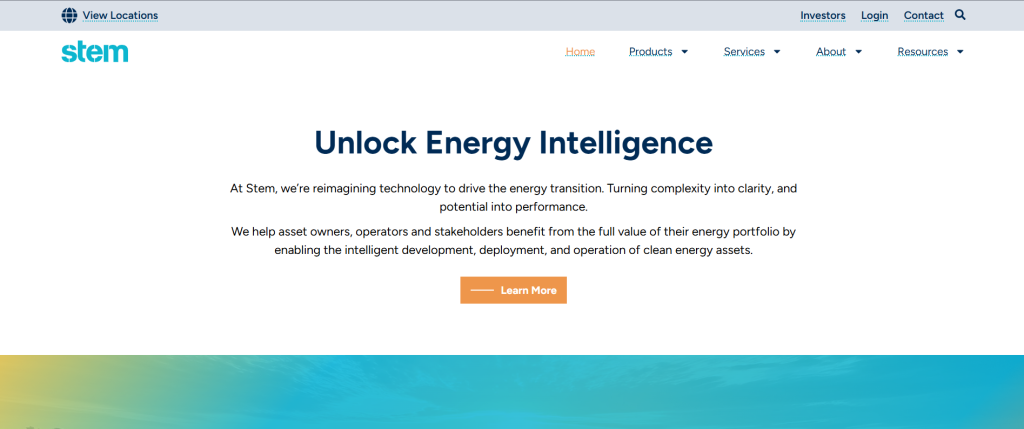
Stem
Stem is the “AI brain” of the energy storage world. Their Athena platform is a world-class AI-powered analytics platform that maximizes the value of flexible energy assets. While other companies build general management tools, Stem focuses specifically on the economic optimization of battery storage and solar PV. Athena uses advanced Machine Learning to forecast energy prices and demand, automatically switching between battery and grid power to minimize “demand charges” and maximize revenue for asset owners.
Stem’s expertise in Virtual Power Plants (VPPs) is particularly noteworthy. They can aggregate hundreds of decentralized sites into a single networked power source that can be traded on the open market. For independent power producers or businesses with large-scale battery investments, Stem is the definitive partner. They provide the automated data pipelines and economic signals needed to turn a simple battery into a high-yield financial asset.
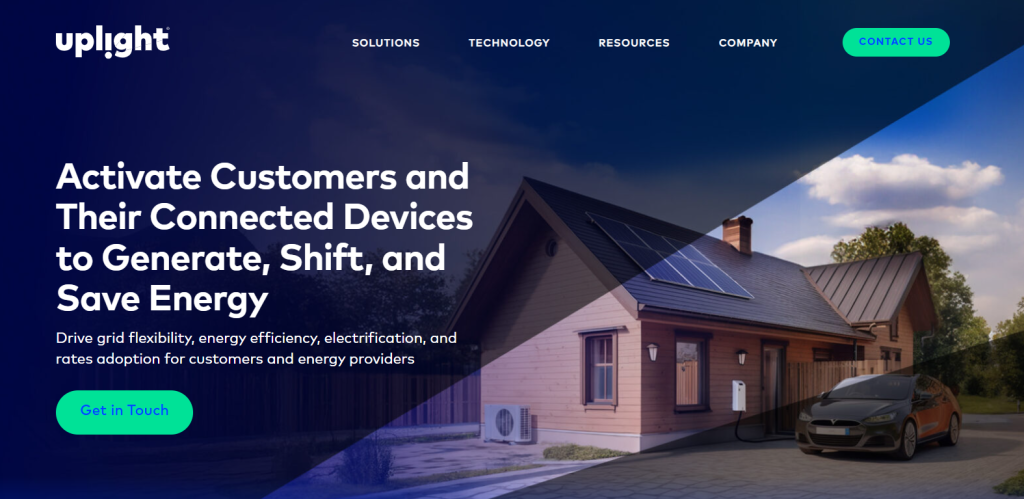
Uplight
Uplight focuses on the “human element” of the energy transition. They are the leading energy software company for utility customer engagement and demand-side management. Their platform connects utilities with their customers through “Marketplaces,” home energy reports, and intuitive customer portals. In 2026, Uplight’s value is in its ability to drive “behavioral decarbonization” – getting millions of people to shift their energy use to off-peak hours without manual intervention.
Their software manages everything from Time-of-Use (ToU) rate education to automated EV charging programs. By creating a seamless digital experience for the end-user, Uplight helps utilities meet their carbon-reduction goals while saving customers money. They are the “last mile” specialists, ensuring that the smart grid actually works for the people using it. If your project requires managing the relationship between a utility and its thousands of decentralized residential assets, Uplight is the gold standard.
Locusview
Locusview solves the “physical-to-digital” bottleneck that plagues the utility industry. Their Digital Construction Management (DCM) platform is a transformative solution that creates a “digital thread” from the moment a new gas or electric line is planned until it is energized. Historically, construction data was trapped in paper maps and handwritten notes; Locusview digitizes this entire workflow, reducing the time spent on data entry by 90% and project close-out time by 70%.
For a utility, Locusview is essential because it ensures that the “as-built” data in their GIS (Geographic Information System) is 100% accurate. This accuracy is critical for safety and for the future performance of the software controlling the grid. Locusview bridges the technology gap for field crews, providing them with simple mobile tools to capture high-quality data in real-time. They are the “foundational” partner – without the accurate infrastructure data Locusview provides, the AI models of companies like GE Vernova or Stem wouldn’t have a reliable map to operate on.
Ready to transform your energy data into a strategic asset?
Leverage our AI and Machine Learning expertise to build the next generation of smart grid solutions.
Technical comparison: 2026 Capabilities
| Company | Primary Focus | Best For | Core Expertise |
| Blackthorn Vision | Custom Solutions | Bespoke Systems | Precision Engineering |
| Schneider Electric | Energy Management | Industrial Efficiency | IoT & Automation |
| GE Vernova | Grid Orchestration | Large-scale Utilities | GridOS & SCADA |
| EPAM Systems | Digital Transformation | Enterprise Cloud | Big Data & DevOps |
| SoftServe | AI & Analytics | Predictive Modeling | Machine Learning |
| Stem | Storage & Solar | Solar software companies | AI Storage Optimization |
How to choose the right partner: A checklist
Selecting an energy software development company is a high-stakes decision. To move beyond marketing claims, you need to probe their technical depth and operational resilience. Use this checklist during your vetting process to identify a partner that can handle the unique rigors of the energy sector.
1. The standard test: Do they understand IEEE?
In the world of renewable energy software, compliance with the Institute of Electrical and Electronics Engineers (IEEE) standards is the difference between a functional product and an expensive paperweight.
The “Must-Have” Standard (IEEE 1547): Does the partner have experience with the latest IEEE 1547-2018 (or the 2024 revisions)? This standard governs the interconnection and interoperability of Distributed Energy Resources (DERs). If they don’t know this, they cannot safely connect your software to the grid.
Smart Energy Profile (IEEE 2030.5): Ask if they have implemented IEEE 2030.5 (SEP 2.0). This is the “language” of the modern grid, essential for Virtual Power Plants (VPPs) and demand-response programs, especially in markets such as California (Rule 21) and Australia.
Time Synchronization (IEEE 1588): For high-frequency grid monitoring, ask about their experience with the Precision Time Protocol (PTP). Microsecond accuracy is vital for analyzing fault data across vast distances.
2. The legacy bridge: Can they talk to SCADA?
Most energy infrastructure is not “greenfield.” Your energy industry software must coexist with hardware that might be 20 years old.
Protocol Proficiency: Test their knowledge of DNP3, Modbus, and IEC 60870-5-104. A top-tier energy software development partner should be comfortable translating these legacy protocols into modern, cloud-friendly formats such as JSON or gRPC via OPC UA gateways.
Hardware Abstraction Layers: Ask: “How do you prevent modern software updates from crashing our legacy RTUs (Remote Terminal Units)?” A good partner will suggest a dedicated integration layer or a “data diode” approach to isolate sensitive OT (Operational Technology) from IT.
Edge Processing: Can they write code that runs locally on a gateway? This is critical when working with remote wind farms where satellite latency makes cloud-only control impossible.
3. The security audit: What is their defensive strategy?
In energy sector software development, security isn’t just a feature – it’s a regulatory requirement.
Regulatory Alignment: Depending on your market, ask about their approach to NERC CIP (North America) or NIS2 (Europe). Specifically, ask about CIP-013 (Supply Chain Risk Management). How do they vet the open-source libraries they use in your code?
Zero Trust & Data Integrity: Do they use Hardware Security Modules (HSMs) or TPM chips to store encryption keys for your smart meters? In 2026, a simple password is a failure; you need a partner who implements Mutual TLS (mTLS) for every device connection.
The “Kill Switch” Protocol: Ask: “In the event of a breach, how does your software handle fail-safe operation?” The software should be designed so that, if the control system goes offline, the physical assets (such as solar inverters) revert to a safe, autonomous state.
Quick interview scorecard
| Question for the Vendor | Green Flag (Hire Them) | Red Flag (Avoid) |
| “How do you handle grid outages?” | Detailed explanation of local caching and edge-autonomy. | “Our cloud provider guarantees 99.9% uptime.” |
| “Which IEEE standards do you prioritize?” | Mentions 1547 and 2030.5 immediately. | “We follow general web standards like ISO.” |
| “How do you secure OT/IT boundaries?” | Mentions network segmentation, DMZs, and data diodes. | “We use a standard firewall and VPN.” |
Conclusion
The transition to a greener, smarter world is powered by code. From the massive grid operations of GE Vernova to the agile, custom energy software development provided by Blackthorn Vision or Techstack, the right partner depends on your specific stage of growth and technical complexity.
FAQ
What exactly does an energy software development company do?
What is the typical timeline for developing a renewable energy software solution?
A Minimum Viable Product (MVP) for a renewable energy software solution – such as a basic monitoring dashboard – typically takes 3 to 5 months. However, a full-scale enterprise grid management system or a complex VPP platform can take 12 to 18 months of iterative development to reach full production capacity.
How does AI improve the performance of renewable energy software?
AI is the “brain” of modern renewable energy software. It is primarily used for:
Predictive Analytics: Forecasting solar or wind output based on weather patterns.
Demand Response: Automatically shifting loads to off-peak hours to save costs.
Predictive Maintenance: Analyzing sensor data to fix wind turbines or transformers before they fail.
Can modern renewable energy software solutions integrate with old SCADA systems?
Yes. Modern energy software development services specialize in “bridging the gap.” Through the use of IoT gateways and protocols like DNP3 or OPC UA, developers can extract data from decades-old SCADA (Supervisory Control and Data Acquisition) systems and feed it into modern, cloud-based AI analytics platforms without disrupting the physical hardware.
What are the must-have security standards for energy industry software?
Security in the energy sector is a matter of national infrastructure safety. Any reputable energy software company must comply with:
NERC CIP: Mandatory for North American bulk power systems.
NIS2 Directive: The updated cybersecurity framework for the EU.
ISO 27001: For information security management.
SOC2 Type II: For ensuring service providers manage data securely.
Why should I choose custom energy software development over an off-the-shelf product?
While off-the-shelf products are faster to deploy, custom energy software development allows you to build a system tailored to your specific hardware (like proprietary inverters or unique battery chemistries) and local regulatory requirements. Custom solutions offer better scalability, ownership of your data, and the ability to integrate seamlessly with your existing legacy infrastructure without expensive “workaround” fees.
You may also like
-
 April 9, 2026Read in 23 min.
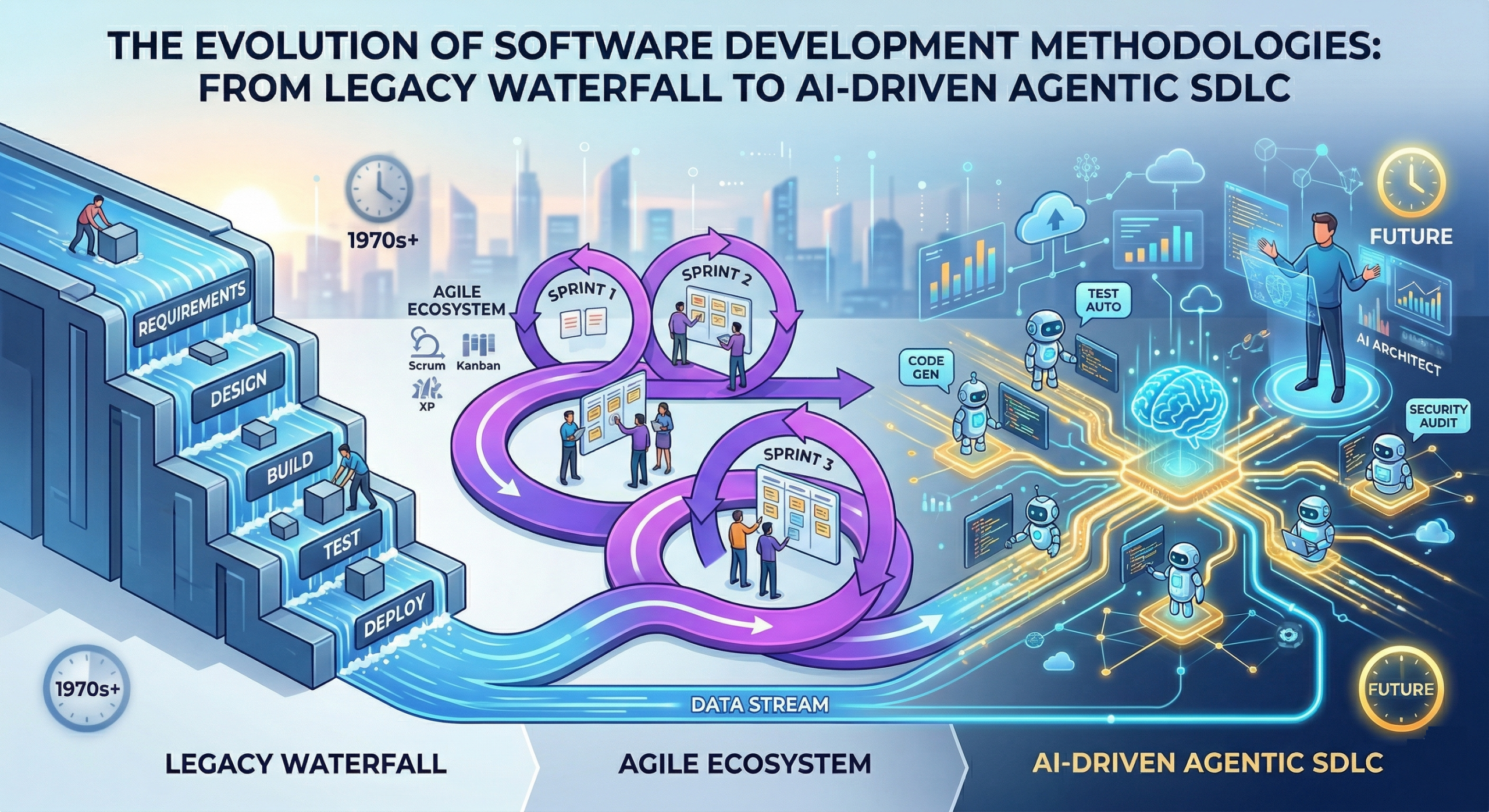
Software development methodologies: A complete guide from waterfall to AI-driven SDLC
Which methodology fits your project? Read our deep dive into Scrum, Kanban, Lean, and AI-powered development with a full comparison matrix -
 April 9, 2026Read in 10 min.
Microsoft PowerApps development services
Accelerate your digital transformation with expert PowerApps development services. We build custom, low-code mobile and web apps that integrate seamlessly with Microsoft 365, SQL, and your existing APIs. Get a free consultation today. -
 April 8, 2026Read in 12 min.
Top 10 Offshore software development companies: Expert review
Don't settle for legacy code. Discover the top offshore software development services company list, featuring vendors with advanced AI-tooling and DevOps maturity -
 April 3, 2026Read in 31 min.
AI software development services: A complete guide for business leaders and decision-makers
Transform your business with expert AI software development services. We build custom GenAI, machine learning, and autonomous agent solutions tailored for enterprise ROI. Get a free consultation today! -
 April 1, 2026Read in 17 min.
The strategic hub: Why global leaders choose software development outsourcing in Ukraine
Why global leaders choose software development outsourcing in Ukraine. Explore the top 10 IT companies, specialized tech stacks, and how to scale your business with a dedicated Ukrainian development team. -
 March 31, 2026Read in 19 min.
Selecting the best Java development companies
Leading Java development companies. Analyzes top-tier Java software development services, evaluation criteria, and delivery models to help you find the perfect strategic partner for scalable enterprise solutions -
 March 31, 2026Read in 14 min.
Top progressive web app development companies
Partner with a leading progressive web application development company. Explore our list of top PWA developers in the USA and globally, offering high-speed, offline-ready, and SEO-friendly web app solutions -
 March 23, 2026Read in 23 min.
Why data warehouses fail and how to design one that doesn’t
top building data swamps. Explore the evolution of DWH design, including ELT workflows, Data Vault 2.0, and high-performance cloud modeling strategies -
 March 18, 2026Read in 13 min.
Choosing React Native app development company
Partner with a premier react native development company. Compare the top 10 firms offering elite react native app development services for high-performance apps. -
 March 17, 2026Read in 15 min.
Choosing the Right Computer Vision Development Company for Your Project
From computer vision consulting to full-scale software development, learn how modern vision systems automate defect detection and optimize operations across healthcare, retail, and manufacturing. -
 March 16, 2026Read in 12 min.
AI in data governance: Everything technology leaders need to know
Master Data Governance for AI. Learn how to manage data drift, bias mitigation, and active metadata using NIST standards. Expert guide on MLOps, RAG security, and EU AI Act compliance for 2026. -
 March 16, 2026Read in 16 min.
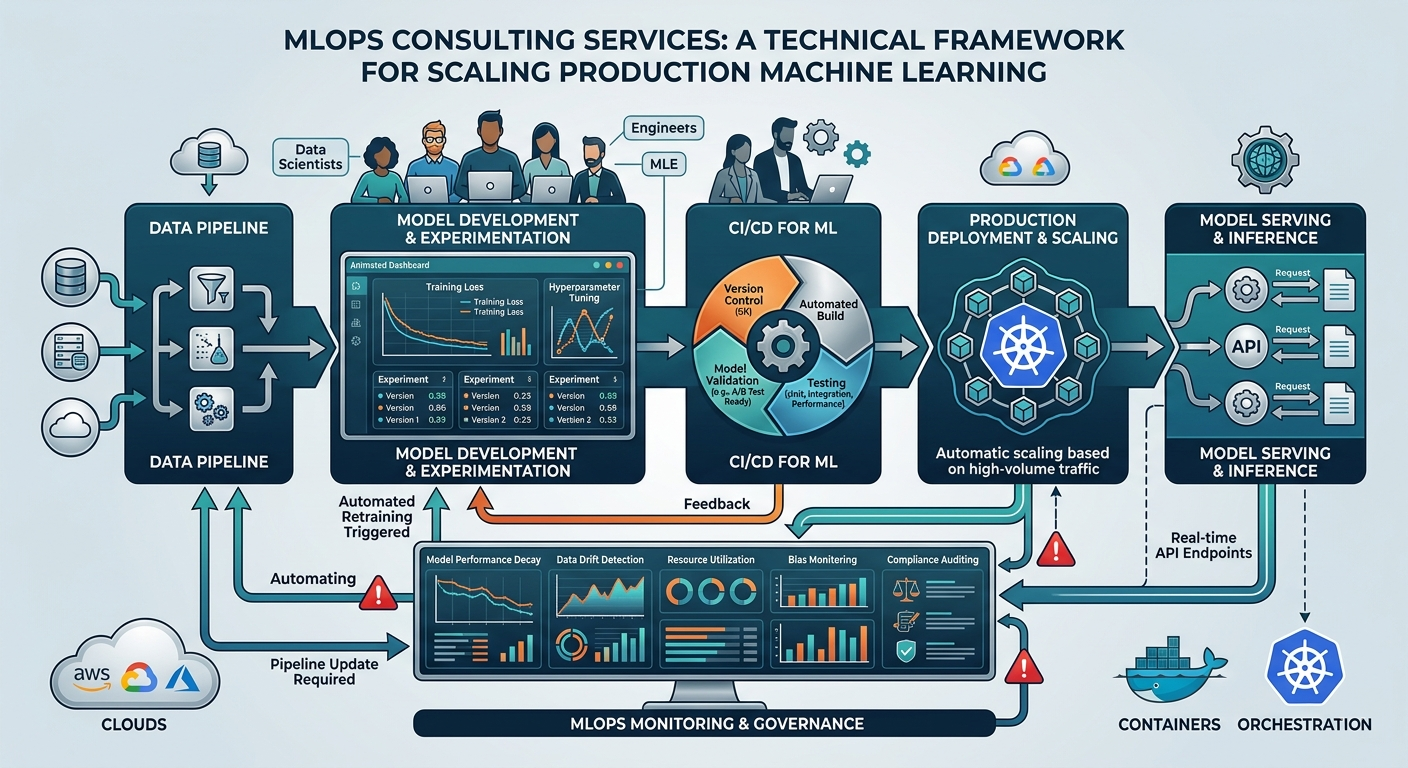
MLOps consulting services: A technical framework for scaling production machine learning
Operationalize ML with expert MLOps consulting. We bridge the gap between Data Science and DevOps using CI/CD/CT pipelines, automated drift detection, and feature stores to reduce Time-to-Value and technical debt. -
 March 12, 2026Read in 12 min.
Choosing your generative AI development company
Compare the best generative AI companies for your enterprise. From custom LLMs to agentic workflows, discover the top partners driving innovation and ROI in the AI-first era. -
 March 6, 2026Read in 15 min.
PyTorch vs TensorFlow: What’s the difference and which one wins
Stop choosing between research and production. Learn how Keras 3 and multi-backend architectures are unifying the AI ecosystem. A professional developer’s deep dive into performance, cost, and scalability. -
 March 5, 2026Read in 15 min.
Choosing the best MVP development companies
Top-rated agencies providing bespoke MVP software development services to help startups validate ideas and scale fast -
 March 4, 2026Read in 19 min.
Top software testing companies: Leading QA partners
Leading software testing companies. Compare top QA service providers, evaluation criteria, and industry trends to find your ideal partner. -
 February 28, 2026Read in 22 min.
Top 10 software development companies in the USA
Find the best US-based software developers. From AI to enterprise web apps, here are the top 10 software development companies in the USA you should hire in 2026. -
 February 25, 2026Read in 12 min.
Top 10 Node.js Development Companies
Industry's leading Node.js development companies. Our deep-dive review covers technical maturity, cloud-native expertise, and architectural standards to help you find the perfect software partner. -
 February 23, 2026Read in 16 min.
Top 10 mobile application development companies: Selection & industry leaders
Top 10 mobile application development companies for your next project. Compare top-rated mobile app developers, explore custom app development company profiles, and learn the secrets to a successful technical partnership. -
 February 23, 2026Read in 12 min.
How to choose the best Android app development agency: Rankings & selection criteria
Compare the leading Android development companies. Our guide highlights the top 10 firms for enterprise architecture, security, and custom app engineering. -
 February 19, 2026Read in 18 min.
IT Managed Service Providers (MSPs): Why does your business need one?
Stop guessing. Compare the 10 leading IT Managed Service Providers (MSPs) for any-sized companies. Find proven security, cloud, and 24/7 support. View the comparison! -
 February 19, 2026Read in 45 min.
Top 30 software development companies: Categories, red flags, and the selection strategy
We’ve analyzed the top 30 software development companies based on expertise, client results, and innovation. Find your ideal match here! -
 February 11, 2026Read in 18 min.
Top 10 Cloud migration companies: Strategic architecture of cloud migration
Compare the top 10 cloud migration companies based on architectural depth, FinOps integration, and modernization capabilities. Expert insights into AWS, Azure, and GCP transformation strategies for enterprise leaders. -
 February 10, 2026Read in 12 min.
Top 10 Flutter development companies: Entities, ecosystems, and strategic selection
Compare the world’s leading Flutter agencies. Our expert analysis covers the top 10 firms, evaluating their mastery of Dart, Skia performance, and Clean Architecture. -
 February 6, 2026Read in 19 min.
Top 10 React development companies: Architecting high-performance digital products
Top-rated React development companies for your next project. Our expert guide analyzes the best React JS web development agencies on performance, scalability, and tech standards -
 February 3, 2026Read in 24 min.
Web application development companies: How to choose the right partner
Find the right web app development company. Explore services, technologies, engagement models, and 10 expert tips for choosing your strategic development partner. -
 February 3, 2026Read in 11 min.
Top 10 Python Development Companies
Looking for a top Python development company? Compare the industry's leading Python software development agencies. Get insights on pricing, expertise, and how to hire a Python development firm that scales your business. -
 January 27, 2026Read in 15 min.
Top cloud application development companies you should follow
Best Cloud Application Development companies for your project. Compare expertise in AWS, Azure, & GCP. See client reviews, specialization, and costs for top Cloud-Native firms -
 January 23, 2026Read in 21 min.
Dedicated development team model: Definition, benefits, and nuances
Scale your product fast with a Dedicated Development Team. Compare DDT vs. outsourcing, analyze costs, and get a management blueprint for success. -
 January 19, 2026Read in 8 min.
The Low-Code Revolution in Oil & Gas: Accelerating Digital Transformation
From real-time well monitoring to automated safety permits - see how low-code applications drive operational efficiency and ESG compliance in the energy sector’s volatile market. -
 January 19, 2026Read in 18 min.
Top 10 desktop application development companies to watch
Compare the world’s best desktop development firms. From legacy modernization to high-performance C++ and cross-platform Electron apps, find your perfect vendor here. -
 December 24, 2025Read in 10 min.
Software development company in Florida: What we do, how we work, and where we add value
Florida's premier custom software partner for enterprise-grade applications. We specialize in fintech, healthcare, and scalable cloud systems. Innovate with Florida experts. -
 December 9, 2025Read in 10 min.
Custom software development for San Diego businesses
Find out about the demands of software development in San Diego and how local companies are adapting to technology needs. -
 December 9, 2025Read in 9 min.
Specifics and perspectives of custom software development in Los Angeles
Find out why choosing a custom software development company in Los Angeles is essential for evolving industries like fintech and healthcare. -
 December 6, 2025Read in 8 min.
Software development in San Francisco: Custom solutions for Area
Find out how software development in San Francisco sets standards in technology and customer satisfaction. -
 November 28, 2025Read in 14 min.
Custom software development in Houston: State and perspectives
Partner with a leading custom software development company in Houston to harness the power of technology for your growth. -
 November 28, 2025Read in 12 min.
Custom software development Dallas businesses need
Find out how a custom software development company in Dallas can elevate your business in a booming tech landscape filled with opportunities. -
 November 27, 2025Read in 11 min.
Software development services in Austin
Find out how a custom software development company in Austin can elevate your business in a booming tech landscape filled with opportunities. -
 November 12, 2025Read in 34 min.
Top FinTech software development companies: The core of modern finance
Compare the top-rated FinTech software developers based on expertise in AI, Blockchain, and compliance. Choose your perfect partner now! -
 November 4, 2025Read in 12 min.
AI in biotech: Application, specifics, and challenges
How AI and Machine Learning are transforming biotechnology, accelerating drug discovery, genome sequencing, and personalized medicine. Learn the applications, challenges, and future. -
 October 28, 2025Read in 20 min.
The best AI development companies in the US
The definitive guide to hiring the best AI development company. See our ranking by MLOps maturity, GenAI expertise, and verified client ROI. Get transparent costs and a partnership blueprint -
 October 20, 2025Read in 16 min.
How to hire the best ReactJS developers in a constantly growing market
Hire the top ReactJS developers. Get pre-vetted, senior React & Next.js engineers matched to your project in 48 hours. Start risk-free -
 October 16, 2025Read in 25 min.
Top 10 AI chatbot development companies
Leading chatbot development companies. Our expert guide helps you choose the best firm for AI chatbot solutions, custom development, and seamless integration -
 October 9, 2025Read in 17 min.
Top biotech software companies: Choosing the right tech partner for life-changing innovations
Leading biotech software companies impacting drug discovery, R&D, and lab operations. See how their innovative platforms are speeding up scientific breakthroughs. -
 September 30, 2025Read in 16 min.
All you need to know about custom software development for small business
Stop wasting time on workarounds! Discover how custom software development empowers your small business with tailored workflows, maximum efficiency, and predictable ROI. -
 September 4, 2025Read in 14 min.
Top 10 leading application modernization companies
Top 10 application modernization companies that can transform your business with cloud, AI, and microservices for agility and growth -
 August 28, 2025Read in 14 min.
Develop once, run everywhere: .NET Core cross-platform development
Struggling with multi-OS development? Discover how .NET empowers you to build versatile, high-performance applications that run seamlessly across Windows, macOS, and Linux with ease. -
 August 21, 2025Read in 14 min.
Why offshore .NET development is the best choice for your business
Struggling with talent shortages or escalating development costs? Explores how embracing offshore .NET development can be the strategic advantage your business needs to build innovative solutions faster and more cost-effectively. -
 August 18, 2025Read in 14 min.
.NET vs Java: Comparison, use cases, pros and cons
Unsure whether to use .NET or Java? This guide breaks down their strengths, weaknesses, and ideal applications to help you pick the best technology. -
 August 11, 2025Read in 24 min.
Top 10 Angular development companies to keep an eye on
Leading Angular development companies. Expert Angular developers offering top-tier web application development, consulting, and solutions for your next project. -
 August 7, 2025Read in 15 min.
Hire Angular developers: What you need to know
Need hire Angular developers? Get access to skilled, dedicated Angular teams for your web projects. We provide expert Angular solutions with flexible engagement models. Contact us today! -
 August 1, 2025Read in 9 min.
Why choose Angular for web development
Why Angular is a leading choice for web development. Learn about its powerful features, scalability, and benefits for building robust, high-performance applications. -
 August 1, 2025Read in 12 min.
Hiring .NET developers: Step-by-step guide
Frustrated with the challenges of hiring skilled .NET developers? This article provides a proven framework to help you find, vet, and hire the right talent for your team, avoiding common recruiting mistakes. -
 February 13, 2025Read in 15 min.
What is HMI development, and why is it trending now?
Human-Machine Interface (HMI) development is revolutionizing the way humans interact with machines, driving innovation across industries. -
 December 11, 2024Read in 10 min.
Python vs Java: Key differences, pros, and cons for developers
Key differences between Python and Java, including syntax, performance, and use cases. Find out which language suits your project best -
 October 10, 2024Read in 11 min.
The future of web development: WordPress vs React.js?
Confused between WordPress or React.js? Explore our detailed comparison to find out which platform suits your needs best -
 August 8, 2024Read in 14 min.
AD and Azure AD: What is the difference, and which is better for you?
Differences between Azure Active Directory (AAD) and traditional Active Directory (AD) in this comprehensive comparison. -
 August 5, 2024Read in 15 min.
ESG software development services: Effective ESG software solutions
Innovative ESG software solutions can help your business achieve its sustainability goals. Develop customized software that enhances environmental, social, and governance (ESG) performance, ensuring compliance and driving positive impact -
 July 31, 2024Read in 7 min.
Benefits of Azure Active Directory
Key benefits of Azure Active Directory(AD), including enhanced security, simplified management, and cost savings for your business -
 April 22, 2024Read in 12 min.
Software modernization: What is it & why it matters
Discover the essence of software modernization and its pivotal role in contemporary software development. Uncover why it's crucial. -
 April 22, 2024Read in 20 min.
Legacy app modernization: A comprehensive guide
Revitalize your business with our guide on legacy application modernization. Transform your legacy systems to make them more efficient and innovative. -
 April 22, 2024Read in 16 min.
Digital product design: What is it and why you need it
Unlock innovation with expert digital product design insights. Explore the latest trends and strategies for creating exceptional user experiences. -
 April 21, 2024Read in 11 min.
Healthcare product design: Tips for app development success
Explore the art of healthcare product design in our latest blog post. Discover how innovative design principles are shaping the future of medical solutions -
 April 18, 2024Read in 9 min.
Azure app modernization: Benefits of migrating to Microsoft
Key benefits of Azure app modernization and how migrating to Microsoft can enhance performance, scalability, and compliance -
 March 11, 2024Read in 12 min.
How to choose asset management software for oil and gas in 2026
Explore more ways to optimize operations and streamline processes in oil and gas. Follow our tips to choose the best-fit assent management software in 2026 -
 March 11, 2024Read in 13 min.
AI software development for oil and gas: A comprehensive guide
Explore the transformative power of artificial intelligence software development for oil and gas and the practices of global industry leaders in our blog. -
 March 11, 2024Read in 19 min.
Cloud application modernization: How to improve your app
Cloud application modernization makes app more competitive and business more profitable. The key strategies, tips, and its benefits — in this article! -
 March 11, 2024Read in 12 min.
Enterprise application modernization: Revolutionize your business
Future-proof your business with our guide to enterprise app modernization. Learn strategic approaches, key technologies, and best practices for legacy system transformation and enhanced agility -
 March 11, 2024Read in 12 min.
LIMS integration: Benefits & how it works
Can LIMS integration be called a CRM for laboratories? What to keep in mind during LIMS software development and integration? Find out more in our article. -
 March 11, 2024Read in 11 min.
Active directory integration: What is it & how to do it effectively
Discover seamless Active Directory integration strategies in our latest blog post. Optimize user management with the Blackthorn Vision team! -
 March 5, 2024Read in 15 min.
Mobile app UX design: Basics that will improve user experience
Mobile app UX design differs from the web. Explore these differences, the process, and the main pitfalls with our experts in this article. -
 March 5, 2024Read in 11 min.
HIPAA compliance checklist for healthcare software development 2026
Check the updated HIPAA security guidelines to ensure the safety and privacy of patients' data, it is important to adhere it when creating applications -
 March 5, 2024Read in 9 min.
How to use business process automation to improve oil and gas production
Discover how business process automation can help optimize oil and gas production and improve your bottom line. -
 March 3, 2024Read in 14 min.
Desktop to web migration: everything you need to know
Planning a desktop to web migration? Get essential insights on strategy, technical challenges, approaches, and how to successfully modernize your legacy application. -
 March 3, 2024Read in 11 min.
The process of application migration to the cloud: stages, approaches, and tools
Find out how to effectively migrate your legacy system and data to the cloud without disrupting your business processes. -
 March 3, 2024Read in 16 min.
Benefits of outsourcing software development
Key advantages of outsourcing software development for businesses. Learn how outsourcing can reduce costs, increase efficiency, and provide access to specialized expertise -
 March 3, 2024Read in 13 min.
Boosting cloud security in healthcare with Azure Cloud Services
Explore the most common challenges in the cloud security of healthcare organizations and discover our tips on eliminating them efficiently. -
 March 3, 2024Read in 19 min.
Healthcare app design: how to create a great user experience
Struggling with medical app UX? Get insights into user-centered design, crucial security measures, and future trends to create impactful healthcare applications. -
 March 3, 2024Read in 16 min.
MVP vs. prototype in startup software development: what’s the difference?
Crucial differences between MVP and Prototype in startup software development. Learn how Blackthorn Vision leverages both to build successful products, reduce risk, and accelerate your time-to-market -
 March 3, 2024Read in 12 min.
How to build a custom EHR solution: tips for decision makers
We can augment your talent pool with dedicated developers proficient in healthcare business automation. Check the success stories from our clients. -
 March 3, 2024Read in 7 min.
What is software as a medical device and why it matters for the healthcare industry
From developing SaMD and SiMD to building efficient EHR systems, we unleash the value of business process automation for healthcare providers. -
 March 3, 2024Read in 6 min.
An overview of medical biotechnology in 2026 and beyond
We offer a full cycle of software development for leading biotech companies - from idea visualization to building an MVP and fully-fledged product. -
 March 3, 2024Read in 9 min.
Smart farming: agricultural technology of the future
We have expertise in data analytics, AI, and Machine Learning to build game-changing software tailored for your agricultural business. -
 March 3, 2024Read in 7 min.
BV people: a talk with Head of HR and recruitment in Blackthorn Vision
BV people: a talk with the Head of HR and Recruitment on candidate selection, the company's ideals, and the current state of the Ukrainian IT industry. -
 March 3, 2024Read in 9 min.
What is robotic process automation and how it changes the travel and hospitality industry
How does RPA work and, most importantly, how to utilize it in your travel and hospitality business? Find out in our new article now. -
 March 3, 2024Read in 12 min.
An overview of agricultural biotechnology in 2026
We cooperated with agricultural biotechnology industry leaders to design software that helps scientists and farmers automate and optimize all processes. -
 March 3, 2024Read in 10 min.
Everything you need to know about Microsoft Azure: benefits, use cases, applications
Microsoft Azure is a leading cloud service provider that offers numerous opportunities for businesses to optimize and secure their operations and services. -
 March 3, 2024Read in 10 min.
Smart manufacturing technology and trends for 2026 and beyond
Stay updated on the latest manufacturing technology trends, that drives innovation, efficiency, and growth in the industry to boost your project. -
 March 3, 2024Read in 8 min.
How to choose and manage your dedicated development team
While there are many benefits of working with dedicated software development teams, it’s not a universal solution. Discover why it is so. -
 March 3, 2024Read in 8 min.
What is the best cloud deployment model? Types of cloud computing that will benefit your business
With the guidance of our post, you can better understand various cloud computing deployment strategies. Examine cloud solutions for your company's needs. -
 March 3, 2024Read in 10 min.
Offshore vs. Nearshore outsourcing: what’s best for your business?
What is the difference between the three outsourcing types, and which one is better for your business? Please read our article to find out! -
 March 3, 2024Read in 14 min.
How to develop a medical app for doctors: everything you need to know
The mobile health industry is one of the most rapidly growing segments worldwide. Learn more about the mHealth industry in our new article. -
 March 3, 2024Read in 14 min.
Business analyst: a leading player in your software development team
Your guide to the Business Analyst's vital role in software development teams, including Agile practices, key responsibilities, techniques, and delivering real business value. -
 March 3, 2024Read in 9 min.
Hyperautomation – the future of business processes
Now business processes - Hyperautomation are increasingly not following stable and predictable scenarios. It creates a need for a new type of automation. -
 March 3, 2024Read in 6 min.
The future of Oil and Gas: industry trends and software solutions
Keep up to date on the most recent oil and gas the industry trends, which are driving modifications in technology, sustainability, and energy exploration. -
 March 3, 2024Read in 6 min.
What is an MVP, and why is it necessary? Minimum viable product examples
Even if you have just a basic vision of what your app should do, we will develop a presentable product that you can pitch to investors. -
 March 3, 2024Read in 14 min.
Top 5 soft skills to work in it successfully and resources to develop them
Are soft skills the new hard skills? Can you make a successful career in IT if you are not an effective communicator or lack creativity? -
 March 3, 2024Read in 5 min.
Mobile app development: Xamarin.Forms — a cross-platform solution that responds to modern challenges
When it comes to mobile development, there is a wide variety of solutions. Xamarin.Forms is a cross-platform solution that responds to modern challenges. -
 February 27, 2024Read in 8 min.
Top 10 programming languages of the future for web and mobile app development
Let’s have a look at the most popular programming languages that may become your business workhorse. -
 February 6, 2024Read in 16 min.
Pharmaceutical software development: Unleashing pharma innovation
Explore the future of pharmaceutical software development: innovative solutions revolutionizing healthcare efficiency & precision.